USC Leads AI Mission to Solve Turbulence Challenge
USC is heading a national team developing AI to predict turbulence, one of engineering's oldest puzzles. The breakthrough could make planes more efficient and strengthen America's energy systems.
Scientists just got powerful new tools to solve a problem that has stumped engineers for generations.
USC will lead a national research team developing artificial intelligence that can predict turbulence, the swirling chaos that affects everything from airplane wings to wind turbines. The university is among the first selected for the Department of Energy's Genesis Mission, which brings together 17 national labs, universities, and private companies to accelerate scientific discovery.
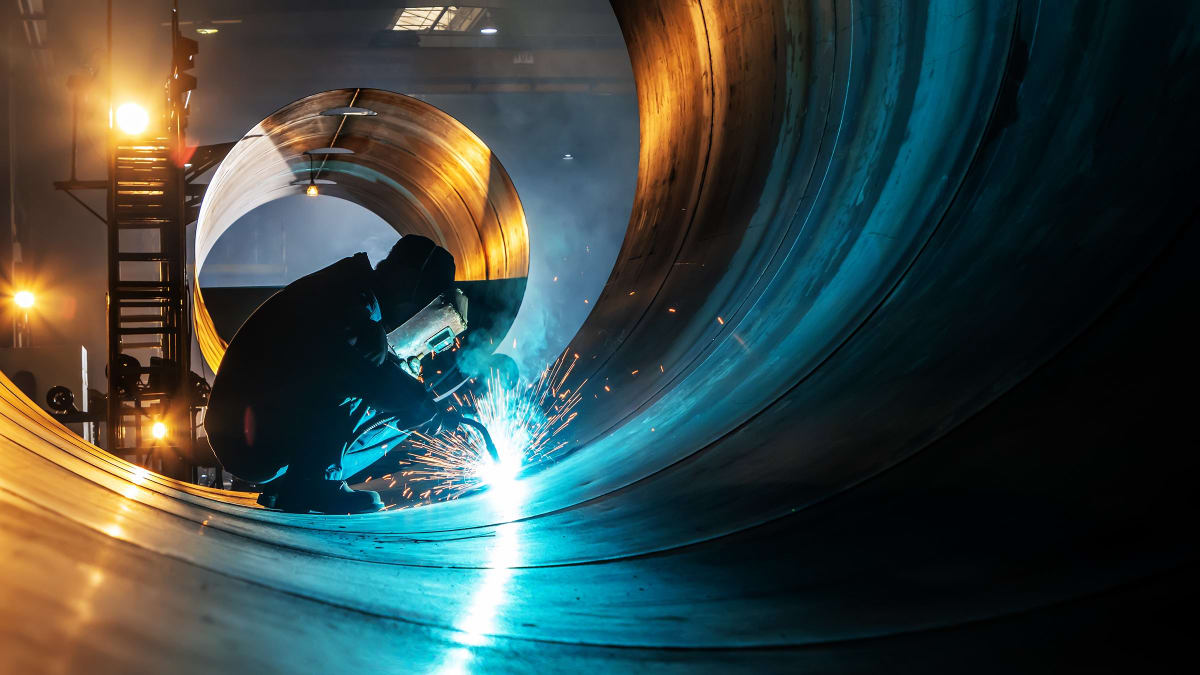
Turbulence shapes the world around us. It determines how air flows over aircraft, how fuel moves through engines, and how storms develop across oceans. Yet despite following the laws of physics, tiny changes in starting conditions can create wildly different outcomes, making predictions incredibly difficult.
"Predicting how turbulence evolves means following millions of tiny motions in the air as they interact, more than even today's fastest supercomputers can calculate," said Iván Bermejo-Moreno, the project's lead researcher at USC's Viterbi School of Engineering.
His team is taking a fresh approach. Instead of trying to calculate every tiny motion, they're teaching AI to recognize recurring patterns in turbulence, like the swirling structures you see in waterfalls or certain clouds. The AI learns from the laws of physics and advanced simulations, then uses those patterns to predict what happens next.
The potential impact reaches far beyond the lab. More accurate turbulence predictions could help engineers design aircraft that use less fuel, strengthen energy infrastructure, and speed development of technologies critical to American competitiveness.
The Ripple Effect
This breakthrough extends beyond turbulence itself. The underlying AI approach could eventually improve scientific simulations across multiple disciplines, helping researchers tackle problems too complex or costly to solve today.
USC isn't just advancing the science. The university is preparing the next generation of AI researchers through partnerships with Argonne National Laboratory's training programs and intensive summer schools. Students get hands-on experience with the computing tools that will power tomorrow's discoveries, and many go on to careers at national labs.
The Genesis Mission reflects USC's broader vision of connecting AI research across engineering, computing, medicine, sciences, and the arts. President Beong-Soo Kim has championed this cross-sector collaboration, creating opportunities for researchers to work alongside partners in industry and government.
For Bermejo-Moreno and his collaborators at the University of Michigan and Argonne National Laboratory, the work represents years of partnership coming to fruition. Together, they're turning one of engineering's toughest challenges into a solvable problem.
The future of scientific discovery is getting faster, smarter, and more collaborative.
More Images


Based on reporting by Google: scientific discovery
This story was written by BrightWire based on verified news reports.
Spread the positivity!
Share this good news with someone who needs it