Vet Spends Life Savings on 600-Tree Mango Gene Bank
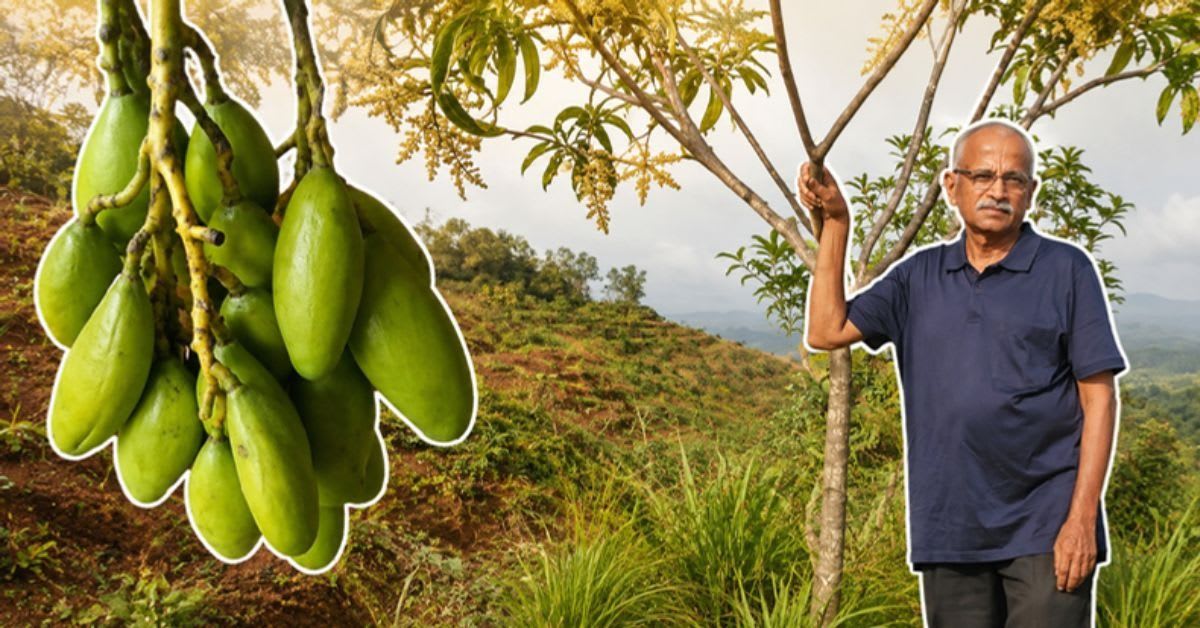
A veterinary surgeon in Karnataka invested everything he had to create a living archive of 600 endangered mango trees. His farm now protects 430 indigenous varieties that were quietly disappearing from India's landscape.
In a corner of Karnataka's Dakshina Kannada district, 600 mango trees are rewriting the story of agricultural conservation. Each one represents a variety that was slipping toward extinction, and each one owes its survival to a veterinarian who bet his future on saving them.
Dr. P Manohara Upadhya spent his life savings to create Maavu Mantapa, a 5.4-acre mango gene bank in Kukkila village. The name means "mango pavilion" in Kannada, and it's exactly what he built: a sheltering space for 430 indigenous mango varieties that commercial farming left behind.
These aren't the uniform, glossy mangoes stacked in supermarkets. They're smaller, more aromatic fruits with names like Otte Maavu and Kuri Tale, each tied to a specific village or family in Karnataka's coastal and forest regions. Many were remembered only by elderly farmers, their trees felled to make room for standardized crops that promised easier profits.
Dr. Upadhya began collecting saplings from across the state, tracking down varieties that existed as single trees in remote backyards or forest edges. By May 2026, his gene bank held not just indigenous species but 170 Indian hybrid and exotic varieties as well. Five trees have already begun bearing fruit, with a hundred more expected next season.
He doesn't work alone. A dedicated team called NaaMaaMi (Naada Maavu Mitraru, or "friends of local mangoes") helps identify and document species across Karnataka. Together, they're creating a living catalog of flavors, names, and agricultural knowledge that was nearly lost.
The mangoes carry practical value too. Varieties like Sagara's Kattinakere and Mangaluru's Derebail bear fruit year-round, keeping households supplied across all seasons. Others, like Kadugaayi, are prized for pickling when the fruit reaches 1.5 kilograms. Each tree represents not just genetic diversity but generations of farming wisdom.
The Ripple Effect
What started as one man's personal mission is now inspiring broader conservation efforts across Karnataka. Farmers, nurseries, and research institutions are joining the work, recognizing that these endangered varieties hold answers to climate resilience and food security. The old trees that once seemed inconvenient are now being seen as irreplaceable genetic libraries.
Climate change makes this work urgent. Irregular rains and sudden heat waves weaken flowering and reduce harvests, threatening even common varieties. The genetic diversity preserved at Maavu Mantapa could provide traits needed to breed mangoes that survive future environmental stress.
Dr. Upadhya's investment wasn't just financial. It was a declaration that some things matter more than profit margins: flavor, heritage, and the living memory of a landscape. His orchard proves that conservation doesn't always require government funding or institutional support—sometimes it just takes one person willing to plant a future they might never fully see.
Each sapling in Kukkila is a small act of hope, and together they're keeping an entire vocabulary of taste and tradition alive.
More Images
%2Fenglish-betterindia%2Fmedia%2Fmedia_files%2F2026%2F09%2F04%2Fkarnataka-wild-mango-conservation-2026-09-04-18-05-45.jpg)


%2Ffilters%3Aformat(webp)%2Fenglish-betterindia%2Fmedia%2Fmedia_files%2F2026%2F09%2F04%2Fappemidi-in-bloom-2026-09-04-18-07-19.jpg)
Based on reporting by The Better India
This story was written by BrightWire based on verified news reports.
Spread the positivity!
Share this good news with someone who needs it