Volunteer Named Fossil Curator After Discovering New Species
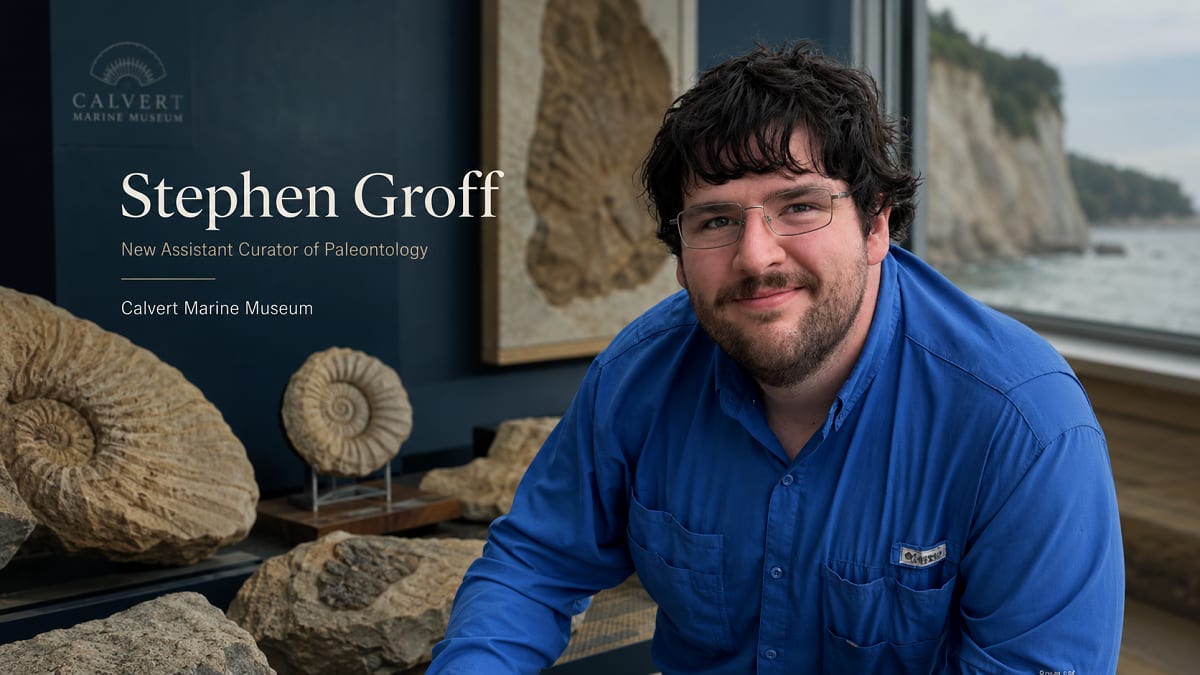
A dedicated fossil hunter who started as a junior docent just became assistant curator of paleontology at Maryland's Calvert Marine Museum. Stephen Groff discovered a new species and had another named after him along the way.
Stephen Groff spent years combing the beaches of Calvert Cliffs as a volunteer, searching sediment for ancient treasures. This month, the museum where he started as a junior docent promoted him to assistant curator of paleontology.
His journey mirrors the spirit of the museum's entire paleontology program, built largely on passionate volunteers. Groff has now done nearly every job the department offers, from leading the Fossil Club to excavating specimens from the eroding cliffline.
In April 2019, Groff and fellow enthusiast Marcus Jones spotted something unusual embedded in a fallen block of sediment. When they returned the next day with the museum's collections manager to properly extract it, they realized they had found the first fossil cobia skull ever recovered.
The discovery turned out to be an entirely new species. Scientists published their findings in the Journal of Paleontology, naming it Rachycentron stremphaencus by blending "Stephen" and "Marcus."
This July, Groff went from being honored to doing the honoring himself. He served as lead author on a paper describing Pinnotheres prochowniki, a 10-million-year-old pea crab species from Calvert Cliffs.
Why This Inspires
The species name honors Bill Prochownik, a beloved volunteer nicknamed "Robo-Bill" for his tireless work excavating fossils. Prochownik died unexpectedly in 2023 at age 40 and was posthumously named Volunteer of the Year.
That circle of discovery and recognition shows what dedicated amateurs can accomplish. The museum's collection now holds roughly 200,000 specimens, almost entirely thanks to volunteers who locate, excavate, and prepare finds from the cliffs.
Groff brings hands-on experience from every level of fossil hunting to his new role. The museum says he's excited to continue making new discoveries and sharing them as widely as possible.
From finding fossils on the beach to leading the team that studies them, Groff proves that passion and persistence can turn a hobby into a scientific career.
More Images


Based on reporting by Google: fossil discovery
This story was written by BrightWire based on verified news reports.
Spread the positivity!
Share this good news with someone who needs it