Voyager and Max Space Team Up for Moon Habitats by 2030
Two space companies are joining forces to build expandable homes on the moon, racing to meet a White House goal of a permanent lunar base by 2030. Their innovative inflatable technology could give astronauts comfortable living spaces millions of miles from Earth.
Building a home on the moon just got a major boost from an unlikely partnership combining balloon-like technology with cutting-edge space expertise.
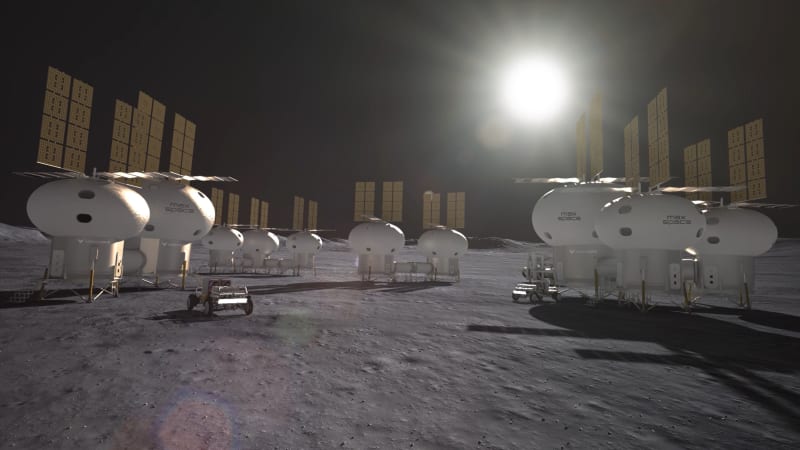
Voyager Technologies and Max Space announced they're teaming up to develop expandable habitats for lunar explorers. Think of them as high-tech inflatable structures that can be packed small for transport but expand into full-size living quarters once deployed on the moon's surface.
The timing couldn't be better. President Trump's December executive order challenges NASA to establish the first elements of a permanent lunar outpost by 2030. That means astronauts will need places to live, work, and shelter from the harsh lunar environment.
Dylan Taylor, CEO of Voyager Technologies, says inflatable technology is critical for deep space habitats. His company brings proven space technology experience, including a special dust-repellant coating tested on a lunar lander last year that keeps moon dust from gunking up equipment. Voyager has also developed ways to extract iron and oxygen directly from lunar soil.
Max Space contributes the expandable module expertise. CEO Saleem Miyan says they're planning both ground tests and space demonstrations before the decade ends. Taylor hints they might move even faster, calling working hardware on the moon "the litmus test" for success.
The partnership makes practical sense beyond just moon bases. Max Space is already developing Thunderbird Station, a commercial space station using similar expandable technology. Much of that work can be adapted for lunar use, letting the companies pivot quickly as NASA's priorities become clearer.
The Ripple Effect
This collaboration represents a new model for space exploration. Instead of single companies competing in isolation, Miyan emphasizes that real progress happens through partnerships. By combining Voyager's materials science and Max Space's habitat designs, they're creating solutions neither could achieve alone.
The approach could accelerate humanity's expansion beyond Earth. Expandable habitats offer major advantages over traditional rigid structures because they're lighter to launch and provide more living space once deployed. That means lower costs and better conditions for the astronauts who'll call the moon home.
Other space entrepreneurs are taking notice, with multiple companies now highlighting their lunar capabilities in response to the administration's ambitious timeline.
The moon is about to get its first real neighborhood, and these innovators are building the blueprint.
More Images


Based on reporting by SpaceNews
This story was written by BrightWire based on verified news reports.
Spread the positivity!
Share this good news with someone who needs it