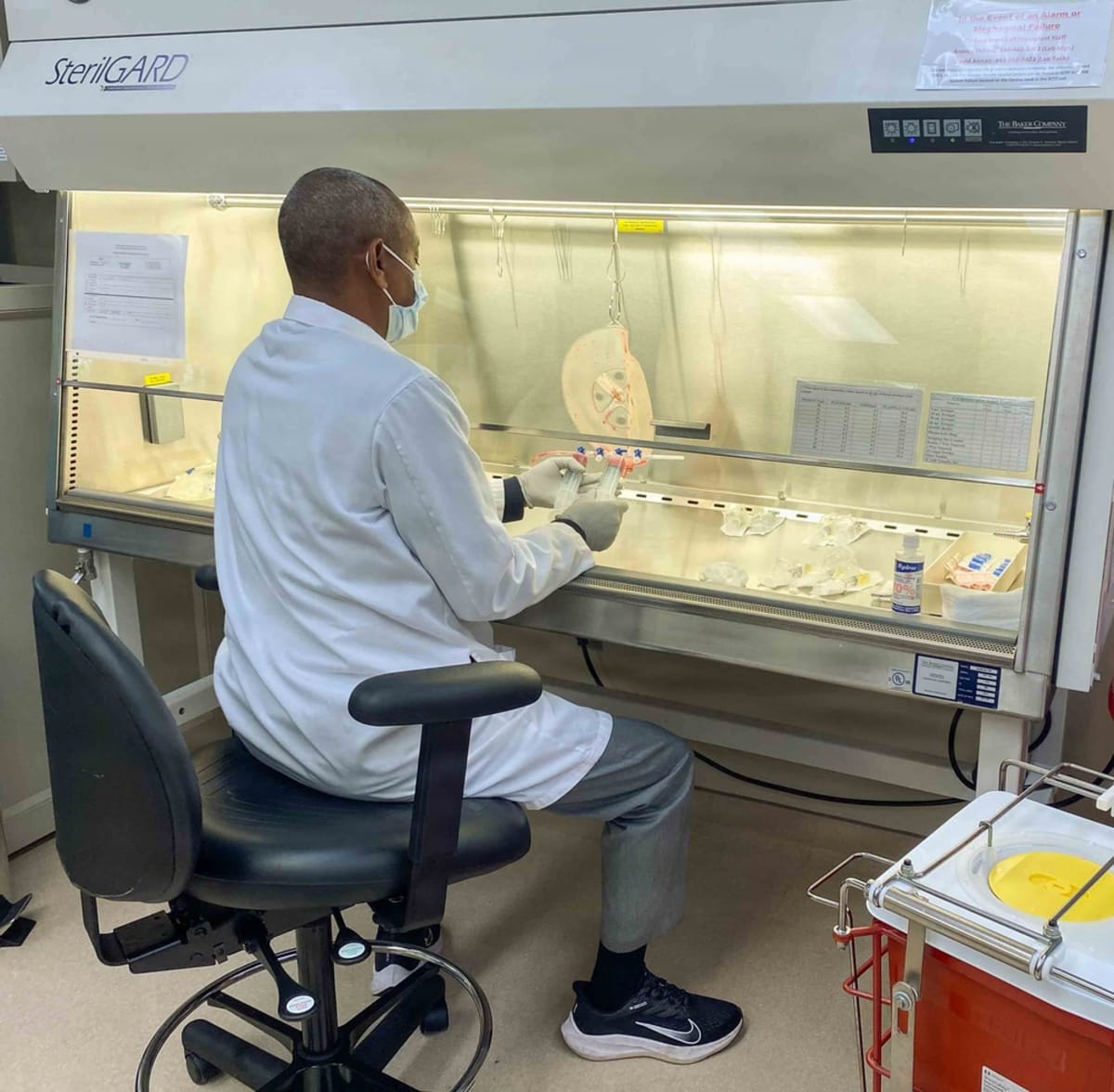
Walter Reed Now Offers Breakthrough CAR-T Cancer Treatment
Walter Reed becomes the only military hospital authorized to deliver CAR-T therapy, a revolutionary treatment that reprograms patients' own blood cells to hunt and destroy cancer. The breakthrough offers new hope for service members battling lymphoma and leukemia who've run out of options.
For cancer patients who've tried everything, Walter Reed National Military Medical Center just opened a door that didn't exist before.
The hospital's Murtha Cancer Center now offers CAR-T therapy, a revolutionary treatment that turns a patient's own immune cells into cancer-fighting warriors. Walter Reed is the only facility in the entire Department of Defense approved to provide this breakthrough therapy.
The treatment targets non-Hodgkin's lymphoma and acute lymphoblastic leukemia, two aggressive blood cancers. Doctors extract T-cells from a patient's blood, send them to a lab where they're genetically reprogrammed to recognize and destroy cancer, then infuse them back into the bloodstream.
"Before this technology, if lymphoma patients didn't respond to their initial treatment, we would give them more chemotherapy and consider a stem cell transplant," said Army Major Dr. Arjun Kalra, a staff physician at Walter Reed. "Unfortunately, that can only apply to a subset of patients."
CAR-T therapy changes the game entirely. Many patients who wouldn't qualify for stem cell transplants because of age or health conditions can now receive this treatment instead.
Navy Commander Dr. Daniel Bowers brought CAR-T to Walter Reed after following its development since 2014. The therapy's pioneer is retired Navy Captain Dr. Carl June, who completed his residency at Walter Reed's predecessor and developed the technique at the University of Pennsylvania.
The FDA approved CAR-T therapy in 2017, but logistical challenges mean only select hospitals can offer it. For military families, having access at Walter Reed eliminates the need to travel to civilian facilities.
The Ripple Effect
The impact reaches beyond individual patients. For active-duty service members with lymphoma, successful CAR-T treatment means returning to full military duty rather than medical discharge.
"With active-duty patients, we treat them and return them to medically unrestricted duties," Bowers said. "It's one of the reasons we targeted the lymphoma products first. It has more military relevance."
The therapy represents hope for patients facing their last option. Walter Reed's team carefully screens candidates, looking for those whose cancers haven't responded to standard chemotherapy and who meet specific health criteria.
This advancement puts military medicine at the forefront of cancer care, ensuring service members and their families receive the same cutting-edge treatments available at top civilian cancer centers.
For cancer patients in uniform, the future just got brighter.
Based on reporting by Google News - New Treatment
This story was written by BrightWire based on verified news reports.
Spread the positivity!
Share this good news with someone who needs it