W&M Student Wins First Churchill Scholarship at Age 20
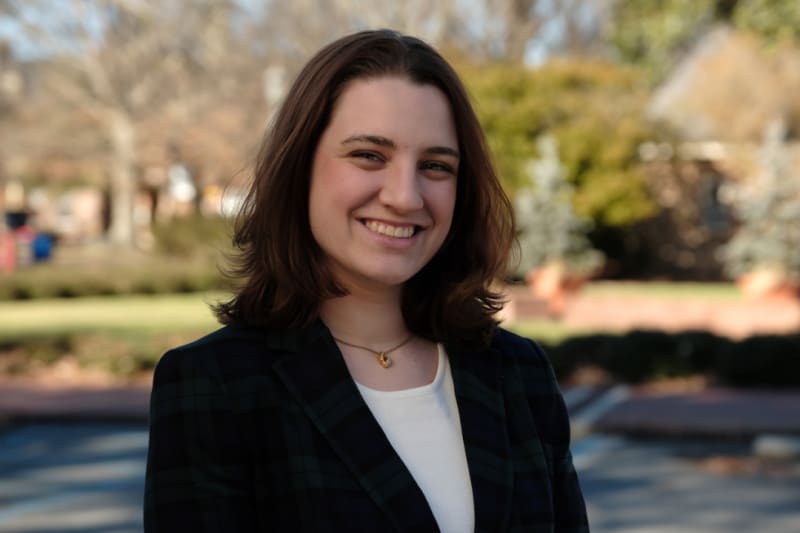
Kate Carline started planning her biotech career her first week of college at age 17. Now she's made history as William & Mary's first-ever Churchill Scholar, heading to Cambridge University this fall.
Most college freshmen spend their first week finding classrooms and making friends, but Kate Carline had bigger plans. At just 17, she was already mapping out her path to graduate school and a career using biotechnology to help communities.
That early vision just paid off in a major way. Carline became the first William & Mary student ever to win a Churchill Scholarship, earning a fully funded year of graduate study at the University of Cambridge.
She's one of only two students nationwide to receive the specialized Kanders Churchill Scholarship this year, which focuses on young scientists who understand how research translates into real-world policy. The award covers full tuition, living expenses, travel costs, and up to $4,000 for research.
Carline didn't just dream big. She got to work in the lab, studying bacteriophages, which are viruses that infect bacteria. Her goal is to genetically engineer these tiny organisms to tackle huge problems like antibiotic resistance and soil pollution.
Her research credentials are remarkable for an undergraduate. She's already published three research papers, with her first appearing in her sophomore year. She's delivered seven presentations at external conferences and is wrapping up an honors thesis that her mentor says will become her fourth publication.
In 2023, Carline joined William & Mary's iGEM team competing against 400 universities worldwide. Her team placed in the top 10, and she fell in love with bioengineering in the process.
Professor Margaret Saha, who has mentored Carline since freshman year, says she's an absolute joy in the lab. "She is super analytical and willing to tackle the most challenging problems and projects," Saha said.
The Ripple Effect
What sets Carline apart isn't just her lab work. She co-founded the Geopolitics of Technology Initiative with students from William & Mary and Yale University, bringing scientific research into conversations about public policy.
Eric Brown, her faculty guide for the initiative, says Carline has a rare gift. She can explain complex bioengineering research in ways that inspire smart policy decisions, understanding not just what science can do but how it affects people and communities.
Her award cabinet already includes the Goldwater Scholarship for future scientists and this year's Thomas Jefferson Prize in Natural Philosophy for exceptional science students. She's spending her final semester at William & Mary volunteering as a teaching assistant for a new bioengineering course developed with MIT and Harvard.
The Churchill Foundation was created in 1959 at Winston Churchill's request to strengthen the science partnership between the United States and United Kingdom. Carline will join that legacy this fall, carrying forward everything she learned about innovation from the lab bench to the global stage.
Based on reporting by Google News - Scholarship Awarded
This story was written by BrightWire based on verified news reports.
Spread the positivity!
Share this good news with someone who needs it