Webb and Hubble Team Up for Stunning Saturn Portrait
NASA's two most powerful space telescopes joined forces to create the most detailed portrait of Saturn ever captured. The collaboration reveals hidden layers of the ringed planet's atmosphere that neither telescope could see alone.
Saturn just got its most revealing close-up ever, thanks to a cosmic team effort between NASA's James Webb Space Telescope and the Hubble Space Telescope.
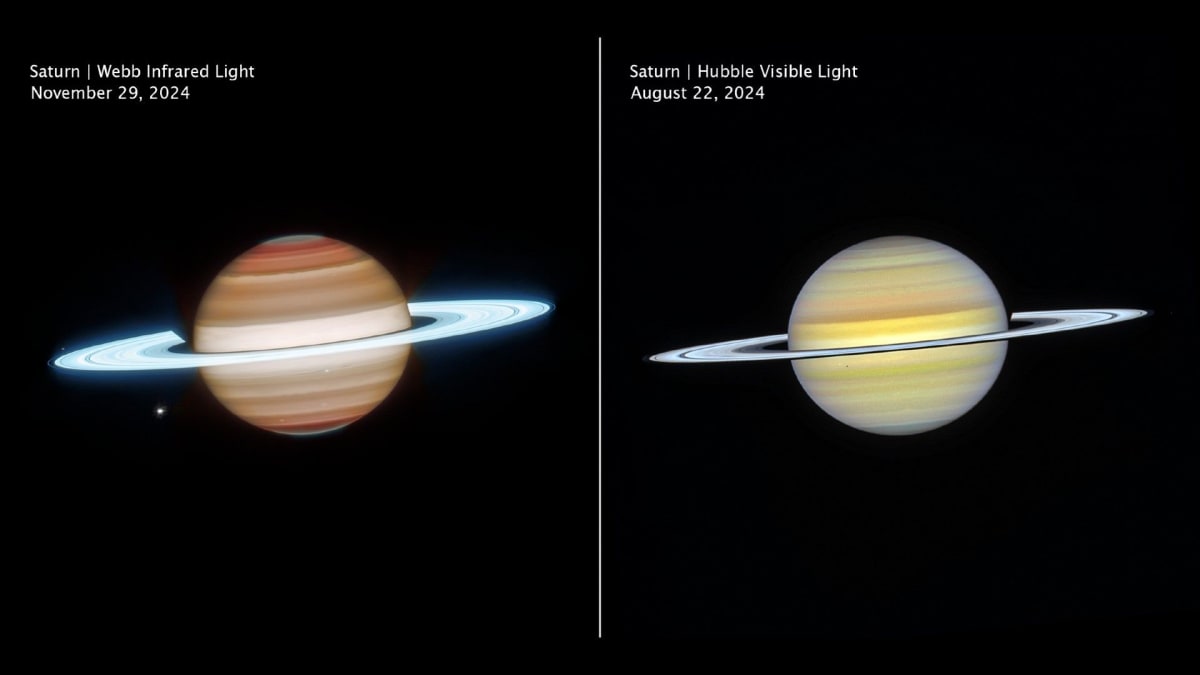
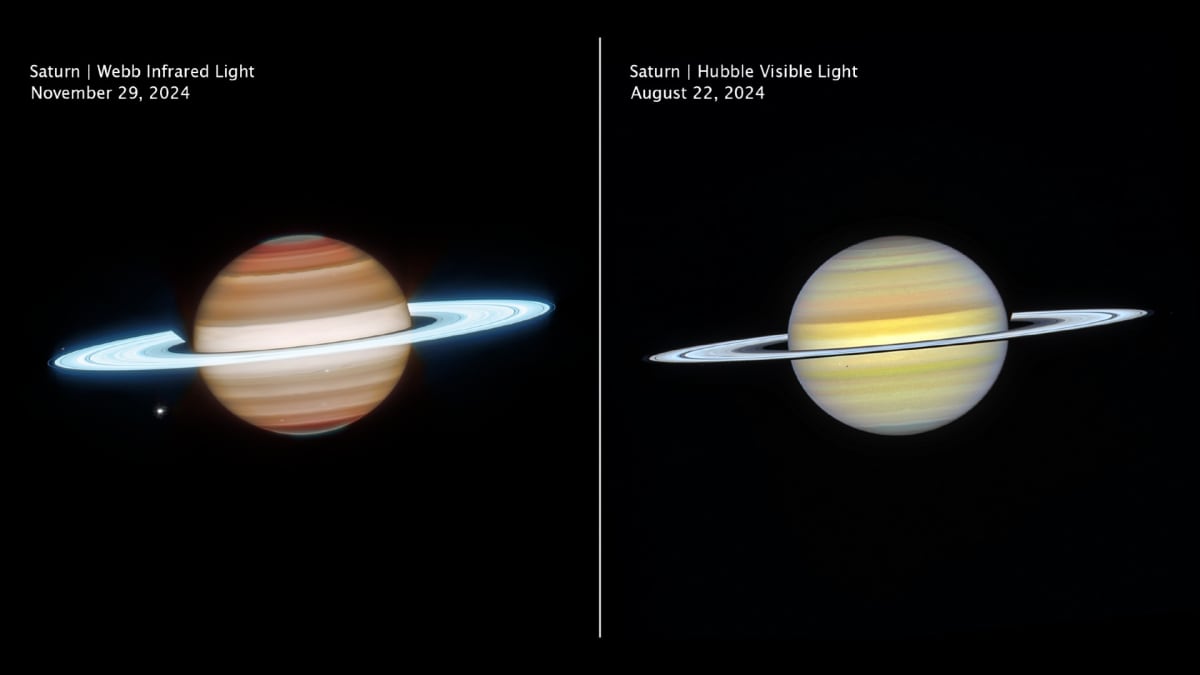
The two observatories combined their unique superpowers to create a layered portrait of the ringed planet that reveals secrets hidden beneath its clouds. Webb peers through Saturn's atmosphere using infrared light while Hubble captures crisp visible-light images, and together they slice through the planet's layers like peeling back an onion.
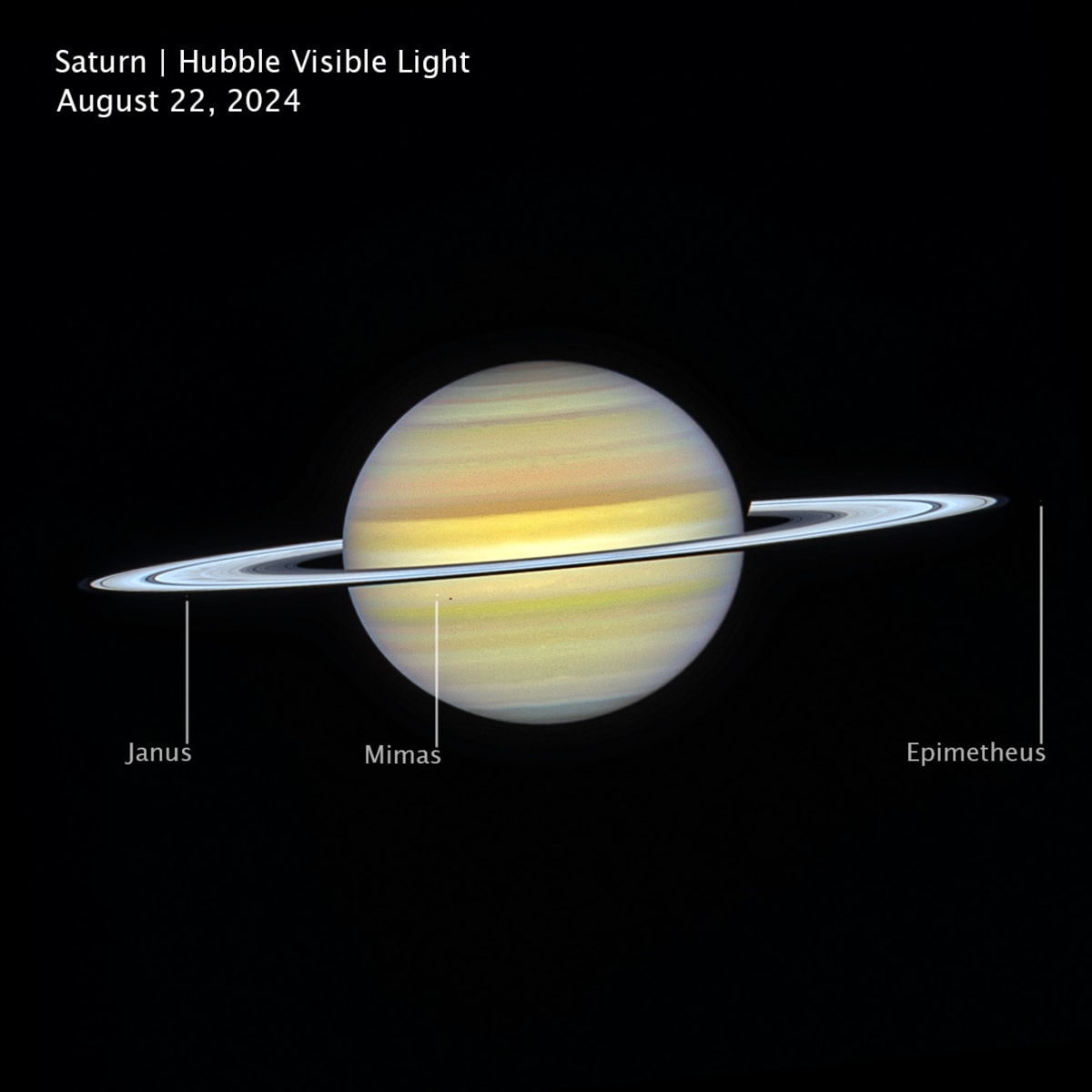
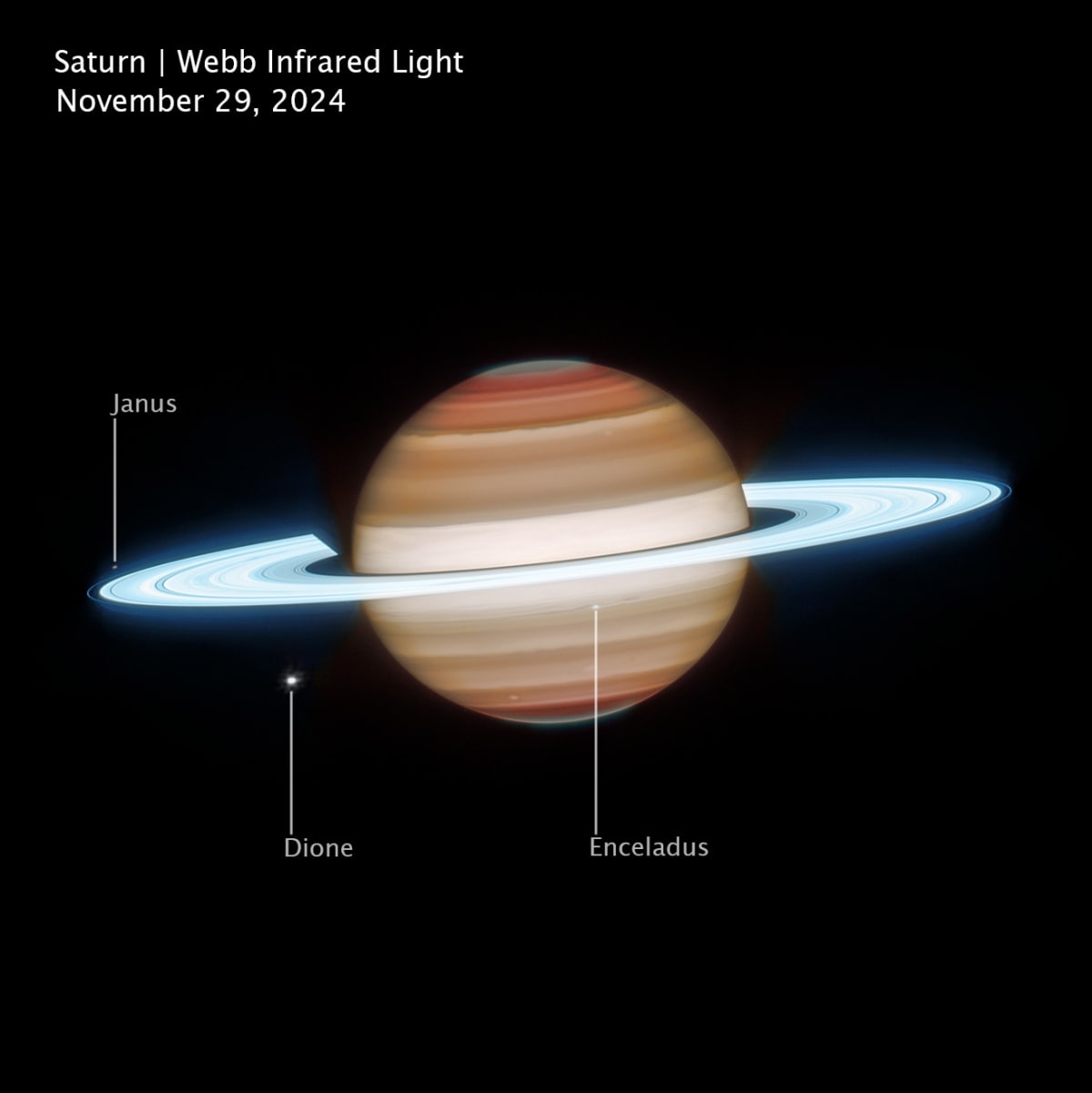
Hubble snapped its visible-light images in August 2024 as part of its decade-long program tracking changes in our solar system's outer planets. Webb followed up 14 weeks later with infrared observations, capturing Saturn as it shifted from northern summer toward its 2025 equinox.
The timing matters because Saturn's seasons last about seven Earth years each. Tracking these long cycles helps scientists understand how the planet's atmosphere changes over time.
Each telescope reveals different atmospheric features. Hubble's view shows Saturn's softly banded clouds and bright ring system glowing in reflected sunlight. Webb's infrared vision uncovers deeper atmospheric layers, a wandering jet stream in the northern mid-latitudes, possible auroral activity, and several storms scattered across the southern hemisphere.
The rings themselves tell two different stories depending on which telescope you ask. In Hubble's data, the water ice rings appear bright and clearly structured. In Webb's infrared view, they shine even more prominently against the dark background of space, revealing additional details in the ring system that visible light can't detect.
Scientists can even spot subtle features like spokes in the rings and structure in the thick central region. The outer ring appears thin and sharply defined in Webb's image but only faintly visible in Hubble's, showing how different wavelengths of light interact with Saturn's icy particles.
The Ripple Effect
This telescope teamwork demonstrates how combining different observatories creates a far more complete picture than either could achieve alone. By integrating Webb's infrared sensitivity with Hubble's long-standing visible-light record, scientists can now track Saturn's evolving atmosphere, monitor storm systems, and refine models of its complex climate.
The collaboration turns Saturn from a distant gas giant into a dynamic world whose hidden layers are finally coming into focus. As both telescopes continue their missions, researchers plan to build on these observations, tracking how the planet's atmosphere works as a connected three-dimensional system.
Saturn's secrets are no longer hidden in the shadows.
More Images

Based on reporting by Space.com
This story was written by BrightWire based on verified news reports.
Spread the positivity!
Share this good news with someone who needs it