Webb Telescope Captures Baby Stars Being Born
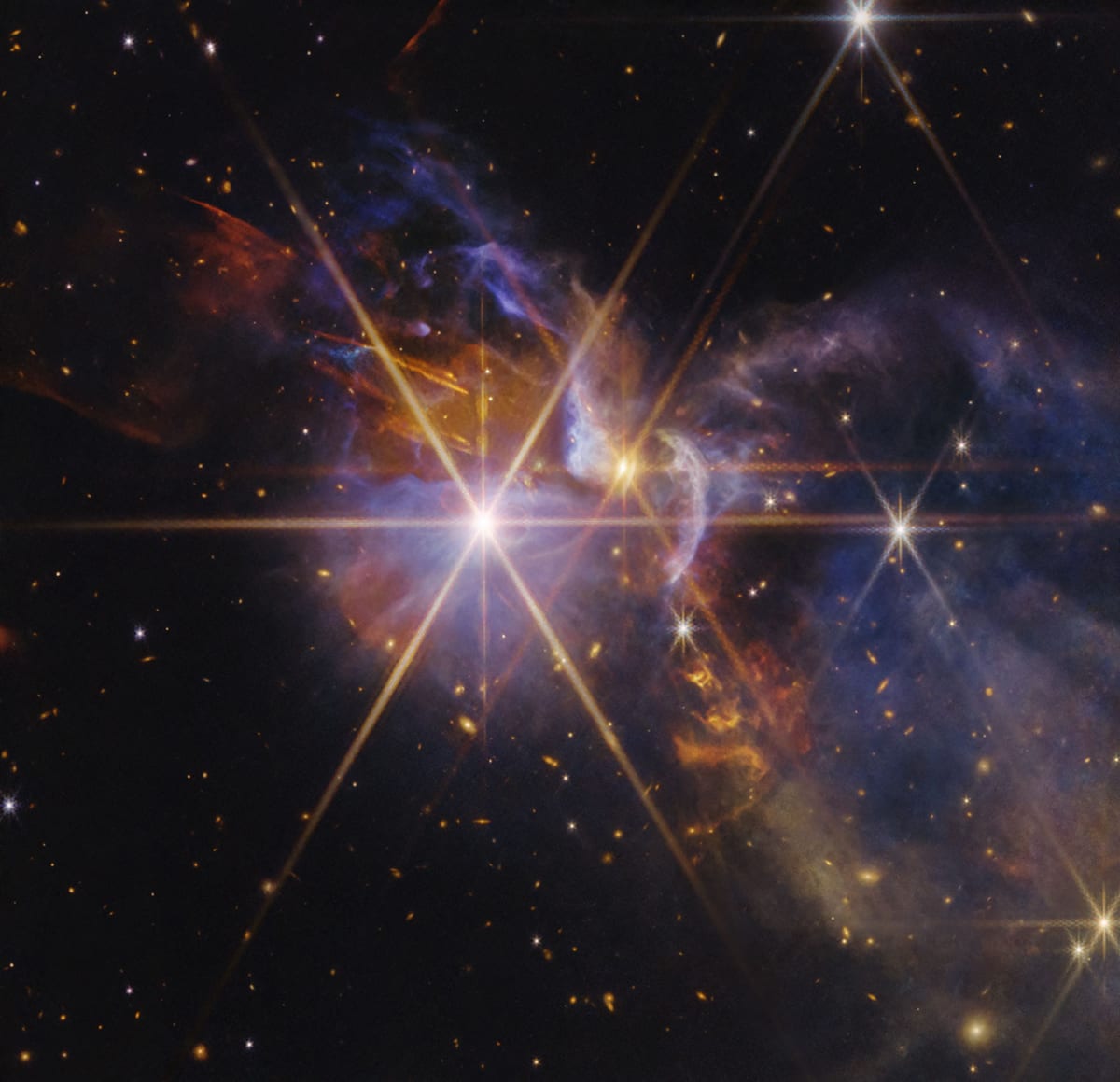
NASA's James Webb Space Telescope just revealed baby stars sparking to life in the FS Tau system, showing us star birth like never before. The stunning infrared images pierce through thick cosmic dust to reveal protostars that are only 1 to 3 million years old.
NASA's most powerful telescope just gave us front-row seats to one of the universe's most beautiful shows: stars being born.
The James Webb Space Telescope captured stunning new images of the FS Tau star system, revealing protostars (baby stars) that are lighting up the cosmos. These cosmic newborns are only 1 to 3 million years old, practically infants compared to our 4.6 billion-year-old Sun.
What makes this discovery so special is what Webb can see that other telescopes can't. While previous observations showed mostly thick dust, Webb's infrared vision cuts right through it like fog lights on a misty night. The result is a dazzling display of baby stars and distant galaxies that look like cosmic fireworks.
One protostar called FS Tau B is putting on quite a show. As it feeds on surrounding dust and gas to grow bigger, it shoots out superheated matter in bright orange streams. These outflows shape the space around them, compressing gas and dust into thick ridges that glow light blue as they reflect the protostar's light.
Scientists are especially excited because these low-mass stars are perfect for studying how stars form. Unlike their bigger siblings, they don't blast their surroundings with intense radiation, making it easier to observe their development without interference.
The new images also revealed something surprising: gaps between the outflows. This discovery adds to growing evidence that baby stars don't grow steadily. Instead, they seem to eat in bursts, gathering material in episodes separated by quiet periods.
Why This Inspires
This breakthrough shows how new technology keeps opening windows into parts of our universe we've never seen before. Just a few years ago, the thick dust clouds around FS Tau hid these stellar nurseries from view. Now we can watch baby stars take their first breaths.
The images also remind us that everything has a beginning, even the most ancient-seeming stars. Our own Sun went through this same dramatic birth process billions of years ago, shooting out streams of matter and slowly gathering mass until it could ignite nuclear fusion in its core.
These baby stars will eventually become full-fledged suns capable of warming planets and possibly supporting life. We're witnessing the first chapter of stories that will unfold over billions of years.
More Images



Based on reporting by NASA
This story was written by BrightWire based on verified news reports.
Spread the positivity!
Share this good news with someone who needs it