Webb Telescope Finds Galaxy With Glowing Star Tentacles
The James Webb Space Telescope discovered a rare "jellyfish galaxy" 8.5 billion light-years away, sporting glowing tentacles of newborn stars. The cosmic oddity is helping scientists understand how galaxies form stars in the most unexpected places.
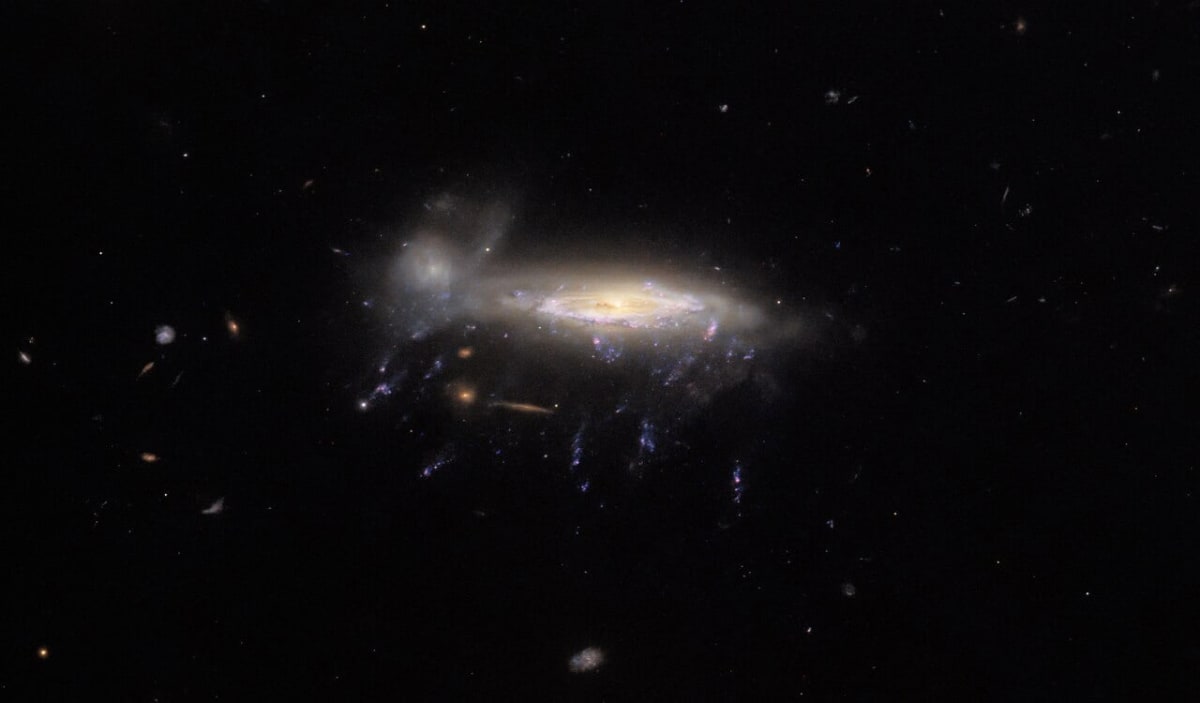
Scientists just spotted something wild in deep space: a galaxy with tentacles made of baby stars stretching out like cosmic streamers.
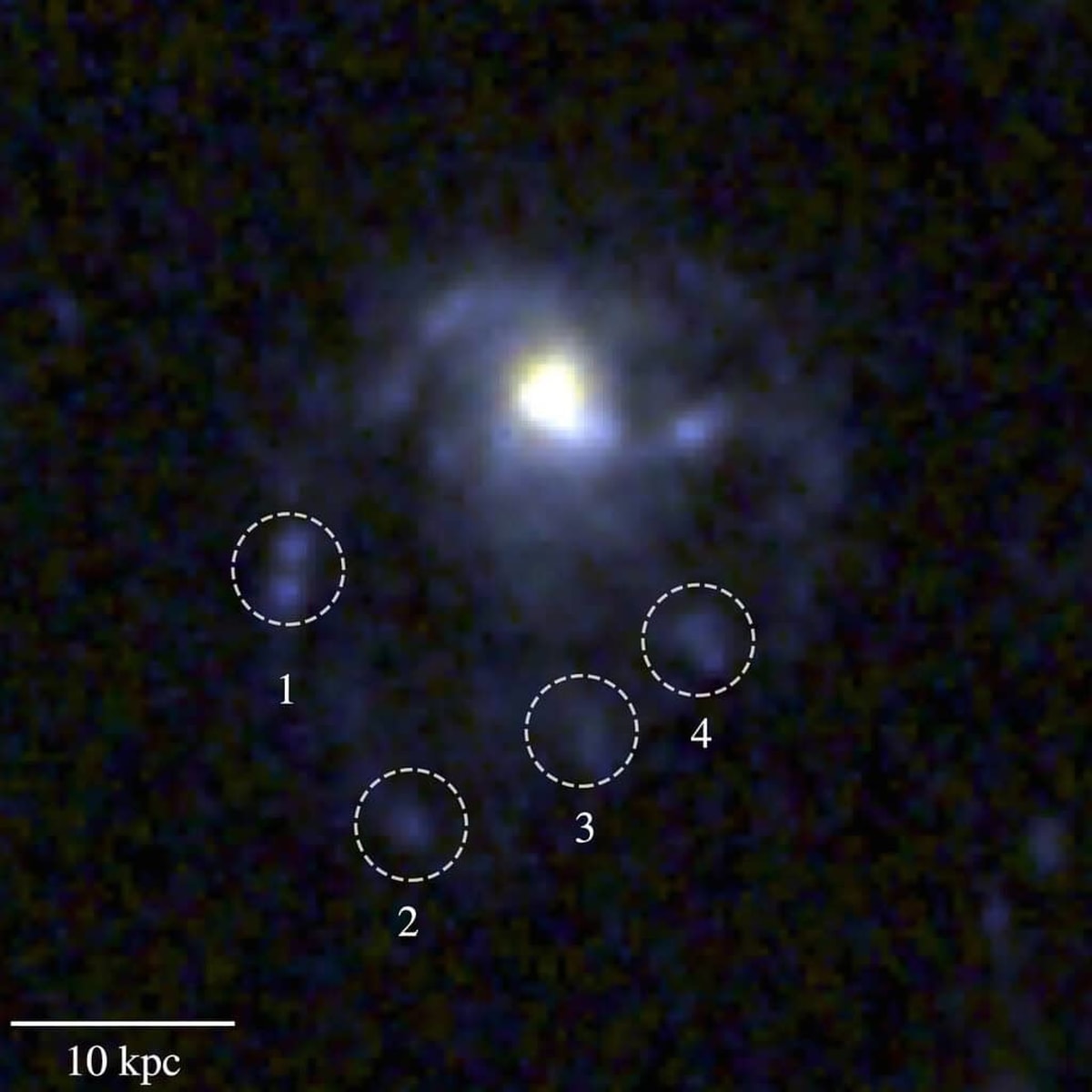
The James Webb Space Telescope captured images of COSMOS2020-635829, a distant galaxy that looks like it's swimming through space. Its long, glowing trails contain clusters of brand-new stars that are less than 100 million years old, lighting up the darkness 8.5 billion light-years from Earth.
Dr. Ian Roberts from the University of Waterloo and his team weren't even searching for this particular oddity. They were combing through Webb's data from a well-studied patch of sky when the galaxy caught their eye, standing out among thousands of others with its distinctive shape.
The galaxy earned its "jellyfish" nickname through a process called ram-pressure stripping. As it speeds through a cluster of other galaxies, the surrounding hot gas creates a powerful headwind that pushes the galaxy's own gas outward into long, wispy strands. It's like holding your hair out a car window, except the "hair" is made of stars.
Here's the surprising part: those tentacles aren't empty. Massive star clusters dot the trailing streams, each containing about 100 million times the mass of our sun. These stellar nurseries are actively cranking out new stars, creating the equivalent of a sun-sized star every one to ten years.
Follow-up observations from the Gemini Observatory confirmed the glowing knots are real and physically connected to the main galaxy by a tail of ionized gas. They're all traveling together through space like a cosmic family road trip.
Why This Inspires
This discovery rewrites what scientists thought possible in the early universe. Finding a jellyfish galaxy this ancient proves that galaxy clusters were already mature and active enough to trigger dramatic star formation billions of years earlier than expected.
The fate of these tentacles remains beautifully uncertain. The star clusters might eventually drift back to rejoin their parent galaxy, or they could break free entirely to become independent dwarf galaxies wandering through space. Some might even dissolve into a faint glow between galaxies, like cosmic breadcrumbs marking where they've been.
Roberts told Live Science that finding such an interesting galaxy so easily suggests many more are waiting to be discovered. His team is now planning a systematic search to find other jellyfish galaxies hiding in Webb's treasure trove of data.
Each new discovery like this helps scientists piece together the story of how galaxies live, grow, and sometimes lose their ability to form new stars. The universe, it turns out, is far more dynamic and surprising than we ever imagined.
More Images
Based on reporting by Google: James Webb telescope
This story was written by BrightWire based on verified news reports.
Spread the positivity!
Share this good news with someone who needs it