Webb Telescope Finds Massive Black Hole Near Big Bang
Scientists discovered a mysterious "overmassive" black hole that existed just after the Big Bang, challenging everything we thought we knew about how the early universe formed. The finding could rewrite our understanding of cosmic history.
A black hole that shouldn't exist is shaking up our understanding of the universe's birth story.
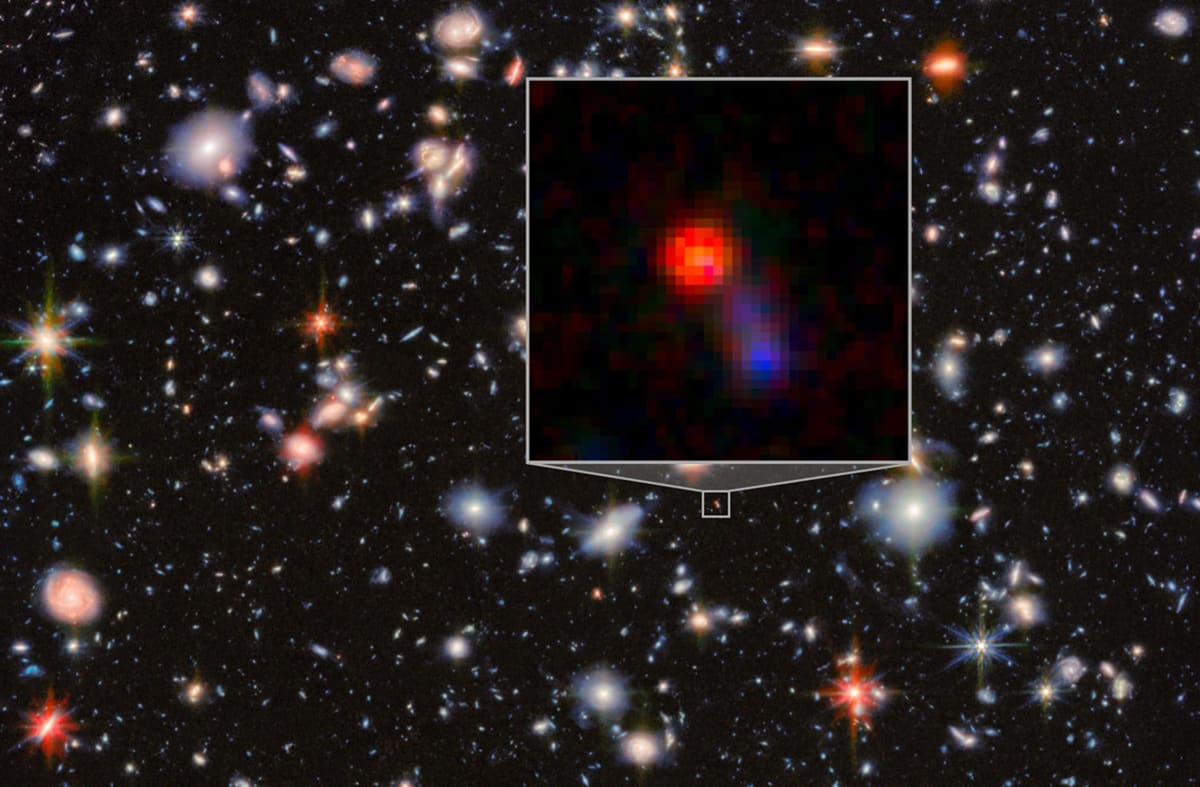
Scientists using the James Webb Space Telescope spotted something extraordinary in the early cosmos. They found mysterious objects called "little red dots" that appeared within the first two billion years after the Big Bang. One of these dots turned out to be a galaxy hiding an impossibly massive black hole.
Researcher Pierluigi Rinaldi from the Space Telescope Science Institute made the discovery and named it Virgil, after Dante's guide through the underworld. The name fits perfectly because this galaxy has a split personality.
When scientists looked at Virgil using ultraviolet and visible light, they saw a normal star-forming galaxy. But when they added mid-infrared wavelengths to their observations, everything changed. Suddenly, an enormous active black hole appeared at the galaxy's center.
The problem? This black hole is far too massive to exist so early in the universe's timeline. Current theories of cosmology can't explain how such a heavy object could have formed within two billion years of the Big Bang.
Scientists call these giants "overmassive" black holes because they act like dark puppet masters within their galaxies, controlling how the entire galaxy evolves. Finding one so early breaks the rules we thought governed the universe's development.
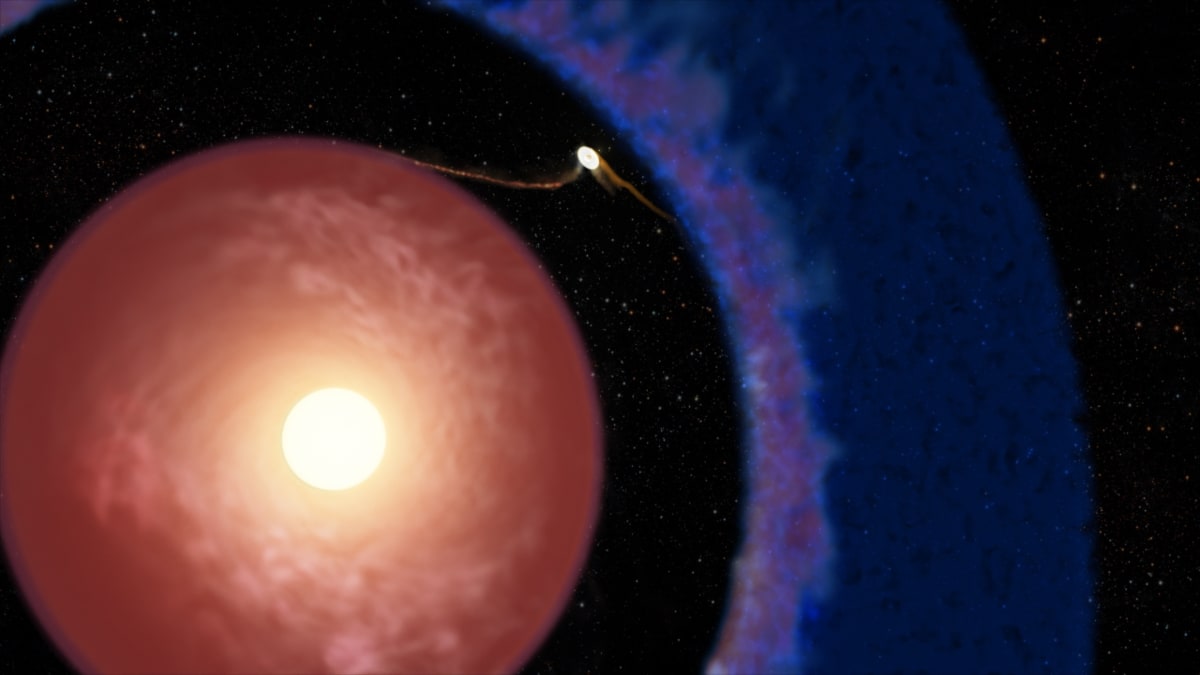
One exciting theory suggests these might not be traditional black holes at all. They could be "quasi-stars," hypothetical objects where black holes sit inside extremely dense cocoons of gas. Radiation from the black hole gets trapped in this envelope, bouncing around before escaping. This cosmic hall of mirrors could make the black hole appear much larger than it actually is.
Why This Inspires
This discovery represents science at its best: asking questions when something doesn't make sense. Rather than forcing the evidence to fit old theories, researchers are considering entirely new possibilities about how the universe works.
The James Webb Space Telescope has only been operational for four years, yet it's already revealing cosmic secrets we never imagined. Each observation pushes back the boundaries of our knowledge.
Rinaldi and his team plan to take deeper observations at mid-infrared wavelengths to understand Virgil better. The work takes enormous amounts of telescope time, but the payoff could be revolutionary. We might be missing an important piece of the cosmic puzzle, and finding it could change everything we know about how galaxies and black holes formed.
The universe is turning out to be far stranger and more fascinating than we ever expected, and we're just getting started.
More Images


Based on reporting by Google: James Webb telescope
This story was written by BrightWire based on verified news reports.
Spread the positivity!
Share this good news with someone who needs it