Webb Telescope Maps Surface of Distant Super-Earth
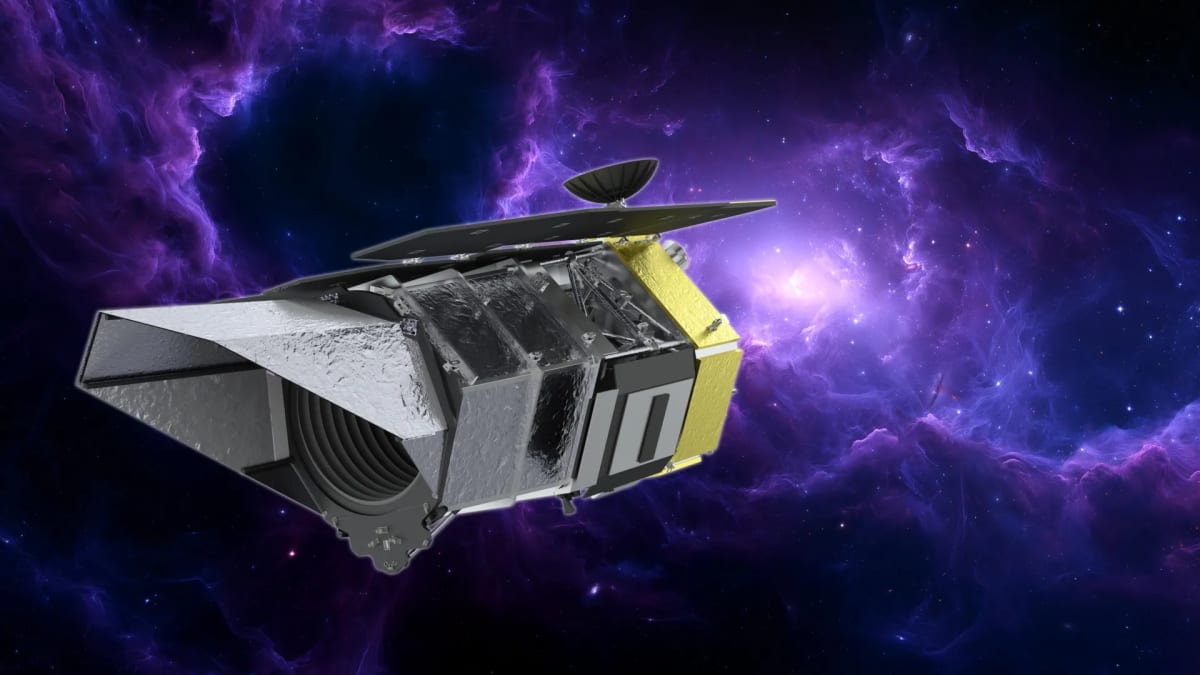
The James Webb Space Telescope just revealed the surface details of a planet 50 light-years away without ever sending a probe. Scientists can now map the terrain and mineral makeup of distant rocky worlds using advanced infrared spectroscopy.
Scientists just figured out what a planet looks like from 50 light-years away, and they didn't need to send a single spacecraft to do it.
The James Webb Space Telescope used its powerful infrared vision to map the surface of LHS 3844 b, a rocky super-Earth nearly a third larger than our own planet. Using a technique called spectroscopy, researchers determined the world is covered in olivine, the same mineral found in Earth's mantle, likely ground into fine powder by eons of solar radiation and meteor impacts.
This marks a massive leap forward in how we study distant worlds. Previous telescopes could only show fuzzy blips, but Webb's precision reveals not just what planets are made of, but what their surfaces actually look like.
The planet itself is a harsh place. It orbits its red dwarf star in just 11 hours and stays locked with one side always facing the sun, heating that surface to 1,340 degrees Fahrenheit. There's no atmosphere, no water, and no signs of volcanic activity or tectonic plates.
Scientists essentially reverse-engineered an alien landscape using pure mathematics and light analysis. By studying the specific wavelengths of infrared light bouncing off the planet, they could determine surface texture, mineral composition, and terrain features without seeing a single pixel of actual detail.
The Bright Side
This breakthrough opens up an entirely new era in planetary science. For the first time, astronomers can study the surfaces of distant rocky planets in detail, helping us understand how planets form, age, and change over billions of years.
The research team is already planning follow-up measurements to map the actual terrain features of LHS 3844 b by analyzing the angles of infrared emissions. What started as a technological achievement is becoming a whole new way to explore the universe.
While this particular world turned out to be a barren, scorched rock, the same technique will help scientists identify more promising candidates for life. Every dead world we map teaches us what to look for in living ones.
The ability to "see" alien surfaces from Earth means we're no longer limited to our cosmic backyard. Thousands of distant worlds are now open for detailed study, each one teaching us something new about how planets work and where life might flourish.
More Images


Based on reporting by Google: James Webb telescope
This story was written by BrightWire based on verified news reports.
Spread the positivity!
Share this good news with someone who needs it