Webb Telescope Reveals Clearest Black Hole Image Ever
The James Webb Space Telescope captured the sharpest view ever of a supermassive black hole's surrounding disk, solving a decades-old mystery about where the glow comes from. Scientists can now see twice as clearly into the heart of distant galaxies, opening new doors to understanding how black holes grow and shape the universe. #
Scientists just got their clearest view ever of what feeds a supermassive black hole, and it's rewriting what we thought we knew about these cosmic giants.
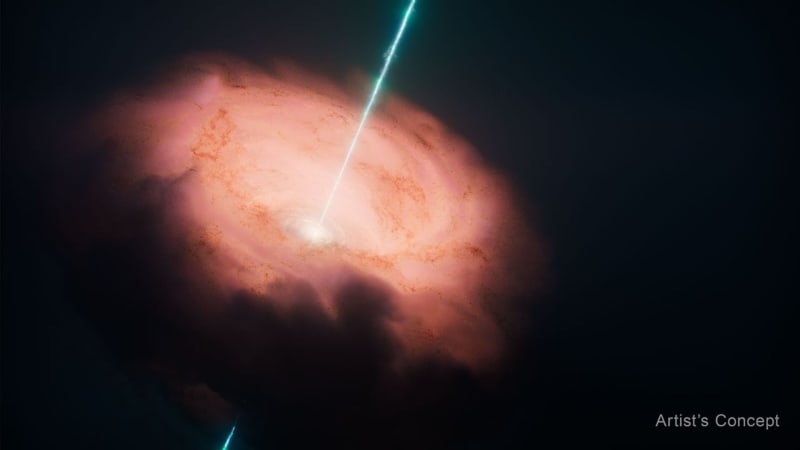
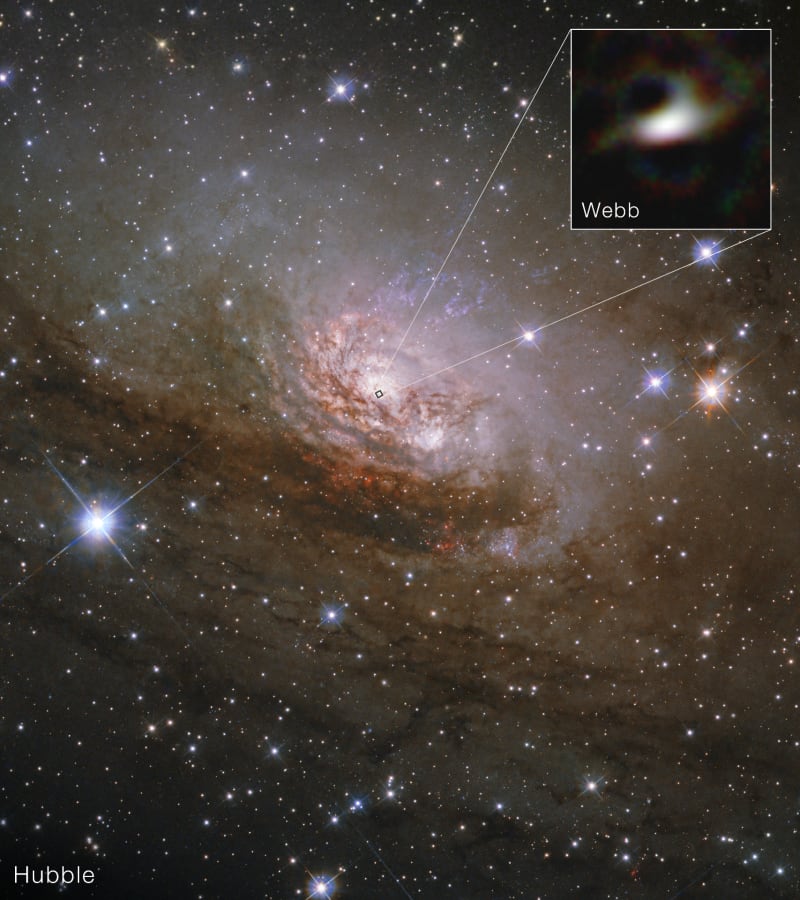
The James Webb Space Telescope captured stunning images of the Circinus galaxy's core, located 14 million light years from Earth. The snapshots reveal a glowing, donut-shaped disk of gas and dust surrounding the black hole in unprecedented detail.
For decades, astronomers believed the intense infrared glow around active black holes came from powerful outflows blasting material away. The new images prove that assumption wrong.
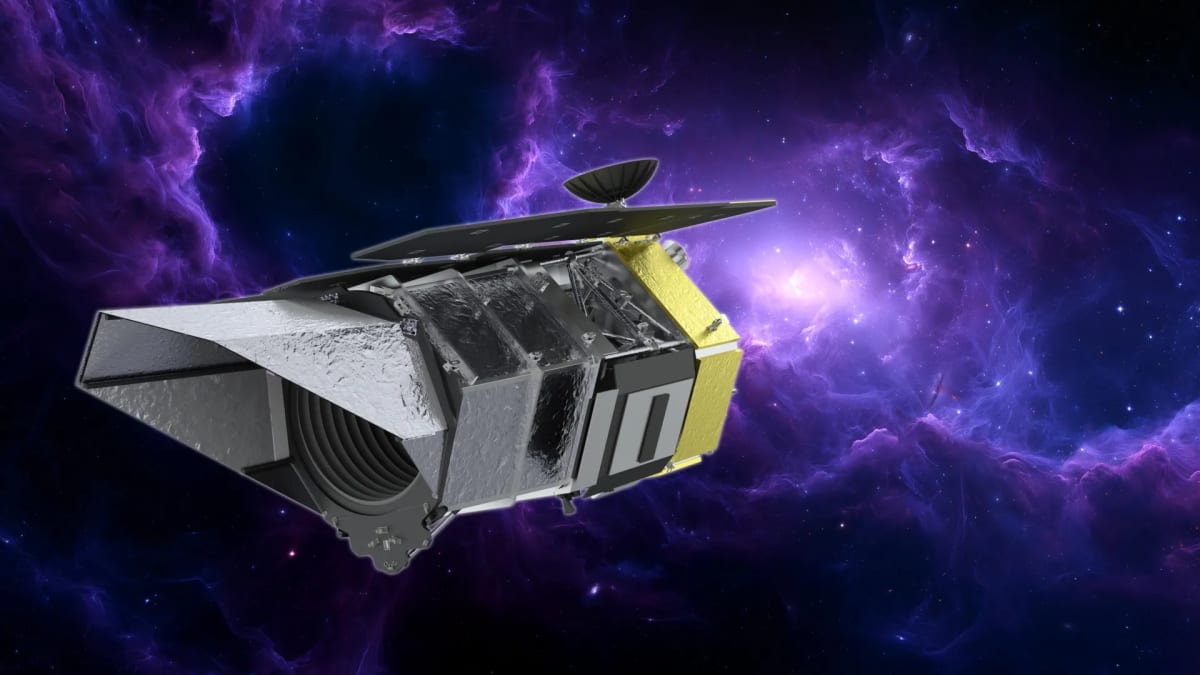
"It is the first time a high-contrast mode of Webb has been used to look at an extragalactic source," said study co-author Julien Girard from the Space Telescope Science Institute. The specialized technique makes it feel like observing with a telescope twice Webb's actual size.
The team led by Enrique Lopez-Rodriguez observed Circinus twice using an instrument that gathers light through seven specially designed hexagonal openings. These openings create patterns that isolate hot dust and reveal structures normally hidden from view.
The data shows that 87 percent of the infrared emission comes from a flattened disk feeding the black hole directly. Less than 1 percent comes from material being blown outward in winds, completely flipping the old model on its head.
Why This Inspires
This breakthrough matters for more than just black holes. Understanding how these cosmic engines feed helps scientists figure out how entire galaxies evolve over billions of years.
When black holes consume material, they release enormous energy back into space. That energy can either trigger new stars to form or shut down star formation entirely, shaping a galaxy's destiny.
By clearly separating what falls into the black hole from what gets pushed away, researchers now have a roadmap for understanding galaxy growth. The team plans to study dozens more black holes using this validated technique.
Previous telescopes couldn't distinguish between the accretion disk, the dusty torus, and the outflows. Everything blended into one fuzzy glow, leaving scientists guessing about the true source of the light.
Now, for the first time, we can see the cosmic kitchen where black holes cook up their power. The findings, published in Nature Communications, give astronomers the statistical sample they need to understand how supermassive black holes relate to their host galaxies.
This clearer window into the universe's most extreme objects brings us one step closer to understanding our cosmic origins.
#
More Images
Based on reporting by Space.com
This story was written by BrightWire based on verified news reports.
Spread the positivity!
Share this good news with someone who needs it