Hubble and Euclid Unveil Stunning New Cat's Eye Nebula Views
Two space telescopes joined forces to capture the most detailed images ever of a dying star's spectacular remains 4,400 light-years away. The new photos reveal intricate shells, jets, and structures that help scientists understand how stars end their lives.
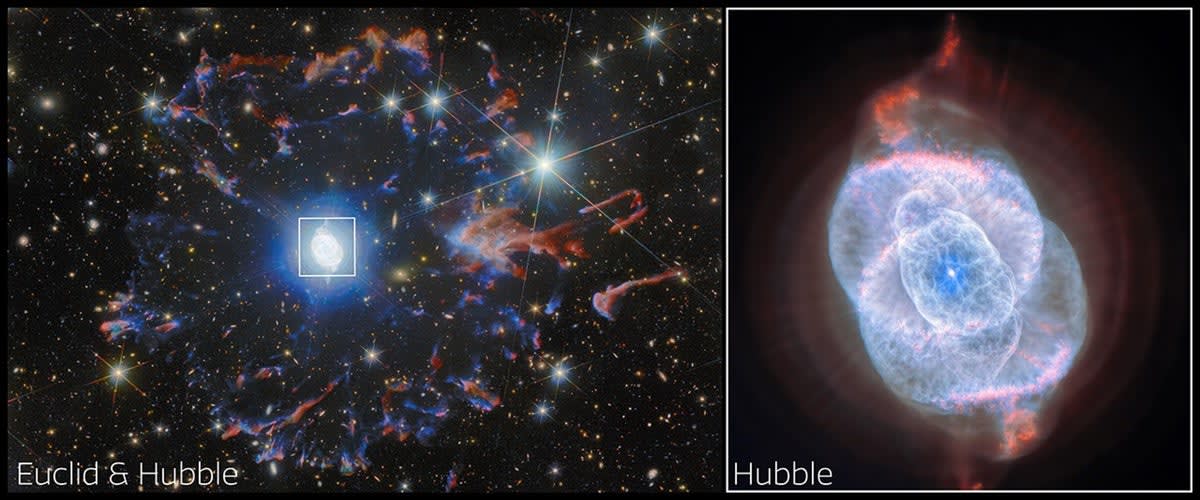
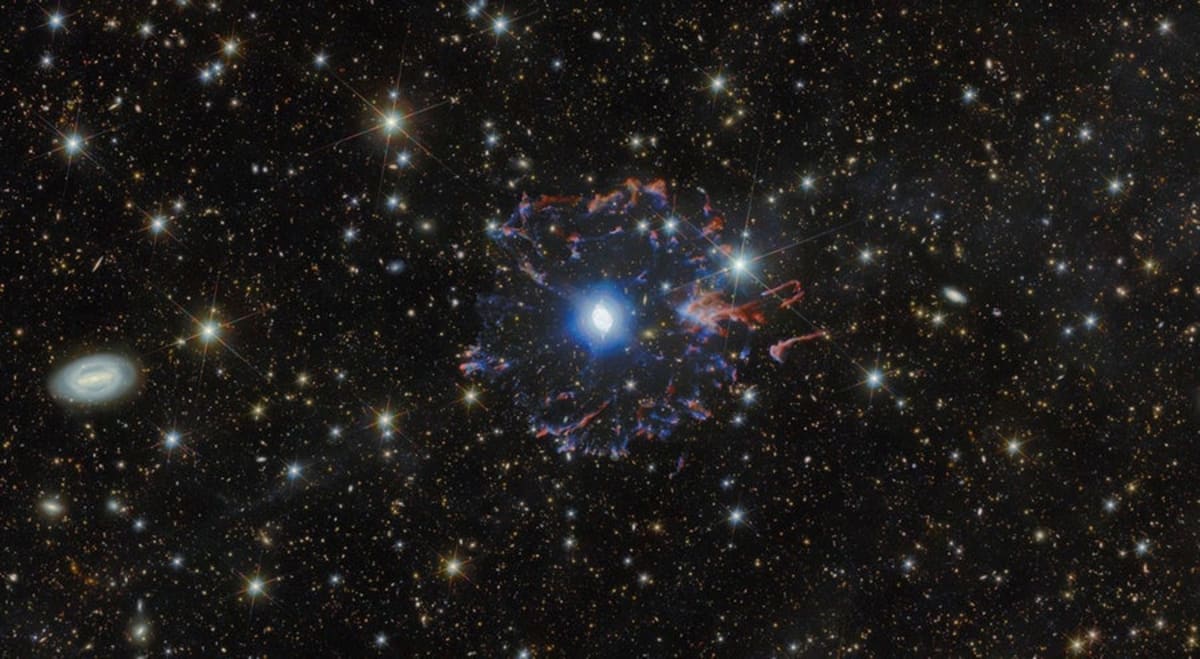
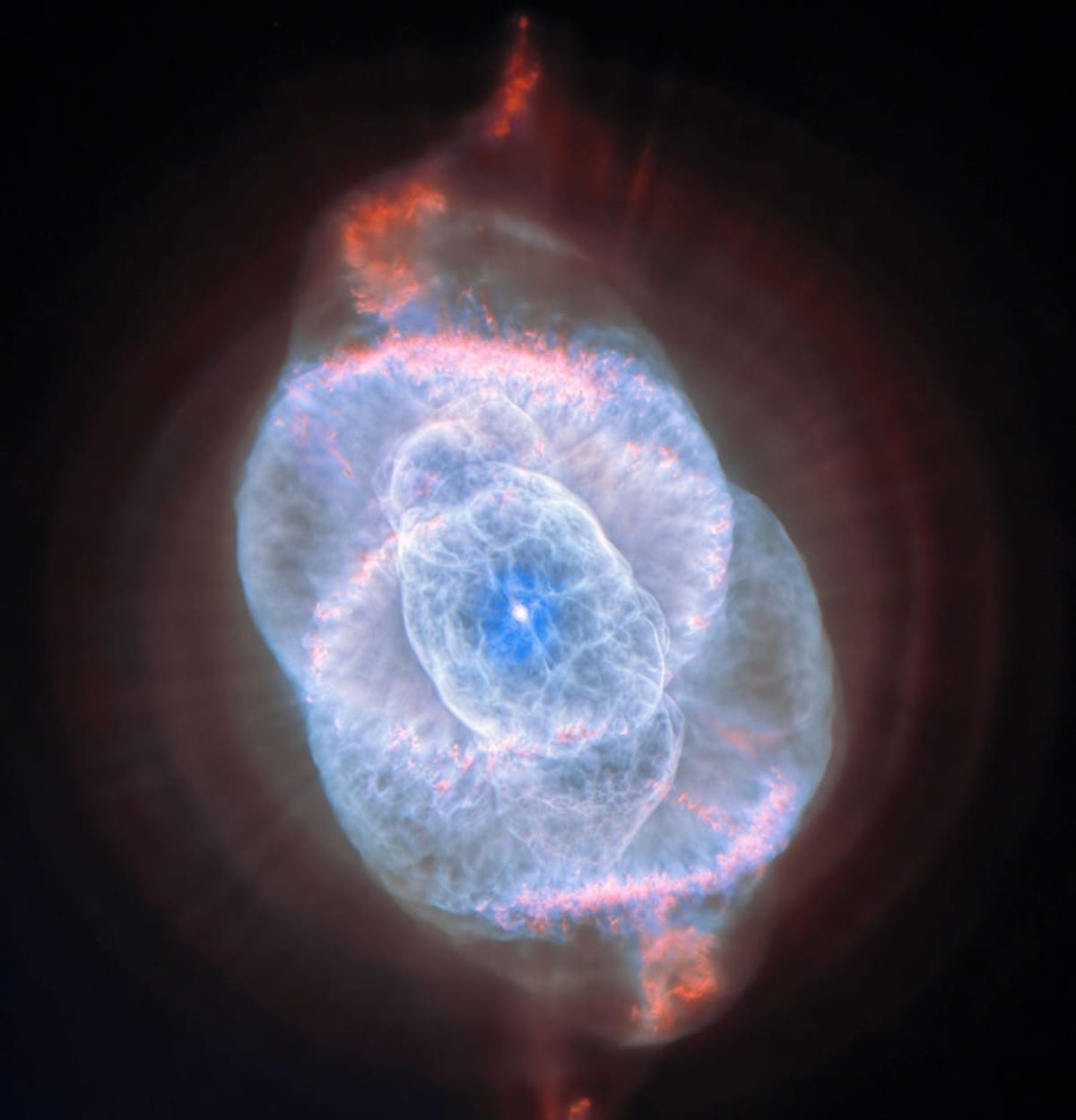
Thirty years after Hubble first photographed one of the most complex nebulas in space, the legendary telescope teamed up with newcomer Euclid to capture even more breathtaking views of the Cat's Eye Nebula.
The new images reveal stunning details never seen before. Swirling red and green clouds of gas form concentric shells around a dying star, while jets of high-speed gas shoot outward in intricate patterns that NASA describes as "almost surreal."
What makes these photos special is the wider view they provide. The telescopes captured a massive halo of material surrounding the nebula's colorful center, and incredibly, this ring was expelled from the star system before the rest of the nebula even formed.
The Cat's Eye Nebula, officially named NGC 6543, sits 4,400 light-years from Earth. Scientists believe it formed from one or possibly multiple dying stars shedding their outer layers into space.
By studying the nebula's structure in unprecedented detail, astronomers can essentially read the cosmic history book of how this star died. The layers and patterns act like fossils, preserving a record of the star's final evolutionary stages.
Why This Inspires
These images remind us that even in death, stars create something beautiful. The glowing shells and intricate structures captured by Hubble and Euclid show the universe transforming endings into new beginnings.
The collaboration between the 35-year-old Hubble and the newer Euclid telescope also demonstrates how different technologies working together can reveal wonders we've never seen before. Each telescope captured different details that, when combined, paint the most complete picture yet of this cosmic marvel.
The observations give scientists crucial clues about stellar evolution and help answer fundamental questions about how stars like our sun will eventually end their lives. Understanding this process helps us grasp our place in the cosmic cycle.
Future generations of stars and planets will form from the material this dying star released into space, continuing the universe's endless cycle of renewal.
More Images
Based on reporting by Scientific American
This story was written by BrightWire based on verified news reports.
Spread the positivity!
Share this good news with someone who needs it