Webb Telescope Runs on Less Power Than Your Kettle
The most powerful space telescope ever built operates a million miles from Earth on the same electricity it takes to boil water. Even more incredible: it had to deploy perfectly the first time, with 344 ways it could have failed.
The James Webb Space Telescope completes groundbreaking discoveries about the universe while using less power than your morning coffee routine.
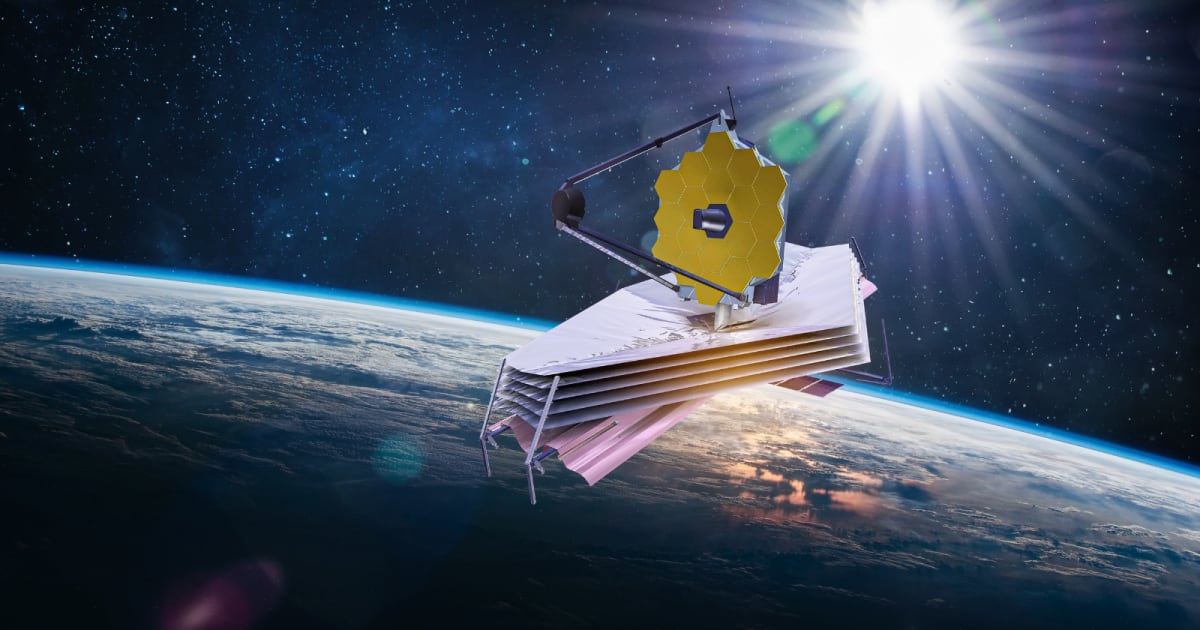
Parked 1.5 million kilometers from Earth, Webb runs on just one kilowatt of power. That's less than most household electric kettles draw while heating water for breakfast.
The engineering feat becomes even more remarkable when you learn what it took to get there. Webb launched with 344 single points of failure, meaning 344 different ways one tiny mistake could have ended the entire mission.
Mike Menzel, Webb's lead mission systems engineer at NASA, kept a detailed list of every mechanism that had to work perfectly. About 80 percent of those critical items were part of the deployment sequence that happened right after launch.
The numbers tell the story of precision: 140 release mechanisms, 70 hinge assemblies, eight deployment motors, 400 pulleys, and a quarter mile of cable. The primary mirror alone required 178 release devices to unfold correctly.
The sunshield proved the most unforgiving part. This tennis court sized structure features five layers of material thinner than a human hair, folded origami style for launch. Each layer had to unfold, separate, and tension perfectly in the freezing vacuum of space.
All 107 sunshield release devices fired successfully. When tensioning completed on January 4, 2022, NASA retired about 75 percent of those potential failure points. The remaining 49 are standard spacecraft systems that will stay on the list for the mission's lifetime.
Why This Inspires
Webb succeeded because thousands of engineers spent years eliminating every possible mistake. Scott Willoughby from Northrop Grumman revealed the team reduced sunshield releases from 109 to 107 through years of careful iteration.
The low power design wasn't about savings. It was about survival. Webb sits too far away for any repair mission, unlike Hubble which shuttle crews visited five times. Everything had to work on the first try, and it did.
The telescope achieves its frigid operating temperatures mostly through passive cooling from the sunshield, not power hungry machines. This elegant solution lets Webb observe the oldest light in the universe while drawing less electricity than heating your breakfast.
Today, Webb continues sending back images that rewrite our understanding of space, proving that brilliant engineering and meticulous preparation can overcome seemingly impossible odds. Every photo it captures is a testament to what humans can accomplish when precision meets perseverance.
More Images


Based on reporting by Google: James Webb telescope
This story was written by BrightWire based on verified news reports.
Spread the positivity!
Share this good news with someone who needs it