Webb Telescope Spots Closest Black Hole Pair Ever Found
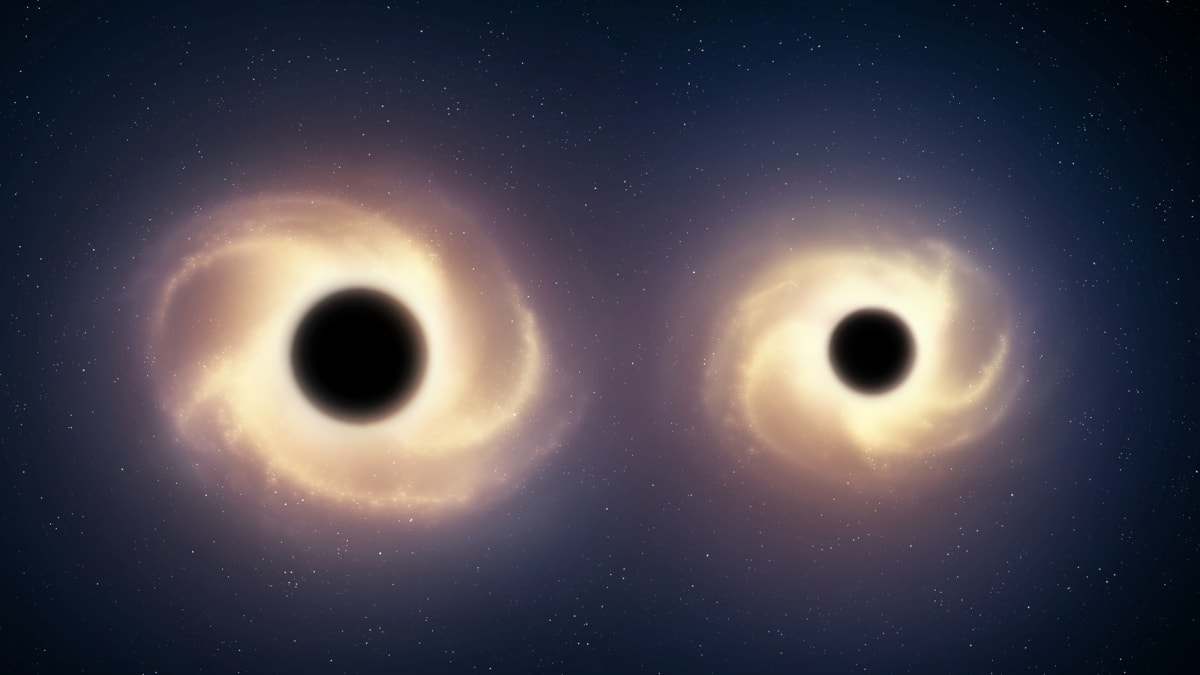
Scientists just discovered two supermassive black holes feeding side by side in the early universe, closer together than any pair ever found at that distance in time. This cosmic duo could finally explain how black holes grew so massive so quickly after the Big Bang.
The James Webb Space Telescope just spotted something that's been hiding in plain sight: two supermassive black holes sitting practically on top of each other in the infant universe.
The pair, collectively called LID-1166, are separated by just 4,900 light years inside a merging galaxy. That might sound far, but it's incredibly close for cosmic objects, especially ones this ancient.
Here's what makes this discovery so exciting: astronomers have long wondered how supermassive black holes grew so ridiculously large so quickly after the Big Bang. These two monsters were caught in the act when the universe was only 1.3 billion years old, actively feeding on gas and dust as their galaxies collided.
Hyewon Suh from the International Gemini Observatory led the team that made this breakthrough. They combined observations from Webb's powerful infrared instruments with data from the ALMA radio telescope array in Chile to confirm what they were seeing.
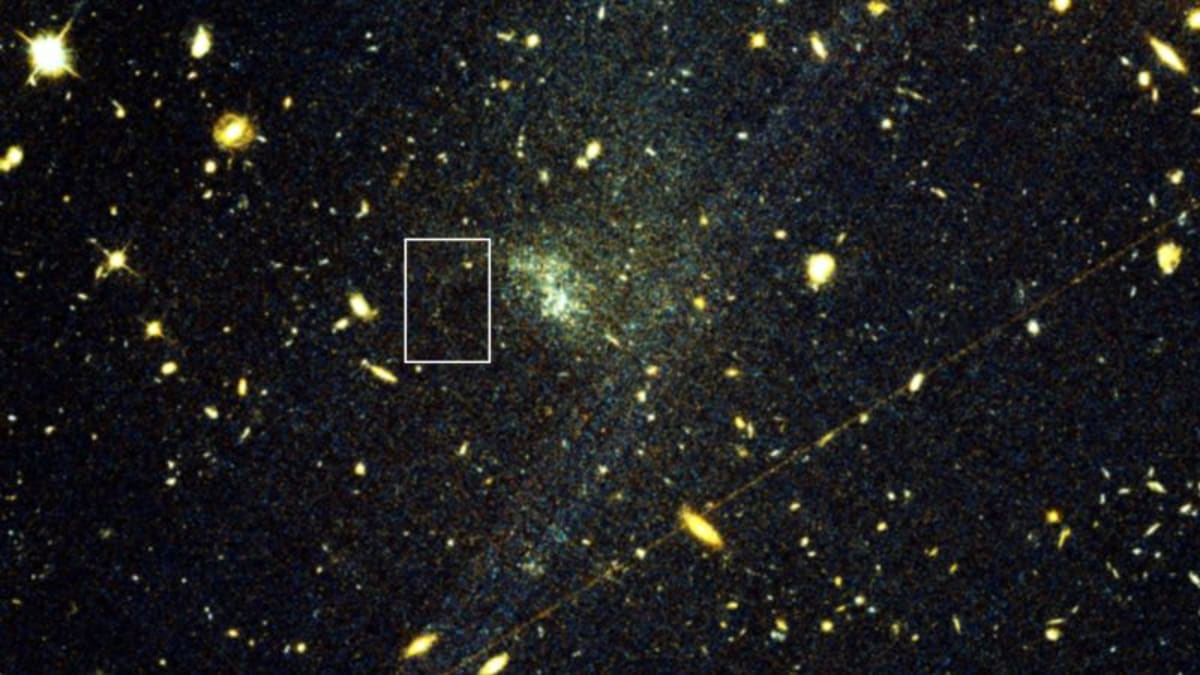
The black holes first appeared as a strong X-ray signal in earlier Chandra telescope surveys, but they were completely invisible in even the deepest Hubble images. Webb's advanced spectroscopy revealed the truth: two separate glowing cores swirling with high-speed gas, the telltale signature of actively feeding black holes.
What really convinced scientists this was a dual system? Each black hole still had its own surrounding galaxy and cold gas pool intact. If one had been kicked out through some violent process, it would appear "naked" and stripped of its environment.
The Bright Side
This discovery opens a window into cosmic growth we've never had before. When galaxies merge, their central black holes eventually meet and combine, creating even larger monsters. LID-1166 shows us this crucial stage happening in real time (cosmically speaking).
Roberto Decarli, a study co-author from the Italian National Institute for Astrophysics, explained that watching these black holes "cannibalizing" their galaxies helps solve the puzzle of rapid early growth. Gas rushes in from the merging galaxies, funneling down to feed both black holes simultaneously.
The discovery only became possible thanks to Webb's unprecedented infrared capabilities. Ground-based telescopes can't see through Earth's atmosphere at these wavelengths clearly enough to spot such distant, close-together objects.
While other black hole pairs have been found from even earlier cosmic times, those were separated by tens of thousands of light years or more. LID-1166 holds the record for proximity at this distance in cosmic history.
The findings have been accepted for publication in Nature Astronomy, and researchers are already planning follow-up observations to study the system in even greater detail.
Discoveries like this remind us that the universe still holds countless secrets waiting to be revealed by our newest cosmic eyes.
More Images

Based on reporting by Live Science
This story was written by BrightWire based on verified news reports.
Spread the positivity!
Share this good news with someone who needs it