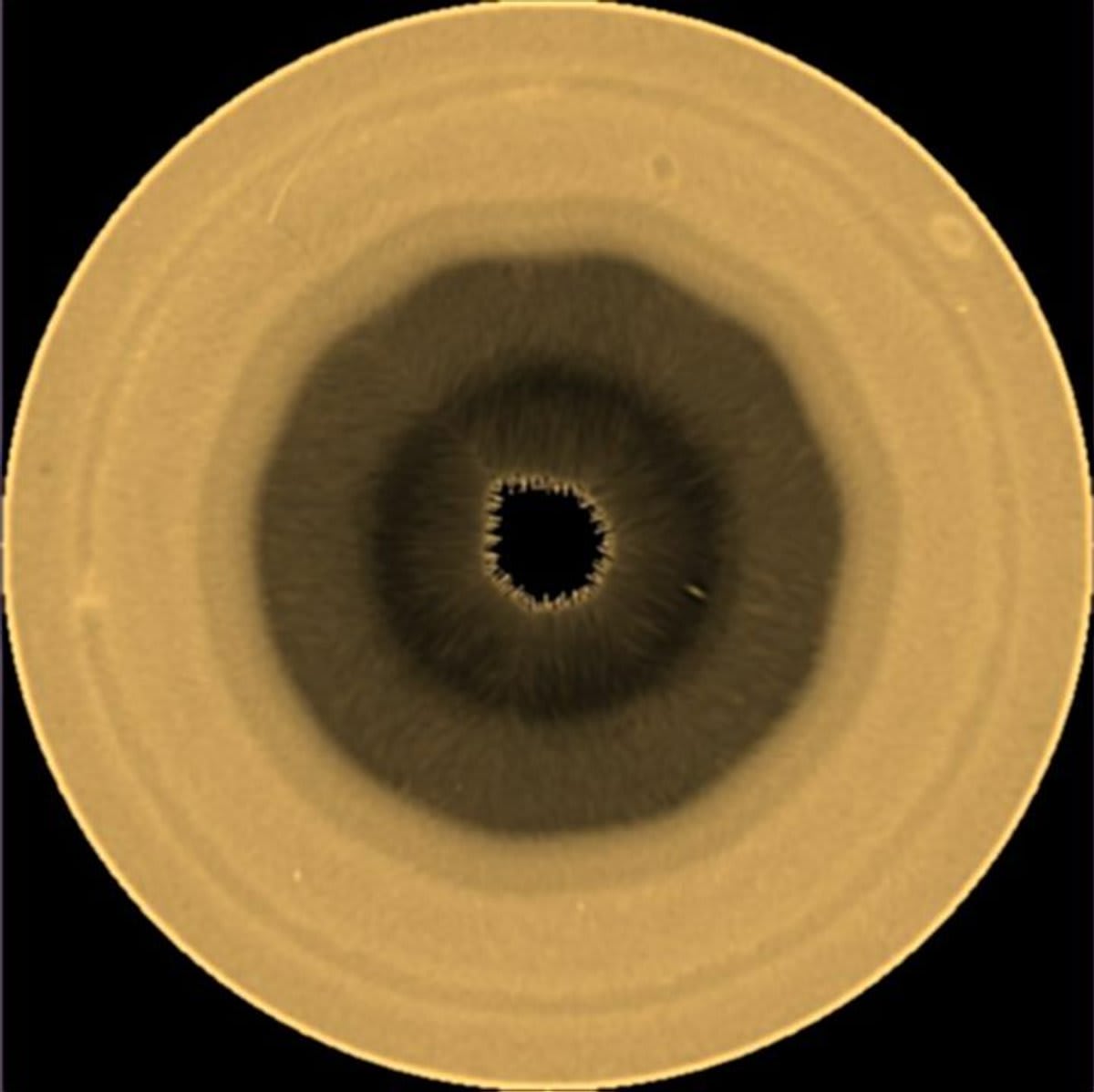
Webb Telescope Spots Methane on Interstellar Comet
NASA's James Webb Space Telescope just caught methane on an interstellar comet for the first time, revealing chemistry unlike anything in our solar system. The discovery shows this cosmic visitor carries secrets from a very different corner of the universe.
Scientists using NASA's James Webb Space Telescope just detected methane gas on an interstellar comet for the first time, opening a new window into the mysterious chemistry of objects from beyond our solar system.
The discovery happened during observations of comet 3I/ATLAS, only the second interstellar visitor scientists have studied up close. Webb's powerful Mid-Infrared Instrument captured the comet's chemical fingerprint on two dates in December as it journeyed back into deep space after swinging past the Sun.
The methane detection surprised researchers because this gas typically evaporates quickly when exposed to sunlight. Its presence suggests the methane was hiding beneath the comet's surface, protected from the Sun's heat until the comet got close enough to warm its deeper icy layers.
Even more unusual, the comet showed extremely high levels of methane compared to water. Scientists rarely see this ratio in comets born in our solar system, hinting that 3I/ATLAS formed in a very different environment with different chemistry.
The telescope also confirmed the comet contains unusually high amounts of carbon dioxide compared to water, another uncommon trait. Together, these findings paint a picture of a world shaped by conditions drastically different from the neighborhood where Earth's comets originated.
Webb watched the comet's activity drop sharply as it moved farther from the Sun. Water production decreased most noticeably because it needs more heat to turn from ice into gas, while the more volatile methane and carbon dioxide lingered longer.
The observations used Webb's Medium Resolution Spectrometer, which splits infrared light into its component colors like a prism. This technique let scientists identify specific gases and map where they appeared around the comet's core, all at the same time.
Why This Inspires
This discovery proves we can now study the chemistry of objects from other star systems in unprecedented detail. Every interstellar visitor carries clues about the conditions where it formed, potentially billions of miles away in environments we can barely imagine.
The methane detection shows Webb's instruments can spot even hidden, volatile materials that previous telescopes might have missed. As more interstellar objects pass through our solar system, scientists will build a library of cosmic chemistry that reveals how planet formation varies across the galaxy.
Each chemical fingerprint brings us closer to understanding whether the building blocks that led to life on Earth are common throughout the universe or uniquely special. This comet's unusual chemistry suggests tremendous diversity exists in the cosmos, with countless worlds forming under wildly different conditions.
The findings remind us that our solar system sits in a much larger universe full of variety and possibility, waiting to be explored one discovery at a time.
More Images



Based on reporting by Google: James Webb telescope
This story was written by BrightWire based on verified news reports.
Spread the positivity!
Share this good news with someone who needs it
%2Fhttps%3A%2F%2Ftf-cmsv2-smithsonianmag-media.s3.amazonaws.com%2Ffiler_public%2F58%2F0a%2F580a77b9-7590-43c5-b70d-e3a590810348%2Fsmithmag-rockwell-edit.jpg)