%2Ffile%2Fattachments%2F2989%2F08Cyrtanthusguthrieae_132942.jpg)
Western Cape Volunteers Hunt Rare Wildflowers to Save Them
A growing team of volunteers is hiking mountains and valleys across South Africa's Western Cape to find and protect endangered wildflowers before they disappear forever. They've already rediscovered species thought to be lost and rescued 35 rare bulbs from a construction site.
Imagine trekking 12 kilometers through wetlands and up a steep mountain slope, all for a glimpse of a rare blue iris that few people have ever seen.
That's exactly what volunteers with the Custodians of Rare and Endangered Wildflowers (CREW) did last week in South Africa's Kogelberg region. Their mission: find and protect the Nivenia stokoei, a seldom-seen bright blue iris, before it vanishes from Earth.
These flower seekers aren't just nature enthusiasts. They're becoming critical players in saving the Cape Floristic Region's biodiversity, one bloom at a time.
The Western Cape is home to thousands of wildflower species that follow ancient natural rhythms. When left undisturbed, they pop up when conditions are perfect, show off their colors, then disappear until their next season to shine.
But human activity keeps disrupting this rhythm. Invasive plants, farming, grazing cattle, and construction are pushing species onto the International Union for Conservation of Nature Red List.
That's where CREW comes in. Led by Ismail Ebrahim, a senior scientist at the South African National Biodiversity Institute, the program monitors rare plants in real time to understand why they're disappearing and how to bring them back.
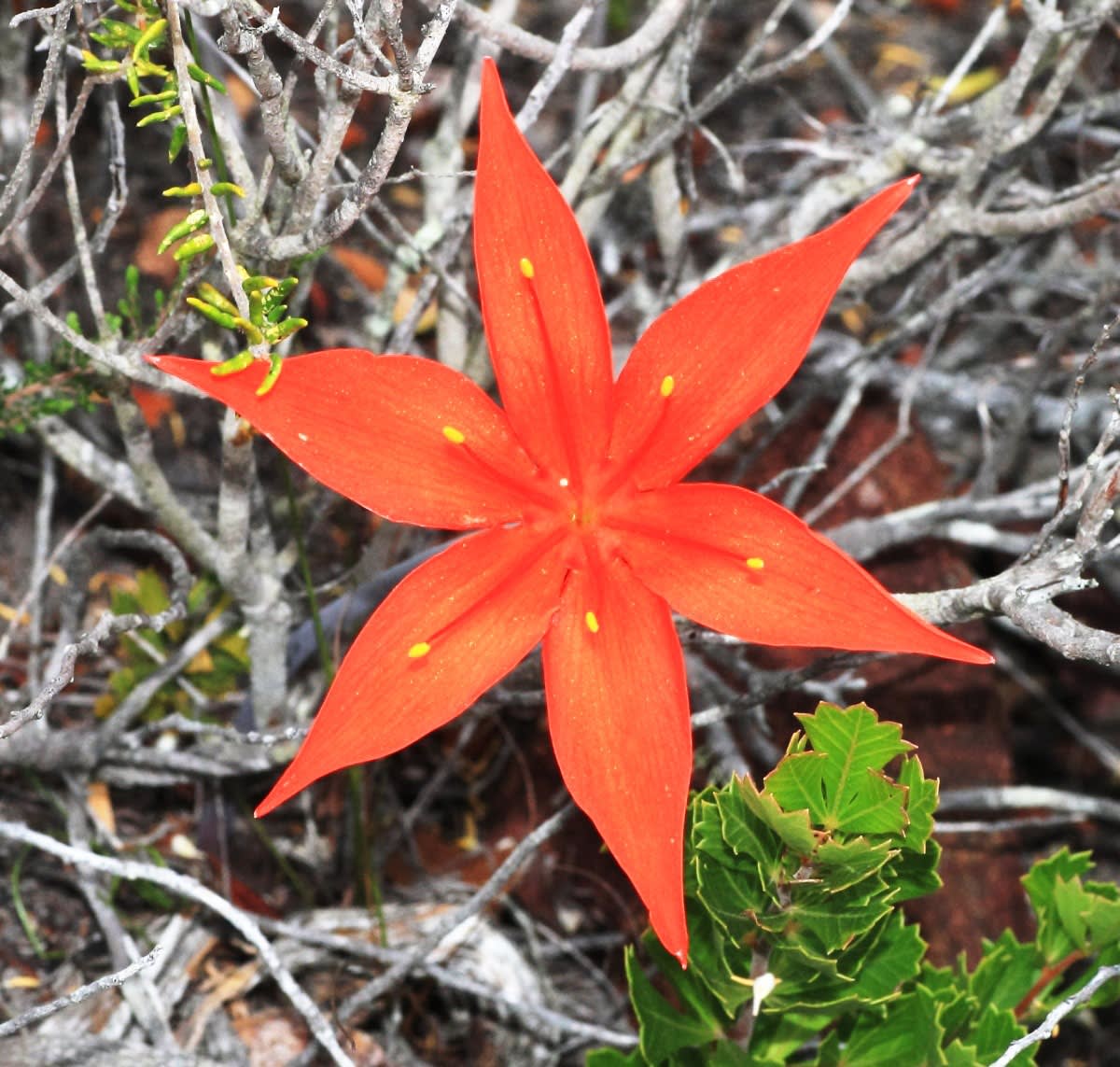
Recently, Ebrahim's team identified the critically endangered Bredasdorp lily, which appeared after fires near Bredasdorp. Fewer than 250 mature plants exist, found only on the lower slopes of Soetmuisberg mountain.
The lily's story shows what's at stake. Much of its former habitat has been converted to crops in just the past 15 years. The remaining plants face overgrazing and invasive species.
Not every mission involves mountain climbing. Volunteer Bridget Doyle recently joined a rescue operation in the dry, hot Karoo region near Quaggafontein, where a new aircraft runway was planned.
The team retrieved 35 indigenous bulbs that would have been destroyed during excavation. All 35 will become propagation stock for future ecological restoration at the site.
Why This Inspires
These volunteers prove that conservation doesn't require a science degree or fancy equipment. It requires people who care enough to hike any distance, climb any mountain, and descend into the steepest valleys to save something beautiful from disappearing.
Their work also creates hope for rediscovery. Some species thought to be extinct are simply waiting for the right conditions and the right people to find them again.
Every bulb rescued, every rare flower documented, and every new population discovered represents a win against biodiversity loss.
One CREW member captured the spirit perfectly: "We are happy to go any distance, up any mountain and into the steepest valleys just to get a glimpse of a rare, endangered plant."
More Images
%2Ffile%2Fattachments%2F2989%2F08Nivenia_stokoei_13939121_530607.jpg)
%2Ffile%2Fattachments%2F2990%2FDM-10042026-001_386146.jpg)

Based on reporting by Daily Maverick
This story was written by BrightWire based on verified news reports.
Spread the positivity!
Share this good news with someone who needs it