Whale Sharks Are Serial Snackers, Dorsal Cameras Show
Scientists strapped cameras to whale sharks' fins and discovered the ocean's biggest fish is constantly snacking throughout the day. The groundbreaking footage revealed six feeding behaviors never seen before.
The ocean's biggest fish turns out to be its biggest snacker, and we finally have the footage to prove it.
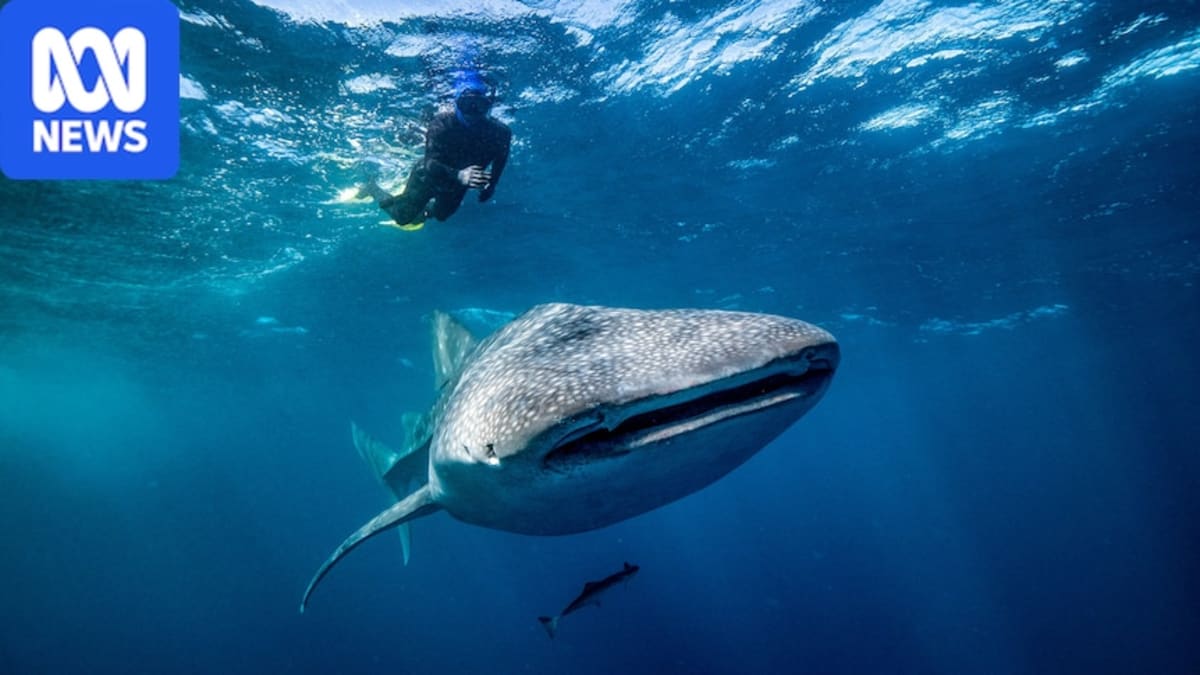
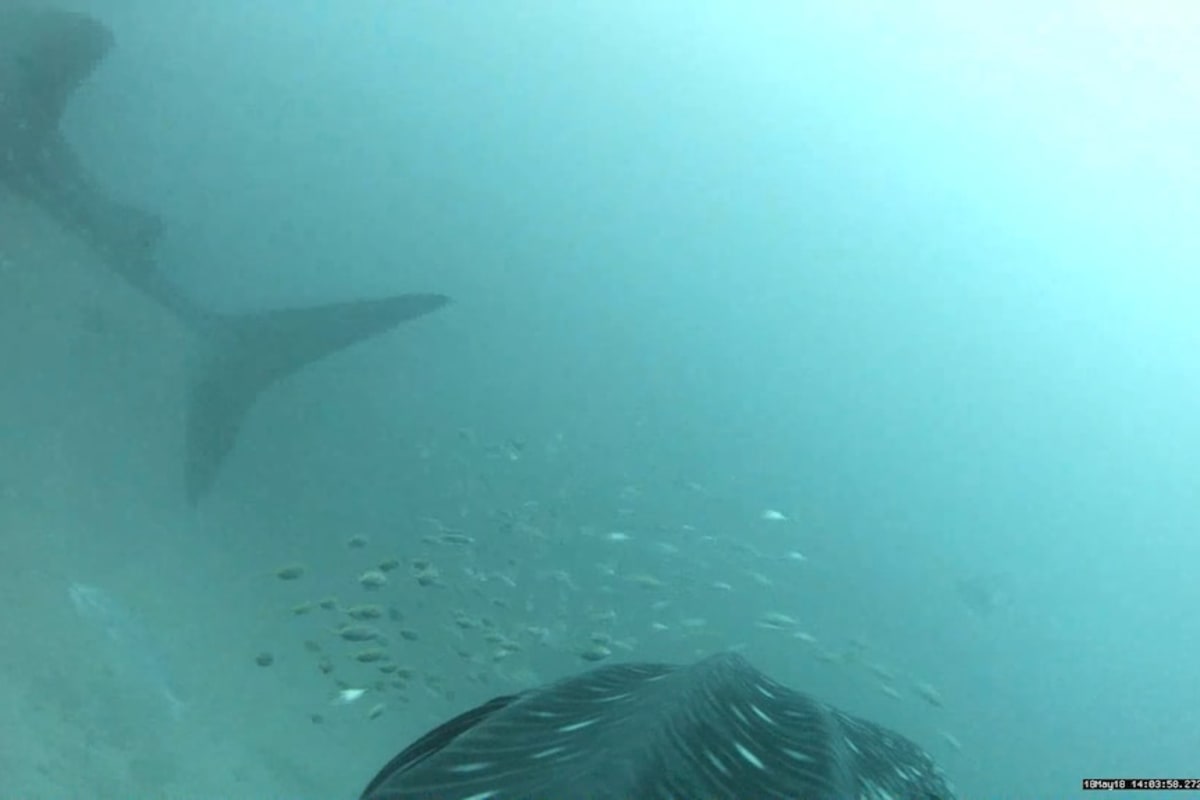
Australian researchers attached cameras to the dorsal fins of five whale sharks swimming off Ningaloo Reef, capturing the first-ever video from the gentle giants' perspective. What they saw changed everything scientists thought they knew about how these massive creatures eat.
Lead researcher Christine Barry from the Australian Institute of Marine Science reviewed the footage alongside 100 other studies. Her team identified 36 different feeding behaviors, including six that had never been recorded before. That's a wider variety than baleen whales or basking sharks, which are also filter feeders.
The secret to whale sharks' success? They're incredibly flexible eaters. Unlike their cold-water cousins who feast on abundant krill, whale sharks live in tropical waters where food is scattered and sparse.
"They change their feeding style depending on how much feed is in the water," Barry explained. The sharks constantly respond to whatever prey crosses their path rather than sticking to scheduled mealtimes.
The footage showed whale sharks slowly sinking toward the sea floor with mouths wide open, catching prey at depths of 100 meters. When they encounter a bigger food source, they switch strategies for a full meal. But mostly, they just keep snacking.
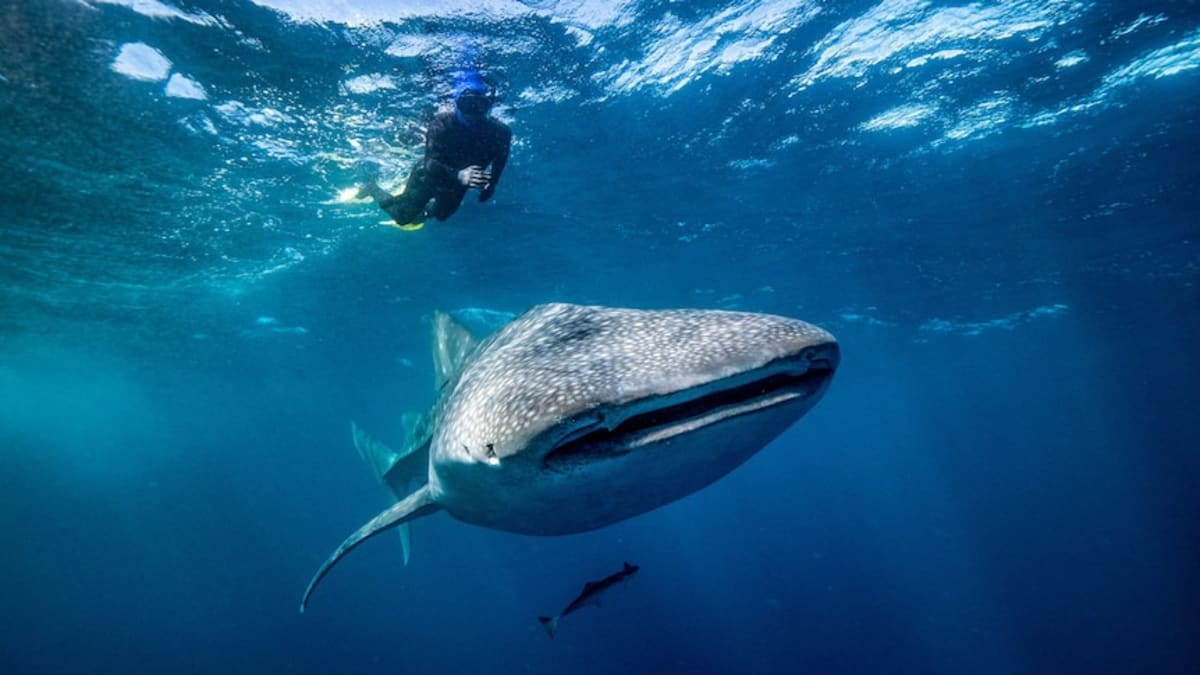
Coral Bay Ecotours photographer Laura Gourgas witnessed this flexibility firsthand during her craziest day at work. Two whale sharks discovered a giant bait ball and put on a show, sometimes circling it, sometimes swimming straight through with mouths agape.
The Ripple Effect
This discovery reveals Ningaloo Reef as a far more critical feeding ground than researchers originally believed. While whale sharks migrate across multiple countries, they receive exceptional protection and management at Ningaloo during their seasonal visits.
Understanding how these endangered animals feed helps conservation efforts worldwide. The new behaviors documented in tropical waters show how whale sharks have evolved unique survival strategies that let them thrive where other filter feeders cannot.
The research also opens doors for future discovery. Scientists now want to understand how whale sharks feed at night, a mystery these dorsal cameras may soon help solve.
For now, the footage offers a rare glimpse into the daily life of creatures that can grow longer than a school bus yet survive by nibbling constantly on some of the ocean's tiniest prey.
More Images


Based on reporting by ABC Australia
This story was written by BrightWire based on verified news reports.
Spread the positivity!
Share this good news with someone who needs it