Why Hard Wins Feel Better: Thomas Paine Had It Right
A 250-year-old quote from Thomas Paine explains why our toughest challenges create the most meaningful victories. His wisdom is helping modern teams, students, and communities turn struggles into lasting strengths.
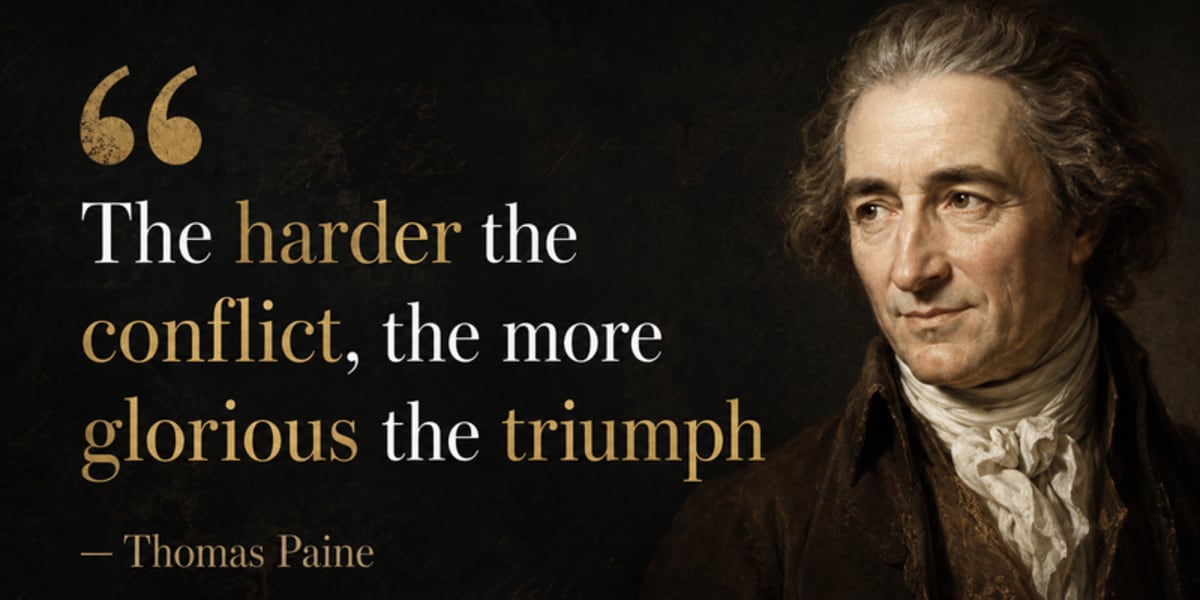
"The harder the conflict, the more glorious the triumph." Thomas Paine wrote those words during the American Revolution, but they're lighting up workplace chats and classroom walls today for good reason.
The founding father wasn't just offering comfort. He was describing something we're rediscovering in 2024: difficult problems don't just test us, they transform us in ways easy wins never could.
When a small tech company recently migrated their legacy systems to the cloud, the project ran months over schedule. Frustration ran high, and the team wondered if it was worth the pain. But when they finally crossed the finish line, they'd gained something unexpected: automated testing, crystal-clear documentation, and a release process they could repeat for every future project.
The struggle had built capabilities that would save them months of work down the road. The harder conflict really did create a more glorious triumph.
This pattern shows up everywhere. A college student fails statistics, then retakes it while keeping a daily problem log and meeting with a study group. She doesn't just pass the second time around. She leaves with data analysis skills that land her a competitive internship.
A neighborhood plagued by flooding coordinates with local officials to map every drain, track rainfall patterns, and schedule regular cleanups. The floods don't disappear entirely, but incidents drop sharply, and residents now have a tested playbook for the next storm.
Why This Inspires
Paine understood that "glorious" doesn't mean flashy or heroic. It points to something deeper: the competence gained under pressure, the trust earned through shared struggle, and the systems improved along the way.
Hard challenges force clearer thinking because there's no room for weak assumptions. Teams must decide what truly matters, what can wait, and what to finish first. That process feels exhausting in the moment, but it sharpens decision-making for every challenge that follows.
The struggles also create shared memory. People remember how problems were solved, what failed spectacularly, and which approaches actually worked. That institutional knowledge becomes gold, cutting solution time dramatically when similar issues arise.
One workplace psychologist now recommends keeping a "difficulty ledger" during tough projects. Create three columns: obstacle faced, fix attempted, and lesson learned. Review it when the project ends, and you'll see the hidden assets the conflict created.
You'll make the triumph measurable and the next challenge more manageable.
Paine's insight matters today because modern challenges feel just as intense as revolutionary ones: rapid technological change, economic pressure, complex social problems. When difficulties escalate, motivation naturally drops. But reframing the moment changes everything. The scale of the struggle can directly increase the meaning of the result.
The triumph isn't just crossing the finish line; it's who you became and what you built while getting there.
More Images

Based on reporting by YourStory India
This story was written by BrightWire based on verified news reports.
Spread the positivity!
Share this good news with someone who needs it