Kashmir's Floating Market Thrives After 600 Years
Every morning at 5 AM, hundreds of boats gather on Dal Lake for a floating market that has survived six centuries of war, partition, and upheaval. The Hanji community's tradition has outlasted empires because it's more than commerce—it's their identity.
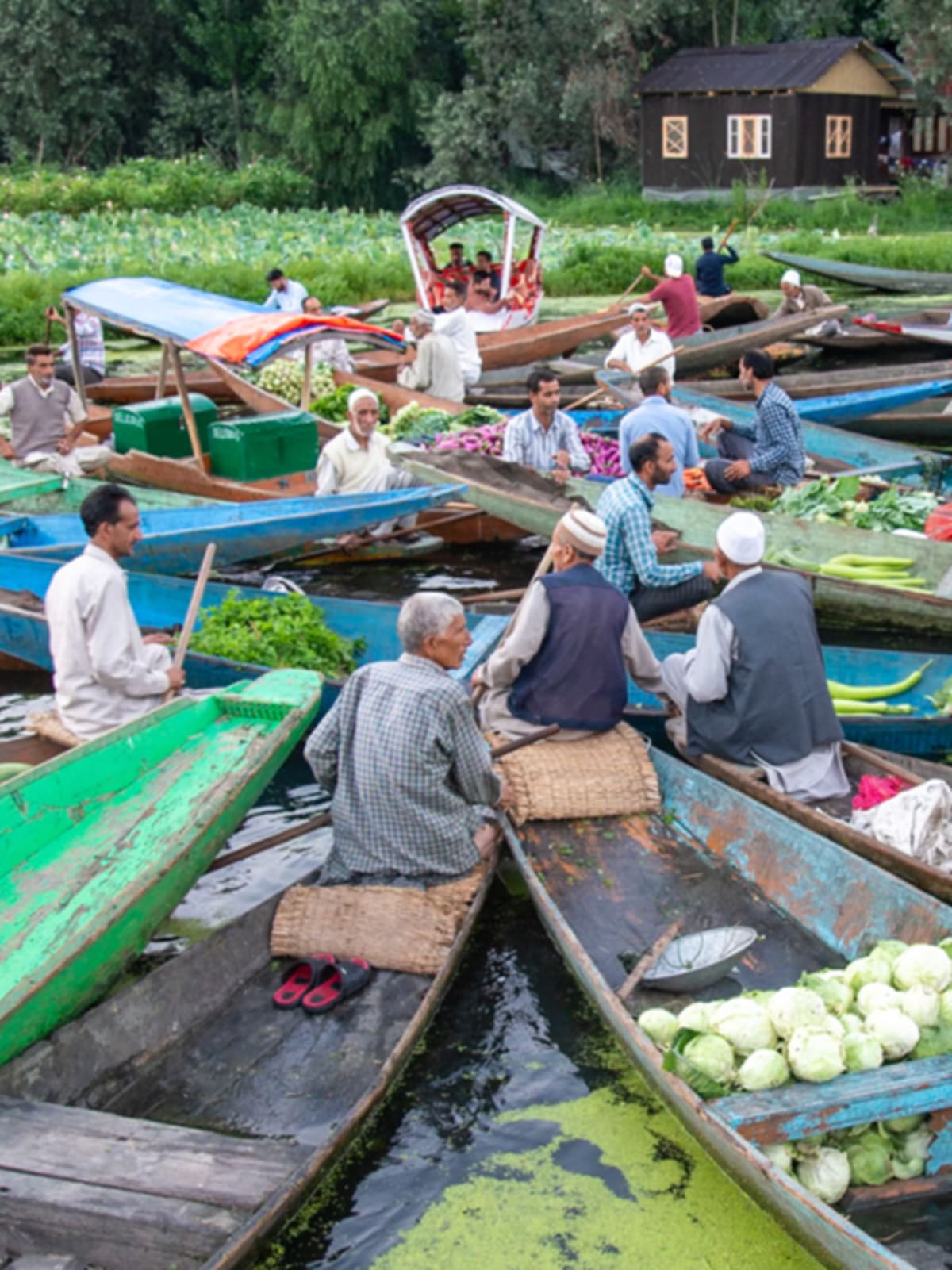
Before sunrise breaks over Kashmir's Dal Lake, hundreds of wooden boats called shikaras glide across the water carrying vegetables, flowers, and hope. This floating market has opened at 5 AM every single morning for over 600 years.
The market began in the 14th century, created by the Hanji community who made Dal Lake their home. These original lake dwellers needed a way to trade their harvests, so they built a marketplace that floats.
When the Mughal emperors arrived in 1586 and constructed their famous gardens around the lake, they left the water trade untouched. The market was already thriving, already essential to Srinagar's survival.
Through the next four centuries, empires rose and fell around Dal Lake. Afghan rulers came in the 1750s, then Sikh annexation in 1819, then British colonial control. The floating market kept opening before dawn, kept feeding the city.
British officers documented the phenomenon in their 19th century records, fascinated by its perfect self-regulation. No government ran it, yet it worked flawlessly.
The chaos of 1947's Partition reshaped all of Kashmir, displacing communities and redrawing borders overnight. Within days, the boats returned to their spots on the water.
The most remarkable test came in the 1990s during armed insurgency. Tourism collapsed, curfews locked down Srinagar, and violence paralyzed normal life. Still, the shikaras gathered at 5 AM.
Why This Inspires
The floating market endured because the Hanji people never saw it as just a place to sell vegetables. It became the living center of their culture, their identity woven into every sunrise gathering.
For 600 years, no war proved strong enough to sink their tradition. No political upheaval could stop them from pushing their boats onto the lake before dawn. The market survived because it mattered more than survival itself.
Today, photographers capture the scene looking much as it did centuries ago: wooden boats clustered together, voices haggling over prices, produce changing hands on the water. The method hasn't changed because it doesn't need to.
The Hanji community preserved something rare in our modern world—a direct, unbroken connection to their ancestors' way of life. Every boat that launches at 5 AM carries 600 years of resilience with it.
Based on reporting by The Better India
This story was written by BrightWire based on verified news reports.
Spread the positivity!
Share this good news with someone who needs it