Wilmington Honors Althea Gibson's 1957 Wimbledon Win
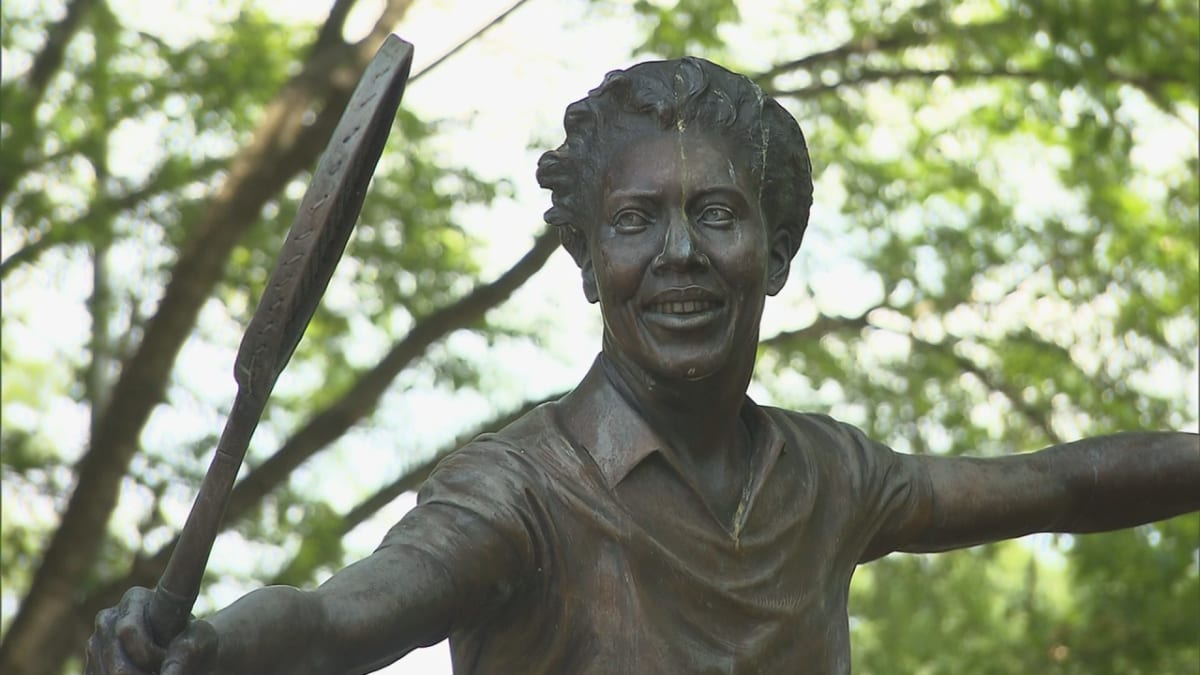
Sixty-nine years ago today, Althea Gibson became the first Black tennis player to win Wimbledon, breaking racial barriers that once kept her off local courts. The Wilmington native trained in a mentor's backyard because segregation banned her from public facilities.
When Althea Gibson lifted the Wimbledon trophy on this day in 1957, she didn't just win a tennis match. She shattered a color barrier that had stood for nearly a century, becoming the first Black player to claim the singles championship.
Gibson's path to greatness began in Wilmington, North Carolina, where she lived from 1946 to 1949 and graduated from Williston High School. But her journey was far from smooth.
Local tennis courts were closed to her because of segregation. New Hanover's public courts and every other white facility turned her away. Instead, Gibson found a champion in Dr. Eaton, a professional tennis player who opened his backyard court to the young athlete.
"She had to practice at Dr. Eaton's home. He had a tennis court in his backyard," said Sonya Patrick with the Southeastern National Black Leadership Caucus. "He was able to train her to be one of the greatest."
That backyard training paid off beyond anyone's wildest dreams. Gibson defended her Wimbledon title in 1958, proving her first win was no fluke. Over her career, she collected 11 Grand Slam titles across Wimbledon, the U.S. Open, and the French Open in both singles and doubles.
The Ripple Effect
Gibson's victories opened doors that had been locked tight for generations of Black athletes. Her success came nearly a decade before the Civil Rights Act of 1964, at a time when tennis clubs and tournaments routinely excluded players based on race.
Every time a Black player steps onto a Grand Slam court today, they walk through doors Gibson forced open. Her perseverance in the face of discrimination showed that excellence could not be denied, even by the most stubborn barriers.
The Wilmington community remembers her not just as a champion, but as proof that talent and determination can overcome institutional racism. Local leaders continue to share her story, ensuring new generations understand the price she paid for her achievements.
Gibson's legacy reminds us that progress often starts with one person refusing to accept the limits others try to impose.
More Images




Based on reporting by Google News - Historic Victory
This story was written by BrightWire based on verified news reports.
Spread the positivity!
Share this good news with someone who needs it