Wind Turbines Get Built-In Underwater Data Centers
A startup is building data centers inside floating wind turbines in the North Sea, using ocean water to cool servers while turbine power keeps them running. It's a creative answer to the world's growing hunger for clean energy and computing power.
Imagine a wind turbine that doesn't just generate power but uses it too, right there in the ocean.
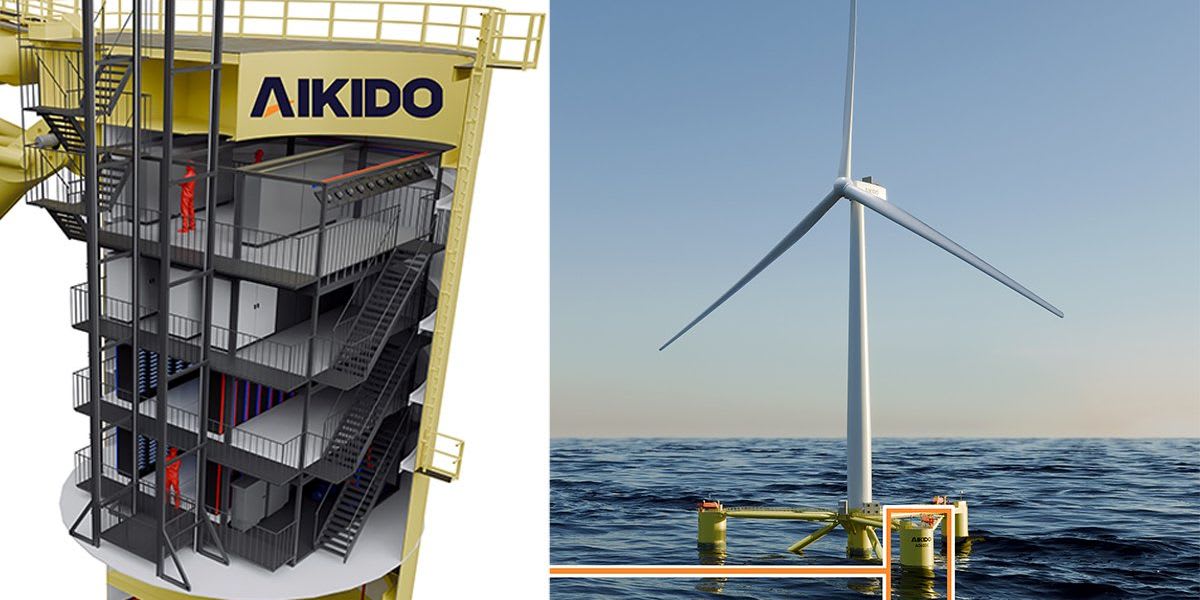
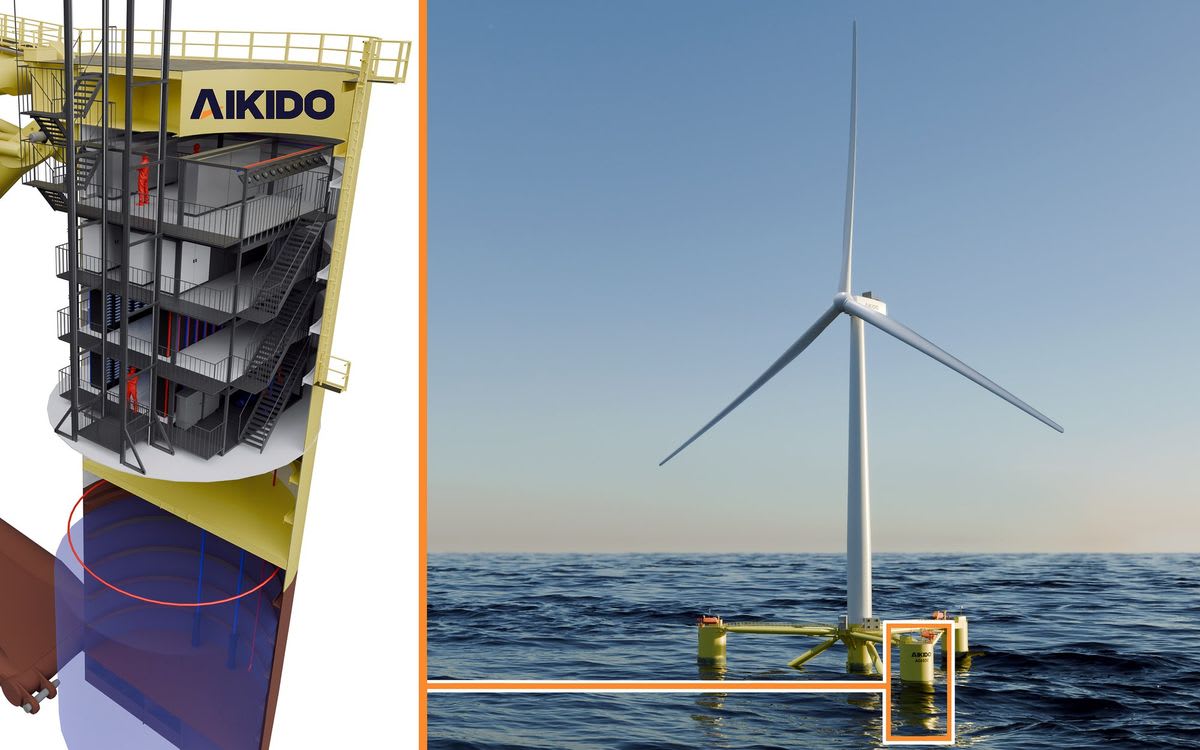
San Francisco startup Aikido Technologies just announced plans to house data centers inside the underwater tanks that keep floating wind turbines upright. The turbines will power the servers directly, while cold ocean water keeps everything cool.
The company's first prototype launches in the North Sea off Norway by year's end. It's small at 100 kilowatts, but a much larger 15 to 18 megawatt project could follow off the UK coast by 2028.
Here's how it works: Aikido's football-field-sized platform holds a turbine in the center with three legs extending outward like a tripod. At the end of each leg sits a ballast tank that reaches 20 meters deep into the ocean.
The data centers fit in the upper part of each tank, with room for 3 to 4 megawatts of computing power per tank. Fresh water from tanks below gets pumped up to cool the servers using liquid cooling technology.
When the water warms up, it flows back down where the cold ocean cools it again through the steel tank walls. It's a closed loop system that never touches the salty seawater.
The timing couldn't be better. Data centers are eating up massive amounts of energy as AI computing explodes, while countries want more control over both their energy production and data storage.
"A lot of energy in the clean-energy space is focused on powering AI data centers quickly, reliably, and cleanly," says Ramez Naam, a clean energy investor. Europe especially wants to keep AI computing within its borders while building renewable power.
The Ripple Effect spreads in multiple directions. Floating platforms can access deeper waters where winds blow stronger and more consistently than close to shore. They dodge the not-in-my-backyard complaints that plague both onshore wind farms and traditional data centers.
The design builds on floating wind technology that's evolved since Norway's Equinor built the world's first floating wind farm in 2017. These newer platforms don't need to extend as deep, making them easier and cheaper to build.
Challenges remain, of course. The salty marine environment is tough on equipment, with corrosion and debris to manage. Some server components can't use liquid cooling yet and need traditional air conditioning.
CEO Sam Kanner sees opportunity in the pressure. "We have this power from the wind. We have free cooling," he says. "This crunch in the next five years is an opportunity for us to prove this out and supply AI compute where it's needed."
The approach might face different environmental reviews than land-based centers, particularly around heat discharge effects on marine life. But the closed-loop freshwater system could sidestep many typical water usage concerns.
Sometimes the best solutions come from combining two needs into one smart answer.
More Images
Based on reporting by IEEE Spectrum
This story was written by BrightWire based on verified news reports.
Spread the positivity!
Share this good news with someone who needs it