World Bank: Closing Digital Gap Can End Extreme Poverty
New research shows internet access dramatically increases employment and wages for the world's poorest people, but only 16% living in extreme poverty can get online. Countries expanding digital access to rural and low-income communities are unlocking pathways out of poverty for millions.
The world's poorest people are missing out on a proven escape route from poverty, and the solution is closer than we think.
New World Bank research reveals that internet access significantly boosts employment, wages, and economic opportunity for people living on less than $3 per day. Studies from Tanzania and Nigeria show mobile broadband coverage shifts workers from low-paying farm jobs to higher-income employment and increases household consumption. In Jordan, expanding mobile broadband boosted women's workforce participation.
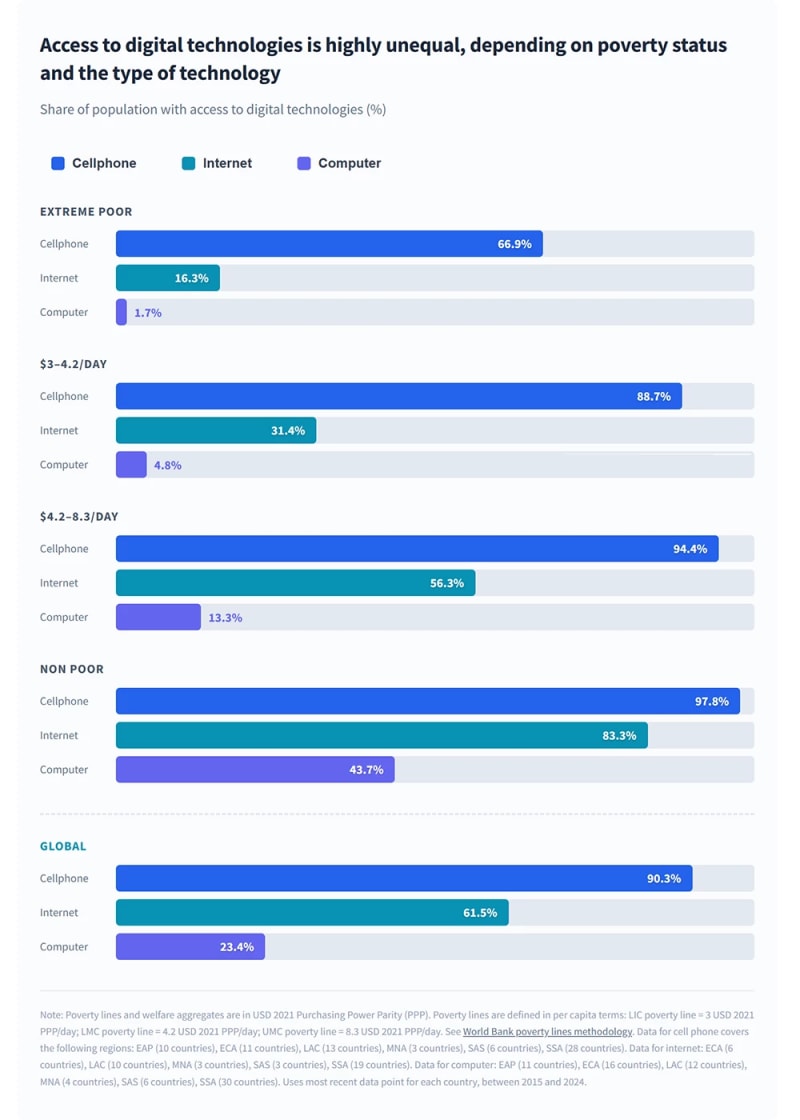
The challenge is getting these life-changing tools to the people who need them most. While nearly everyone now owns a cellphone, only 16% of people in extreme poverty have internet access. Computer ownership is virtually nonexistent among the poorest households.
Cost remains the biggest barrier. People living in extreme poverty spend more than 5% of their income just on internet access, five times the burden shouldered by wealthier households. At least 1.18 billion people lack electricity needed to power digital devices.
Rural communities face the steepest climb. Internet access reaches 75% of urban residents but only 39% of rural populations. Agricultural workers, who could benefit most from digital tools to access markets and improve farming practices, are nearly shut out. Just 30% report having internet access.
The Ripple Effect
When connectivity reaches excluded communities, the benefits multiply quickly. Farmers use mobile information services to secure better prices for their crops. Workers find job opportunities beyond their immediate area. Entrepreneurs reach new markets and customers.
The timing matters more than ever. Over the next decade, more than 1 billion young people in developing countries will reach working age. Digital access could help bridge the gap between job seekers and opportunities, especially as technology reshapes labor markets worldwide.
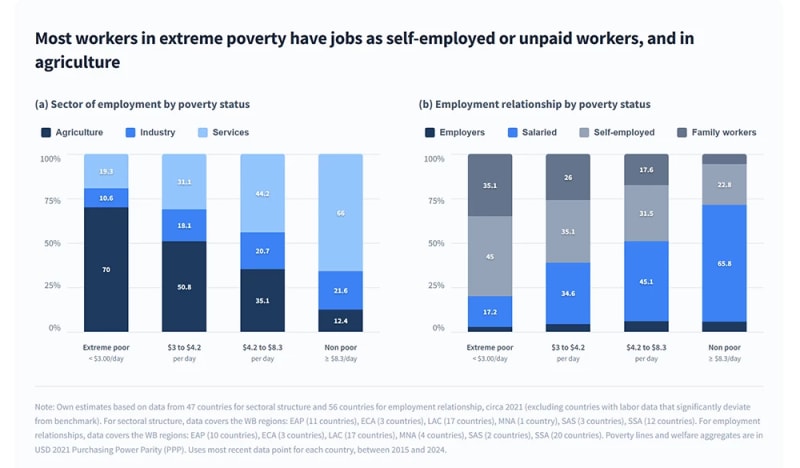
Seventy percent of people living in extreme poverty work in agriculture, often as smallholder farmers with limited market connections. Eighty percent work independently or in unpaid family roles. Digital tools that improve their market access and productivity could lift entire communities out of poverty.
The path forward is clear and achievable. Countries investing in affordable internet infrastructure, rural connectivity, and digital literacy programs are opening doors that transform lives. When the digital economy includes everyone, not just the already connected, technology becomes what it should be: a bridge to opportunity for all.
More Images

Based on reporting by Google News - Poverty Reduction
This story was written by BrightWire based on verified news reports.
Spread the positivity!
Share this good news with someone who needs it