World's First Ethanol Ship Cuts Emissions by 90%
A Brazilian mining company just ordered the world's first ocean-going vessels powered by ethanol, slashing shipping emissions by up to 90%. The groundbreaking ships set sail in 2029.
The shipping industry just took its biggest leap toward clean oceans in history.
Brazilian mining giant Vale and China's Shandong Shipping Corporation announced an agreement to build the world's first ethanol-powered ocean vessels. These massive ships, stretching longer than three football fields, will cut carbon emissions by around 90% compared to traditional heavy fuel oil when they launch in 2029.
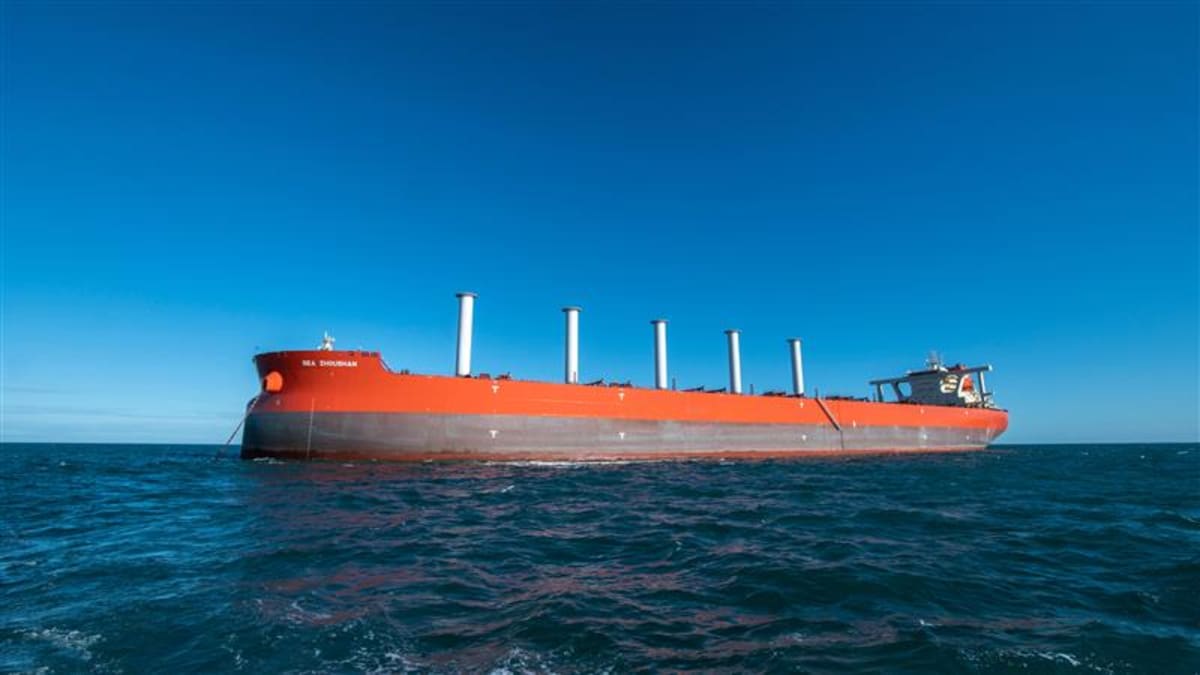
The two companies signed 25-year contracts for an initial pair of vessels, with options for more ships to follow. Each Guaibamax vessel will measure 340 meters long and carry 325,000 tonnes of iron ore across the world's oceans.
What makes these ships truly revolutionary is their flexibility. Beyond ethanol, they can run on methanol and heavy fuel oil, and their design allows future conversion to liquefied natural gas or ammonia as those technologies improve.
The vessels will also harness wind power through five rotor sails, which capture wind energy to reduce fuel consumption even further. Combined with more efficient engines, improved hull design, and other smart technologies, these second-generation ships will achieve 15% lower emissions than Vale's current fleet, which already ranks among the world's most efficient.
"Vale's pioneering efforts towards decarbonization in maritime transport are guided by a strategy that combines flexibility and efficiency," says Rodrigo Bermelho, Vale's Director of Shipping. The company is testing ethanol not just at sea, but in trucks at mining operations and locomotives on railways.
The Ripple Effect
This single announcement ripples far beyond two ships. Shipping accounts for nearly 3% of global carbon emissions, and the industry has struggled to find clean fuel alternatives that work for long ocean voyages.
Vale's commitment proves that large-scale maritime decarbonization is possible right now, not decades away. Since 2020, the company has invested $1.4 billion to reduce emissions across its operations, with a pledge to cut supply chain emissions by 15% by 2035.
The vessels will be built by China State Shipbuilding Corporation, bringing together Brazilian, Chinese, and global expertise to tackle one of shipping's toughest challenges. This collaboration creates a blueprint that other shipping companies worldwide can follow.
Vale has been testing these technologies through its Ecoshipping program, a research initiative designed to share findings with the entire maritime industry. When one company discovers what works, everyone benefits.
The maritime industry is watching closely, because if ethanol-powered ships can haul iron ore across oceans efficiently and affordably, they can transport almost anything.
Based on reporting by Google News - Emissions Reduction
This story was written by BrightWire based on verified news reports.
Spread the positivity!
Share this good news with someone who needs it