World's Largest Solar Telescope Reveals Sun's Hidden Swirls
Scientists just captured the sharpest images of the sun's surface ever taken, revealing thousands of tiny whirlpools that have been hiding in plain sight for 150 years. The discovery could solve a major mystery about our star's intense heat.
Scientists just captured the most detailed view of the sun's surface ever recorded, and it revealed something stunning that's been there all along.
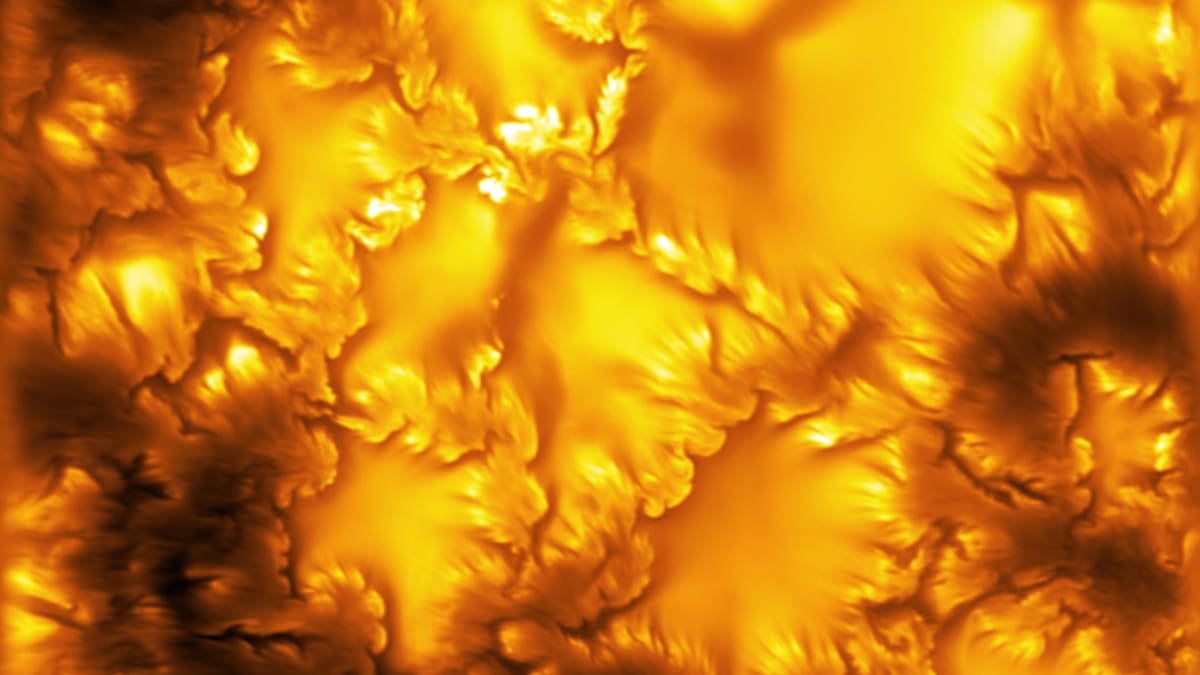
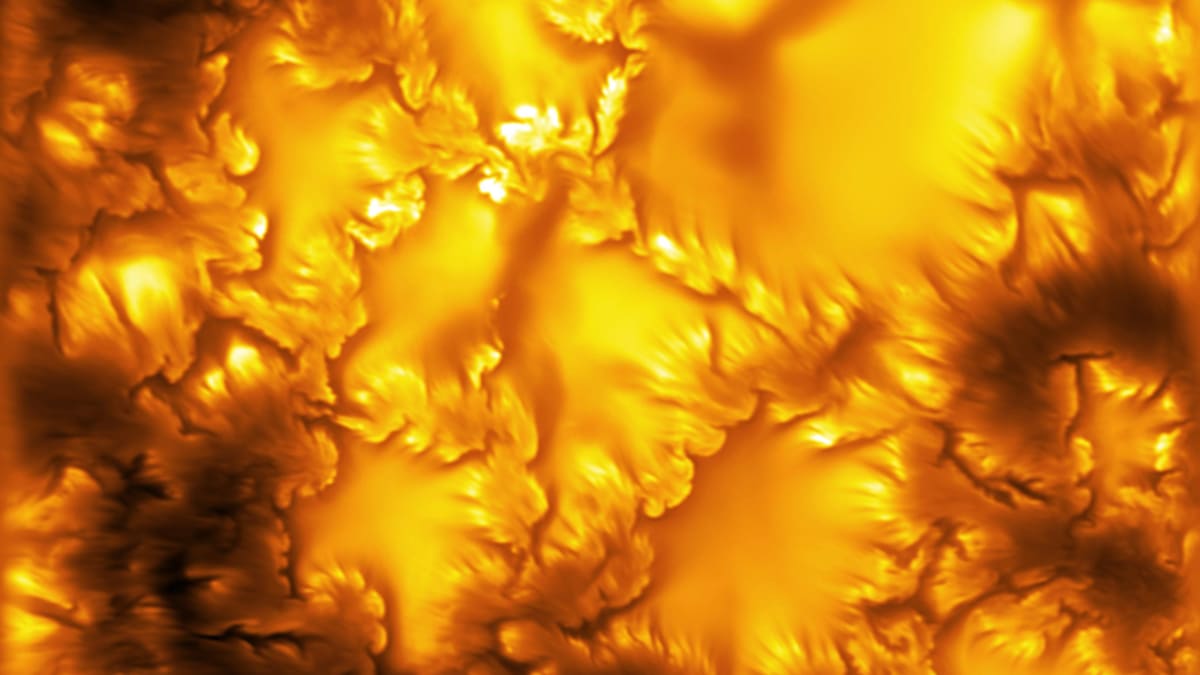
The U.S. National Science Foundation's Daniel K. Inouye Solar Telescope in Hawaii spotted thousands of tiny whirlpools swirling across the sun's surface. These vortices are so small that every previous telescope missed them completely.
The images finally proved a phenomenon that physicists Lord Kelvin and Hermann von Helmholtz predicted back in the 1800s. When two fluids slide past each other at different speeds, the friction between them creates spiraling patterns called Kelvin-Helmholtz instability.
On the sun, this effect plays out between neighboring streams of solar plasma, creating dozens of tiny vortices that cluster along the edges of magnetic regions. The telescope's resolution is powerful enough to pick out structures just tens of miles across.
Researchers published their findings in the journal Nature in August after comparing the telescope images against computer simulations of the sun's visible surface. The match was nearly perfect, down to the average spacing between the vortices.
Why This Inspires
These tiny swirls might be doing something big. By constantly twisting and mixing the sun's magnetic field lines, the vortices may help build up the energy behind solar flares and coronal mass ejections.
Even more exciting, they could explain a puzzle that's stumped scientists for decades. The sun's outer atmosphere reaches scorching temperatures of around 2 million degrees Fahrenheit, while its surface stays hundreds of thousands of degrees cooler.
Thomas Rimmele, chief technologist at the National Solar Observatory, says these swirls might be the missing link. The team now plans to use computer programs to automatically track the vortices and measure exactly how much heat they generate.
Understanding these patterns could help us predict the explosive space weather that disrupts satellites, communications and power grids here on Earth. Sometimes the smallest discoveries unlock the biggest answers.
More Images

Based on reporting by Live Science
This story was written by BrightWire based on verified news reports.
Spread the positivity!
Share this good news with someone who needs it