YouTube Auto-Dubbing Expands to 27 Languages with AI
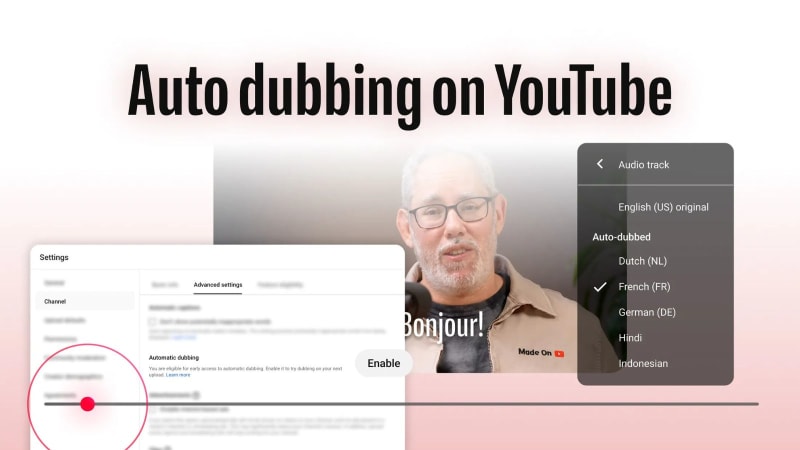
YouTube's AI-powered auto-dubbing now supports 27 languages, helping creators reach global audiences without extra cost or effort. New expressive speech technology makes dubbed videos sound more natural and emotionally authentic.
Breaking down language barriers just got easier for millions of video creators and viewers around the world. YouTube has expanded its auto-dubbing feature to support 27 languages, letting content travel across borders without the expense of professional translation.
The numbers tell the story. In December alone, viewers spent massive amounts of time watching auto-dubbed content, showing just how hungry audiences are for videos they can understand in their own language.
For creators, this changes the game completely. A cooking tutorial filmed in Hindi can now reach Spanish speakers in Mexico, English speakers in Australia, and French speakers in Canada without any extra work or budget.
The technology has gotten remarkably better too. YouTube introduced expressive speech technology for major languages including English, Hindi, Spanish, French, and German. Instead of the robotic, flat voices that made old dubbing feel awkward, the new system captures the speaker's actual emotion, tone, and pacing.
This matters most for vlogs, commentary videos, and storytelling content where personality drives the connection. A joke lands better when the dubbed voice sounds genuinely amused, and a heartfelt moment hits harder when the emotion comes through.
Viewers now have more control over their experience. A new preferred language setting lets people choose between watching videos in their original form or in a dubbed version. This helps bilingual users and anyone who wants to hear content exactly as the creator intended it.
YouTube is also testing lip-sync technology to reduce the visual disconnect that sometimes happens with dubbed content. The feature adjusts lip movements to better match translated audio, making videos feel more seamless.
Behind the scenes, smart filters help creators by recognizing which videos should stay undubbed. Music videos and silent content get automatically filtered out, ensuring dubbing only happens where it actually improves the viewing experience.
The Ripple Effect
The impact extends beyond just convenience. Small creators in non-English speaking countries now compete on a global stage without needing translation budgets that only big studios could afford. A tech reviewer in Indonesia or a fitness coach in Brazil can build international audiences from day one.
Importantly, using auto-dubbing doesn't hurt a video's visibility in YouTube's algorithm. Some creators have even seen their reach expand as their dubbed content appears in search results across multiple languages. Creators maintain full control too, with the ability to turn off auto-dubbing or upload their own professional translations instead.
The expansion represents a quieter but meaningful shift in how global communication works online. Language barriers haven't disappeared, but they're getting lower every month, letting good ideas and compelling stories find the audiences they deserve regardless of geography.
Based on reporting by Indian Express
This story was written by BrightWire based on verified news reports.
Spread the positivity!
Share this good news with someone who needs it