4,500-Year-Old Indian Craft Fights for Survival
The same lost-wax casting technique that created the famous Dancing Girl sculpture in 2500 BCE is still practiced by Dhokra artisans across eastern India. Now this ancient tradition faces extinction as artisans struggle with low incomes and shrinking markets.
📺 Watch the full story above
A bronze sculpture made 4,500 years ago connects directly to craftspeople working in India today, but that link might soon break forever.
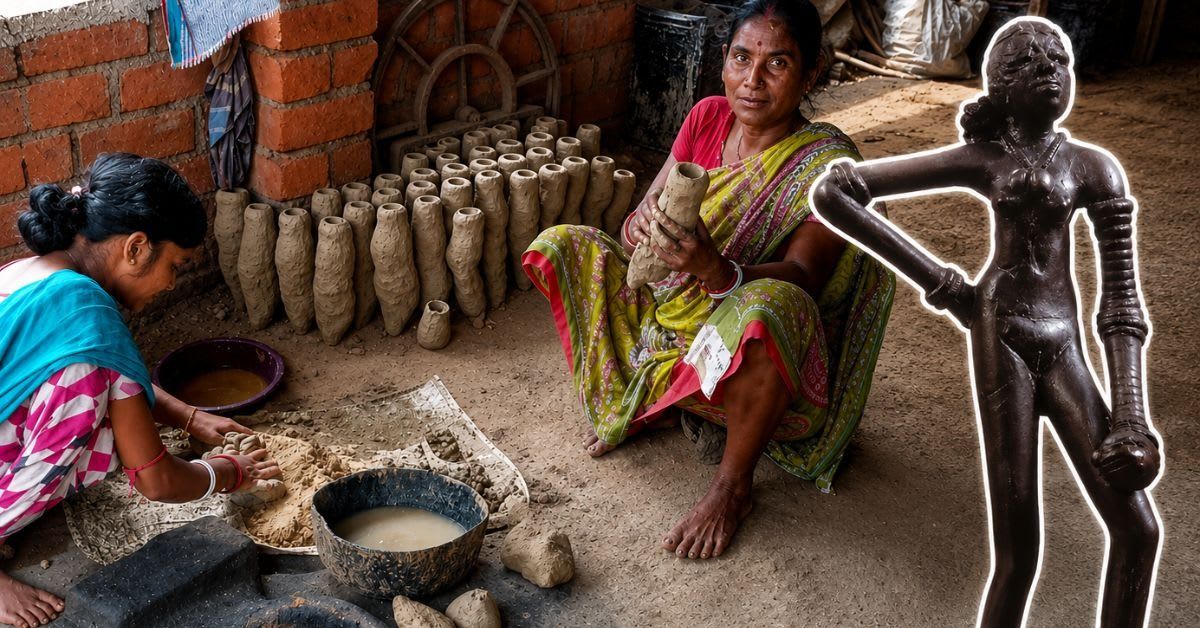
The Dancing Girl of Mohenjo-daro stands just over four inches tall. With one hand on her hip and 25 bangles stacked on her arms, she remains one of the most recognizable artifacts from the Indus Valley Civilisation. What makes her truly special is how she was made.
Artisans created her around 2500 BCE using lost-wax casting, a metal-casting technique so advanced it still amazes researchers today. The method requires building a clay model, decorating it with intricate wax patterns, coating it with layers of earth, then pouring molten metal inside. After each piece is cast, the mould must be broken.
That same technique survives today through Dhokra artisans working across Chhattisgarh, Jharkhand, Odisha and West Bengal. They follow the exact process their ancestors used thousands of years ago. Because every mould breaks after one use, no two pieces are ever identical.
The craft has survived empires, invasions and countless changes over millennia. But it might not survive this generation.
Artisan families are leaving the profession behind as low incomes and shrinking markets make it nearly impossible to continue. Without enough support or recognition, the skills passed down through 4,500 years of history are disappearing.
The Ripple Effect
When a craft this old vanishes, we lose more than beautiful objects. We lose a living connection to our earliest civilizations and the knowledge of techniques that took generations to perfect. The Dhokra artisans carry forward skills that predate written history in many parts of the world.
Their work proves that ancient innovation wasn't primitive or simple. The lost-wax casting method shows sophisticated understanding of materials, heat and design that modern researchers still study and admire.
Every Dhokra piece created today links back to that small Dancing Girl statue, reminding us that human creativity and skill can endure across thousands of years. The artisans don't just make metal figurines. They keep alive proof that some human achievements can outlast everything else we build.
The Dancing Girl has waited in museums for over four millennia, but the hands that know how to create her sisters need support now, not later.
More Images
.png)
%2Fenglish-betterindia%2Fmedia%2Fmedia_files%2F2026%2F06%2F18%2Fdhokra-craft-2026-06-18-16-03-05.jpg)

Based on reporting by The Better India
This story was written by BrightWire based on verified news reports.
Spread the positivity!
Share this good news with someone who needs it