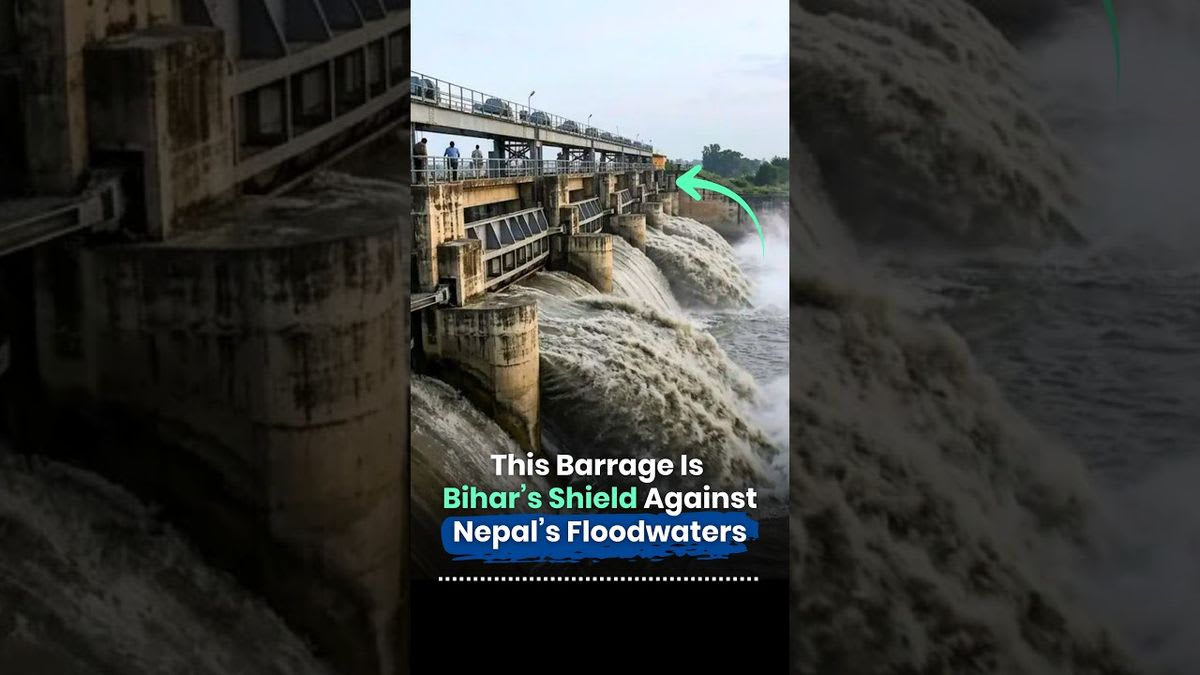
60-Year-Old Dam Saves Bihar From Nepal's Devastating Floods
When catastrophic floods swept down from Nepal, a six-decade-old engineering marvel stood between millions of people and disaster. Engineers at Bihar's Gandak Barrage opened all 36 gates to safely release massive floodwaters and protect downstream communities.
📺 Watch the full story above
When Nepal's worst floods in years sent a wall of water racing toward India, engineers in Bihar faced a critical test of aging infrastructure.
Torrential rains devastated Nepal in late August 2026, turning the Trishuli and Narayani rivers into raging torrents. The floodwaters surged into the Gandak River and headed straight for Bihar, home to millions of people who have lived with the threat of flooding for generations.
At Valmikinagar, the control point where the river enters India, engineers sprang into action at the 60-year-old Gandak Barrage. They opened all 36 gates of the massive dam, releasing nearly 150,000 cubic feet of water per second in a controlled flow. Without this careful management, the uncontrolled surge could have overwhelmed entire districts.
The barrage worked exactly as designed. Built in the 1960s, this concrete and steel structure was engineered to handle extreme flood events by spreading the water's force across multiple gates. Instead of a catastrophic wall of water hitting communities all at once, the controlled release gave people time to prepare and evacuate when necessary.
Some downstream villages still experienced flooding and needed evacuations, a reminder that even the best infrastructure faces limits against nature's most powerful forces. But the difference between managed flooding and uncontrolled disaster saved countless lives and protected vital farmland and infrastructure.
The Ripple Effect
This flood event highlights how cross-border cooperation and smart engineering create safety for millions. The barrage doesn't just protect one village or town. Its successful operation prevented widespread devastation across Bihar's fertile plains, safeguarding homes, crops, and livelihoods for communities that depend on controlled water flow.
The event also sparked important conversations about upgrading flood management systems. Engineers and officials are now discussing how to combine the proven reliability of structures like the Gandak Barrage with modern monitoring technology, creating even better protection for future generations.
India's investment in maintaining and operating this six-decade-old structure paid enormous dividends when it mattered most. The skilled engineers who managed the crisis proved that human expertise and solid infrastructure remain our best defense against natural disasters.
When the next flood comes, Bihar will be ready again.
More Images

%2Fenglish-betterindia%2Fmedia%2Fyoutube_thumbnails%2Fvi%2Fw52EW0jLRIU%2Fmaxresdefault.jpg)
%2Fenglish-betterindia%2Fmedia%2Fyoutube_thumbnails%2Fvi%2FXeX1qPaCe50%2Fmaxresdefault.jpg)
%2Fenglish-betterindia%2Fmedia%2Fyoutube_thumbnails%2Fvi%2FOUqp_fSEWuU%2Fmaxresdefault.jpg)
Based on reporting by The Better India
This story was written by BrightWire based on verified news reports.
Spread the positivity!
Share this good news with someone who needs it