8-Year-Old's Backyard Find Reveals Hidden World of Nature
A curious boy spotting tiny spheres near an ant nest led scientists to discover a century-old mystery about how insects and plants work together. His dad, an entomology professor, turned the moment into groundbreaking research that rewrites textbooks.
📺 Watch the full story above
Hugo Deans was only eight years old when he spotted something unusual near an ant nest in his backyard: tiny BB-sized spheres that looked like seeds. His curiosity sparked a scientific discovery that changes how we understand nature's hidden partnerships.
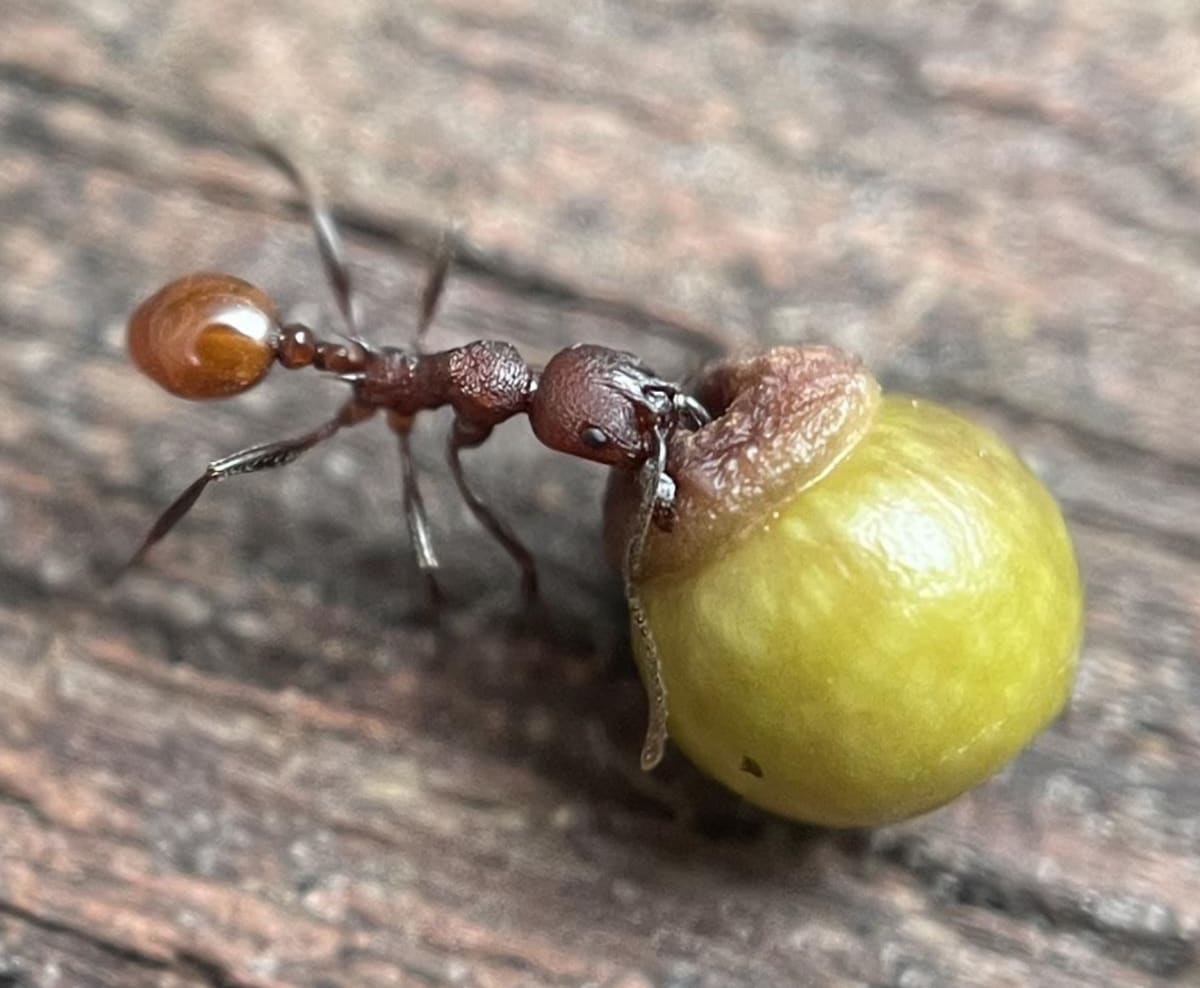
The spheres weren't seeds at all. Hugo's father, Andrew Deans, a Penn State entomology professor, recognized them as oak galls, tiny growths that oak trees build around baby wasps. What nobody expected was why ants were collecting them.
For over a century, scientists have known that ants carry certain seeds to their nests in exchange for a fatty snack called an elaiosome. The ants eat the snack, discard the seed in a safe spot, and the plant gets free delivery to a perfect growing location. Everyone wins.
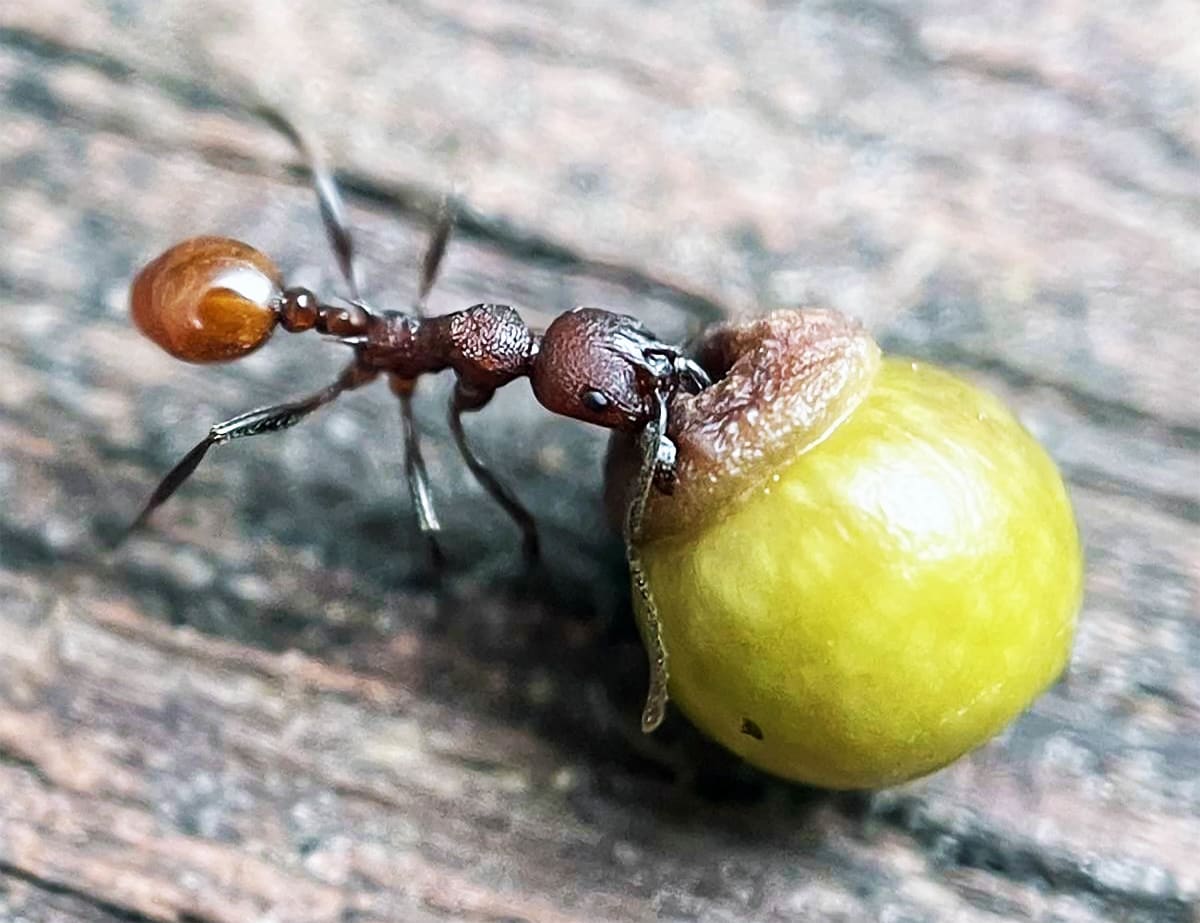
But Hugo's discovery showed that two wasp species have hijacked this ancient system. The wasps create galls with a special "hat" called a kapéllo that mimics the chemical signals of plant seeds. Ants can't tell the difference.
The Penn State and SUNY research team tested this in forests and labs. They placed real seeds and wasp galls side by side, watching ants respond to both with equal enthusiasm. The ants grabbed the kapéllo on galls just like they grabbed elaiosomes on seeds.
Chemical analysis revealed the clever trick. The kapéllo contains the same fatty acids that make seeds attractive to ants, including oleic and palmitic acids. The wasp larvae essentially get free transportation and protection while the ants think they're getting a meal.
The design gets even more impressive. The kapéllo has a built-in break point, lined with stiff tissue that snaps off cleanly, just like seed attachments do. Evolution shaped these galls to perfectly imitate seeds down to the molecular level.
Why This Inspires
This story shows how paying attention to small moments can unlock big discoveries. Hugo didn't need fancy equipment or years of training. He just needed curiosity and someone willing to take his questions seriously.
The finding also reveals nature's beautiful complexity. Three completely different organisms, ants, wasps, and oak trees, are connected through chemistry and behavior in ways scientists never imagined. The wasps evolved to speak the secret language between plants and ants.
Now 13, Hugo remembers his excitement when his dad explained what he'd found. "I was surprised that ants would collect galls because why would they do that?" he asked. That simple question led to research that will appear in biology textbooks for generations.
Young scientists everywhere can take heart: the next major discovery might be sitting in your own backyard, waiting for someone curious enough to ask why.
Based on reporting by Google News - Science
This story was written by BrightWire based on verified news reports.
Spread the positivity!
Share this good news with someone who needs it