8-Year-Old's Backyard Find Rewrites Biology Textbooks
A curious kid spotted tiny objects by an ant nest and sparked a scientific discovery that's challenging what we've taught about plants and insects for over a century. Turns out, wasps have been secretly manipulating oak trees and ants in ways scientists never imagined.
📺 Watch the full story above
When Hugo Deans found some BB-sized objects near an ant nest in his Pennsylvania backyard, he thought they were seeds. His dad, Penn State entomologist Andrew Deans, knew they were oak galls, but what happened next surprised even him.
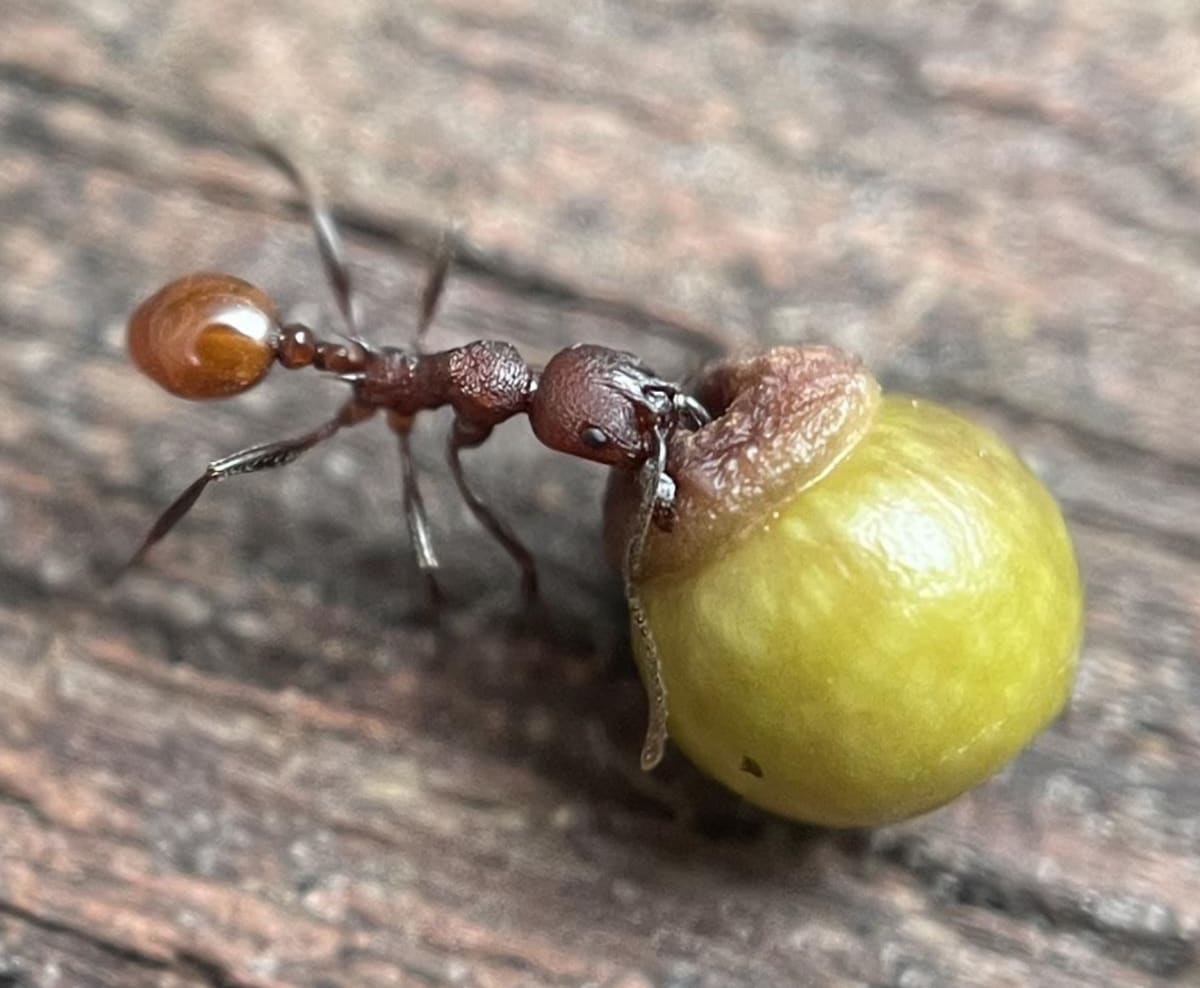
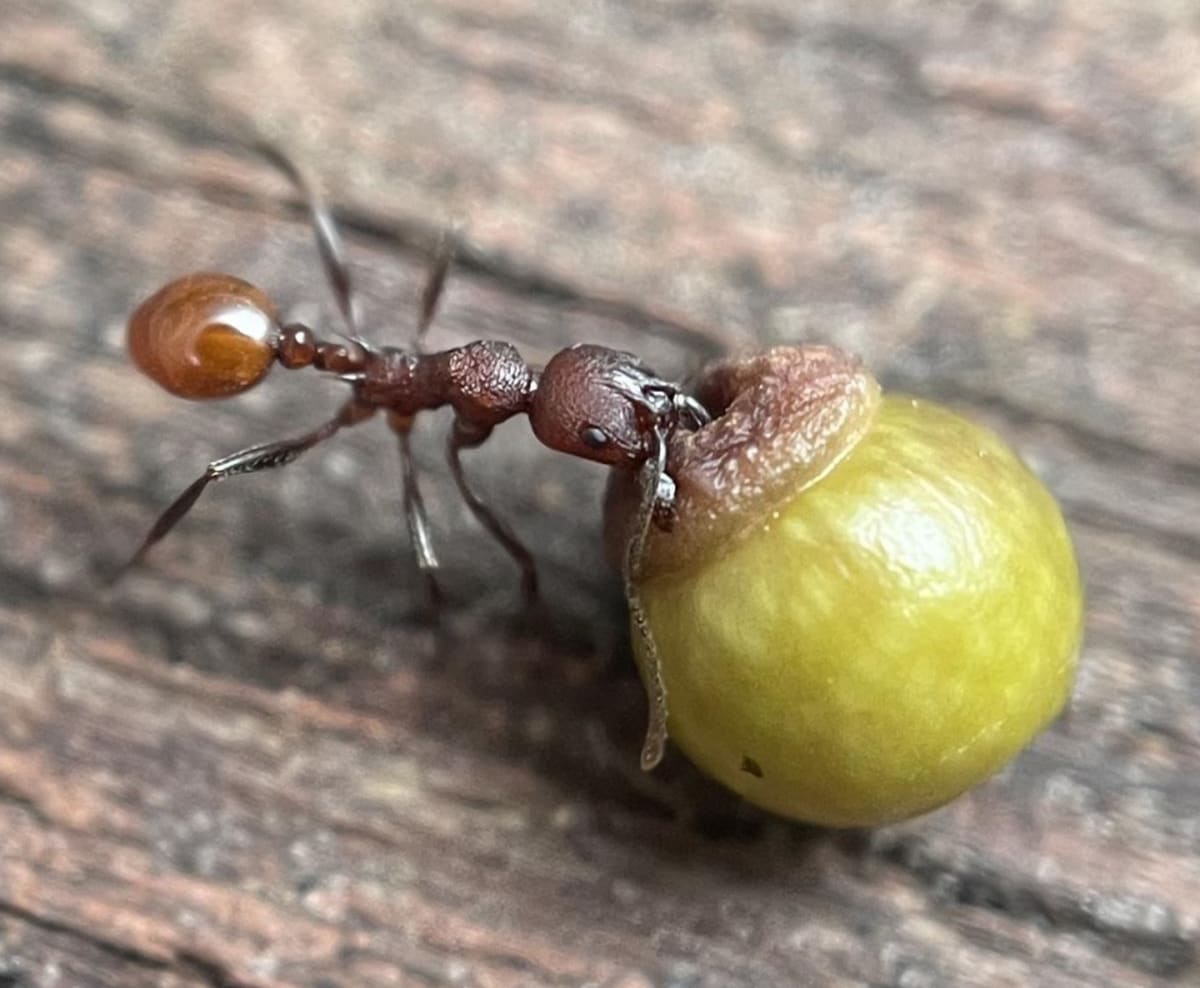
The ants were carrying these galls like they carry seeds, but galls aren't seeds. They're tiny capsules that oak trees create around wasp larvae, and until now, nobody knew ants were interested in them at all.
That simple observation launched a research project that uncovered something remarkable. Two species of gall wasps aren't just manipulating oak trees to protect their babies. They're manipulating the oaks into making structures that then manipulate ants into providing free transportation and protection.
Here's how it works. The wasps trigger oak trees to produce galls topped with a fleshy cap that researchers named kapéllo, Greek for "cap." Ants find these caps irresistible and haul the entire gall back to their nests, where they eat the cap and leave the wasp larva safe inside.
The team tested this in both lab and field experiments across Pennsylvania and Western New York. Ants showed the same level of interest in oak galls as they did in bloodroot seeds, a classic example of ant-dispersed plants. When given choices, ants ignored galls without caps but eagerly grabbed galls with caps attached.
The chemistry revealed why. These fleshy caps contain the same fatty acids found in the seed attachments that plants use to attract ants. Both also share fatty acids typical of dead insects, which makes sense because ants are scavengers looking for protein to bring home.
Why This Inspires
This discovery shows how much we still have to learn about the natural world, even in our own backyards. A century-old textbook example of plant and insect cooperation turns out to be part of a much more complex story involving three different organisms working together in unexpected ways.
The finding also highlights the power of curiosity at any age. Hugo's simple question about what ants were doing led his father and colleagues to rethink established science and publish findings in the journal American Naturalist.
Scientists now wonder which came first: did plants evolve to mimic wasp galls, or did wasps evolve to mimic plants? Either way, this tiny backyard observation is rewriting biology lessons for the next generation of students.
The next time a kid asks why ants are carrying something strange, it might be worth taking a closer look.
More Images

Based on reporting by Google: scientific discovery
This story was written by BrightWire based on verified news reports.
Spread the positivity!
Share this good news with someone who needs it