AI Solves 80-Year-Old Math Mystery Experts Couldn't Crack
An AI model just solved a math problem that has stumped the world's brightest mathematicians since 1946. The breakthrough disproves what experts believed for nearly eight decades and marks the first time artificial intelligence has independently solved a major unsolved problem in mathematics. #
📺 Watch the full story above
A question so simple a kid could understand it just got answered by artificial intelligence after baffling mathematicians for 80 years.
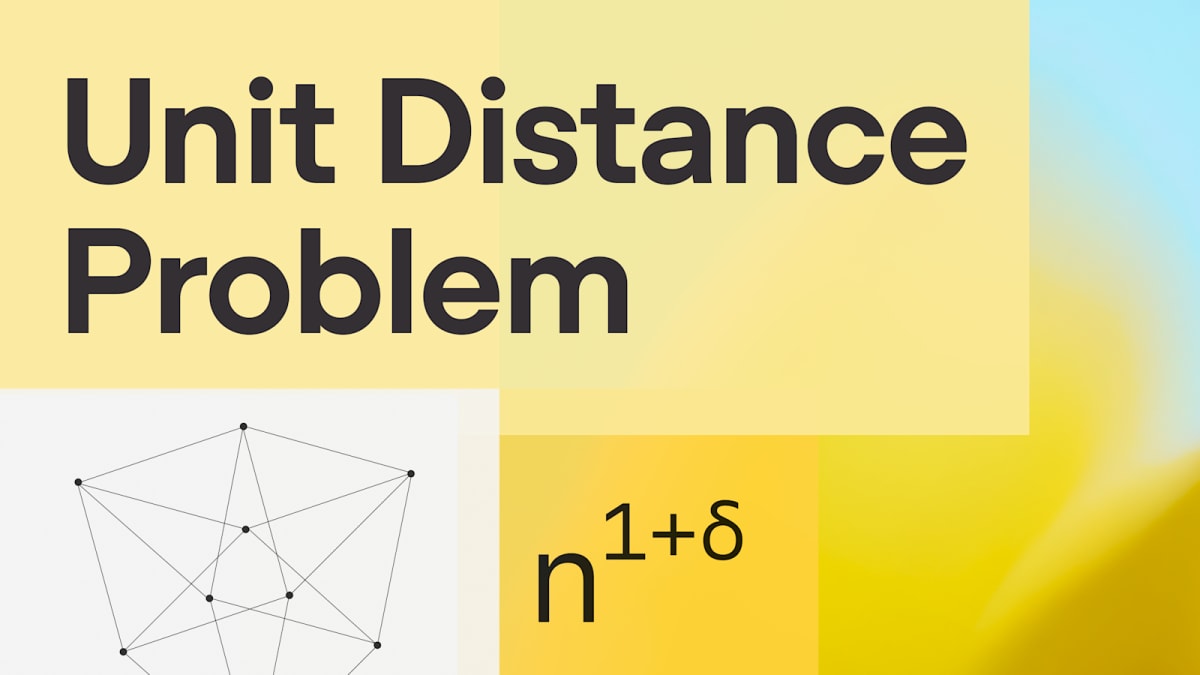
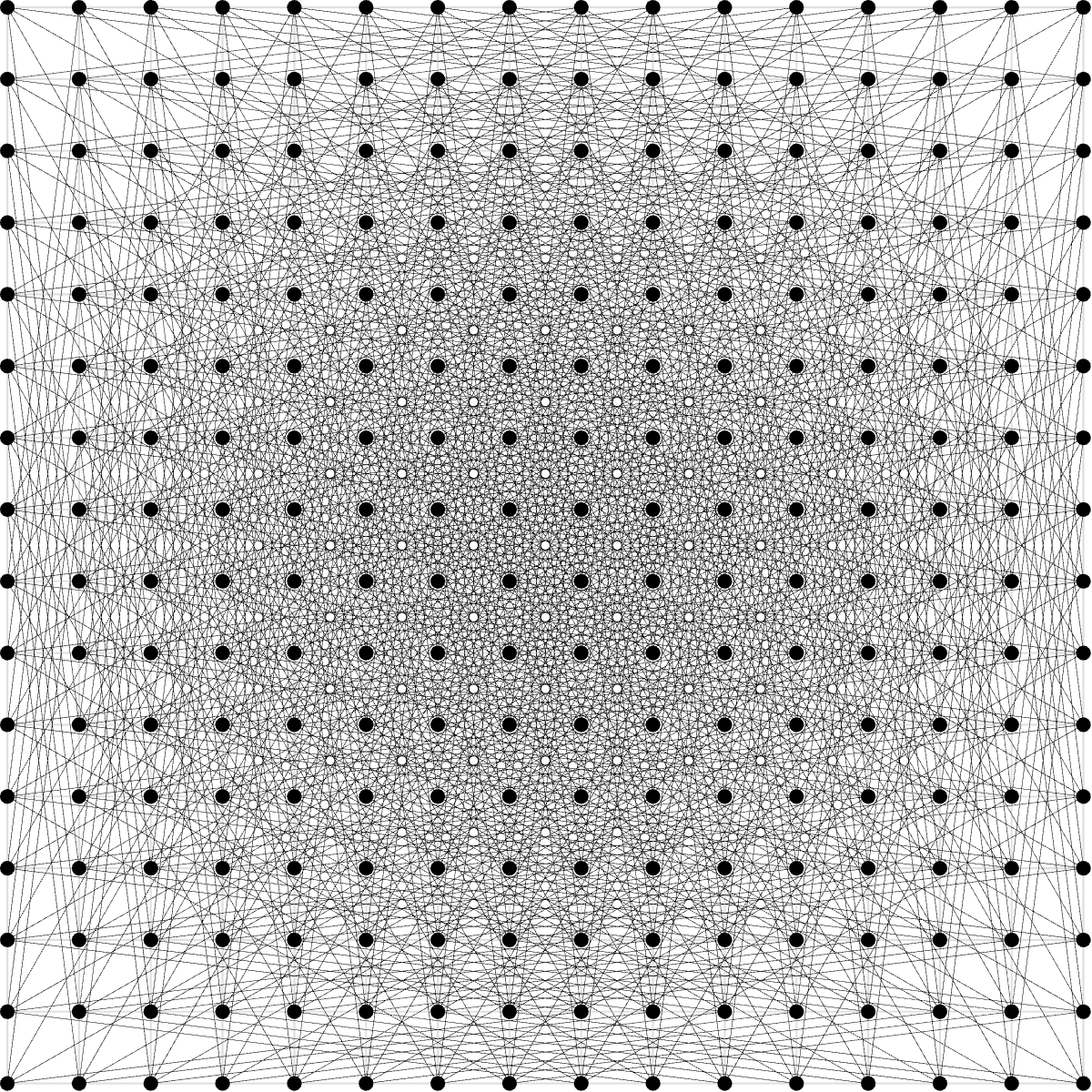
Here's the problem legendary mathematician Paul Erdős posed in 1946: if you scatter points on a flat surface, how many pairs can be exactly one unit apart? It sounds basic, but it became one of the most famous unsolved puzzles in math.
For decades, mathematicians believed the answer followed a specific pattern based on square grids. They were wrong.
An OpenAI reasoning model recently cracked the case, proving that you can actually arrange points to get far more pairs at distance one than anyone thought possible. The AI didn't just stumble on the answer. It constructed an entirely new proof using sophisticated concepts from algebraic number theory that human mathematicians hadn't connected to this problem before.
A team of leading mathematicians verified the proof and confirmed its validity. Fields medalist Tim Gowers called it "a milestone in AI mathematics" and said he would accept it for publication in top journals without hesitation.
Princeton mathematician Noga Alon, who heard Erdős himself discuss this problem multiple times, called the solution "an outstanding achievement." He noted that nearly every mathematician working in combinatorial geometry has thought about this problem at some point.
The way the AI approached the problem surprised experts too. Instead of trying to prove the widely believed theory correct, it spent most of its reasoning time attempting to construct a counterexample. That willingness to challenge conventional wisdom led to the breakthrough.
Why This Inspires
This achievement represents more than just solving an old puzzle. It shows that AI can now contribute original, creative thinking to frontier scientific research.
Stanford mathematician Arul Shankar put it powerfully: "Current AI models go beyond just helpers to human mathematicians. They are capable of having original ingenious ideas, and then carrying them out to fruition."
The proof required the kind of deep, sustained reasoning that holds together from start to finish. There are no shortcuts in mathematics. Every logical step must be airtight, and this AI delivered exactly that.
What makes this moment special is that the model wasn't specifically trained for math problems or programmed to tackle this particular question. It reasoned its way through using general purpose intelligence, much like a human mathematician would, just with different intuitions.
For nearly 80 years, one of math's favorite unsolved problems waited for someone clever enough to crack it. That someone turned out to be an AI with the courage to prove everyone wrong and the brilliance to show a better way forward.
#
More Images

Based on reporting by Google News - AI Breakthrough
This story was written by BrightWire based on verified news reports.
Spread the positivity!
Share this good news with someone who needs it