China Catches Rocket Booster in Mid-Air with Giant Net
China just became only the second country ever to recover a rocket booster from orbit, catching it in a giant net on a ship. The successful catch brings reusable spaceflight closer to reality and clears the path for China's plan to land astronauts on the moon before 2030.
📺 Watch the full story above
China just pulled off something only American companies have done before: catching a rocket booster after it launched a satellite into space.
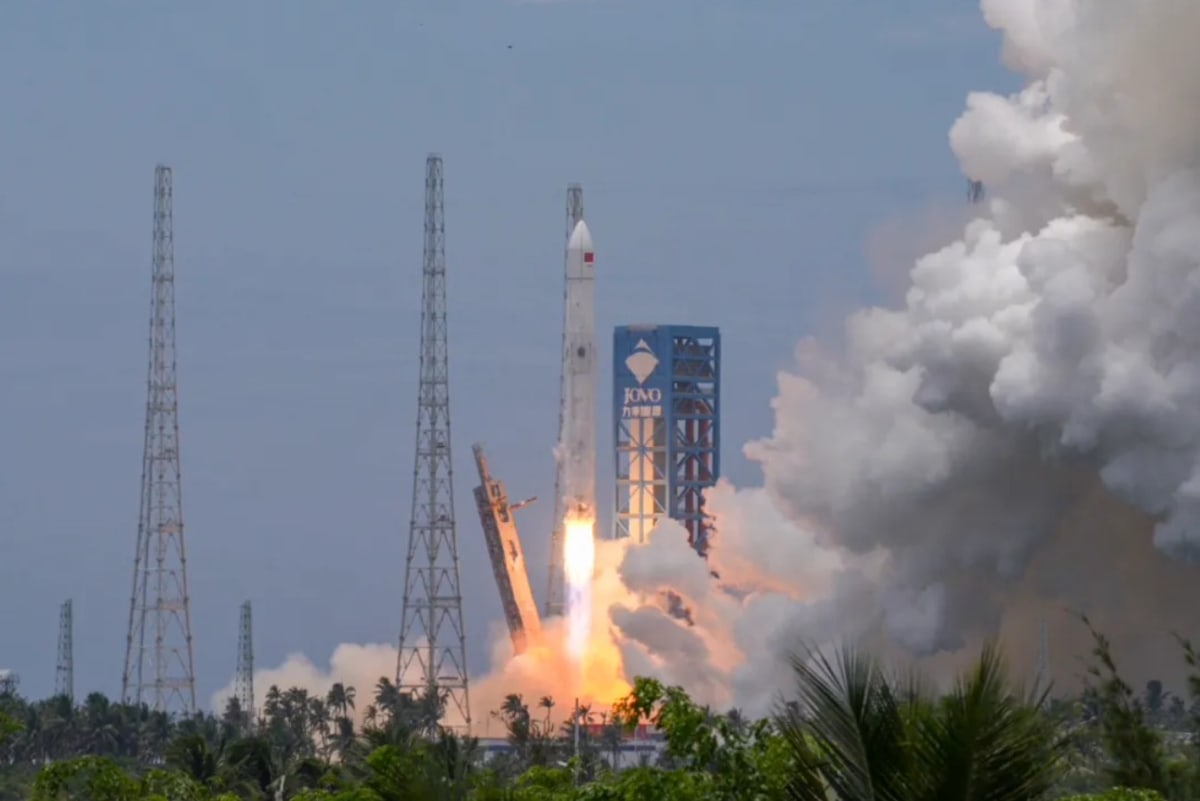
The Long March 10B rocket blasted off early Friday morning from Hainan island in southern China. Eleven minutes later, the massive first stage booster splashed down safely into a net stretched across a recovery ship called the Linghang Zhe, or "navigator."
Videos showed the 63-meter tall booster making a controlled descent with engines firing, black smoke trailing from the top. Hooks on the booster caught the tensioned net perfectly, marking the world's first successful net recovery of an orbital rocket.
This puts China's state space agency CASC in an exclusive club. Only SpaceX and Blue Origin have successfully recovered orbital boosters before, though they use landing legs instead of nets.
The approach has a clever advantage. Without needing heavy landing legs, the rocket can carry more payload or save fuel. CASC plans to reuse this exact booster again before the end of the year.
The Ripple Effect
This success means more than just catching one rocket. The Long March 10B shares its first stage with the Long March 10A, which will launch astronauts toward the moon.
China has committed to landing two astronauts on the lunar surface before 2030. This catch proves the core rocket technology works, clearing a major hurdle for that ambitious timeline.
The rocket uses seven powerful engines that together produce 890 tons of thrust. At 760,000 kilograms fully fueled, it can lift 16,000 kilograms to low Earth orbit while still saving the booster for reuse.
CASC says the technology will drastically reduce costs for launching satellite internet constellations and large commercial satellites. Making space more affordable opens doors for more scientific research, better global communications, and new discoveries.
The space agency plans to keep improving the system. A full test of the astronaut version carrying the new Mengzhou crew spacecraft could happen as soon as 2026.
Two other Chinese rockets tried similar recoveries this year but failed during descent. This success shows persistence pays off, and the space race just got more competitive in the best possible way.
More Images


Based on reporting by SpaceNews
This story was written by BrightWire based on verified news reports.
Spread the positivity!
Share this good news with someone who needs it