Electric School Buses Power Homes During Summer Heat
Thousands of electric school buses are keeping the lights on during record heat waves by feeding power back to the grid. While kids are on summer break, these big yellow batteries are helping 67 million Americans stay cool.
📺 Watch the full story above
When school lets out for summer, 6,700 electric school buses across America are getting a second job that's helping millions of people survive record heat waves.
These buses aren't just sitting idle in parking lots anymore. Their massive batteries are plugging into the electrical grid and sending power back to homes and businesses exactly when it's needed most.
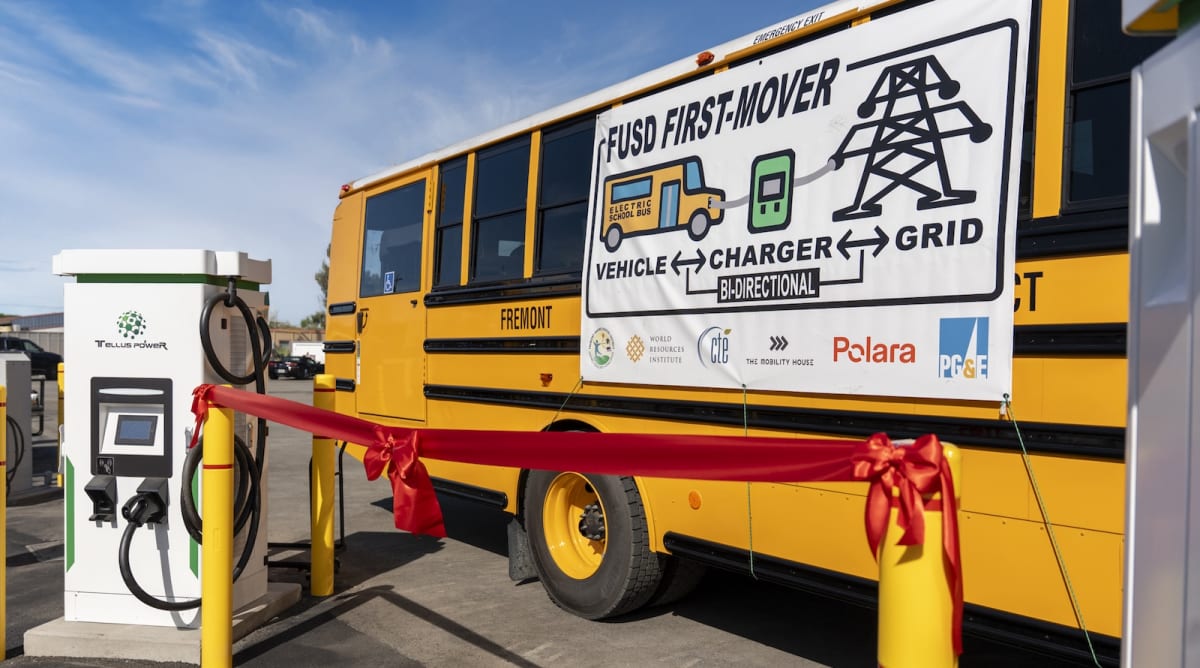
The technology is called vehicle-to-grid, or V2G. Right now, about 230 electric school buses are already doing this work, supplying 8 megawatt-hours of power at any given time. That's enough to make a real difference when air conditioners are running overtime and the grid is straining to keep up.
Each electric school bus carries a battery bigger than most people realize. Some hold over 200 kilowatt-hours of energy. They charge up overnight when demand is low and electricity is cheap, then feed that power back during scorching afternoons when everyone needs it.
California is leading the charge with impressive results. Oakland Unified School District runs 74 buses that generate 2.1 gigawatt-hours annually. San Francisco is launching an even bigger project next month with 104 buses that will return 3 gigawatt-hours during peak hours. By 2028, that fleet will grow to 238 buses.
The magic happens because school buses sit idle precisely when electricity demand spikes. Summer vacations coincide with heat waves. This perfect timing turns what could be wasted capacity into community support.
At least 31 utilities and 21 states are now involved in V2G school bus projects. Connecticut's Branford Public Schools will have 46 V2G-capable buses by August. North Carolina and Florida are testing programs too.
The Ripple Effect
Beyond keeping the lights on during heat waves, these buses are becoming emergency lifelines. In North Carolina, Cherokee Boys Club is testing how their 21 electric buses can power school buildings that serve as emergency shelters. South Florida's Glades County plans to use 13 buses as mobile cooling centers when hurricanes strike.
The bus-to-grid connection works both ways. Schools save money by charging when rates are lowest and sometimes earn revenue by selling power back during peak hours. Communities get more reliable electricity. The environment wins because these solutions reduce the need for fossil fuel power plants that fire up during emergencies.
Steve Letendre from the Vehicle Grid Integration Council calls school buses "a critically important backbone of V2G capacity." As more electric buses join fleets nationwide, that backbone will only grow stronger.
The shift is happening fast. California now requires all state-funded electric school buses to include V2G capability. Major utilities like Pacific Gas & Electric and Southern California Edison are partnering on infrastructure. What started as a handful of test projects is becoming standard practice.
These rolling batteries are proving that the cleanest solutions often hide in plain sight, painted bright yellow and parked right in our neighborhoods.
More Images
Based on reporting by CleanTechnica
This story was written by BrightWire based on verified news reports.
Spread the positivity!
Share this good news with someone who needs it