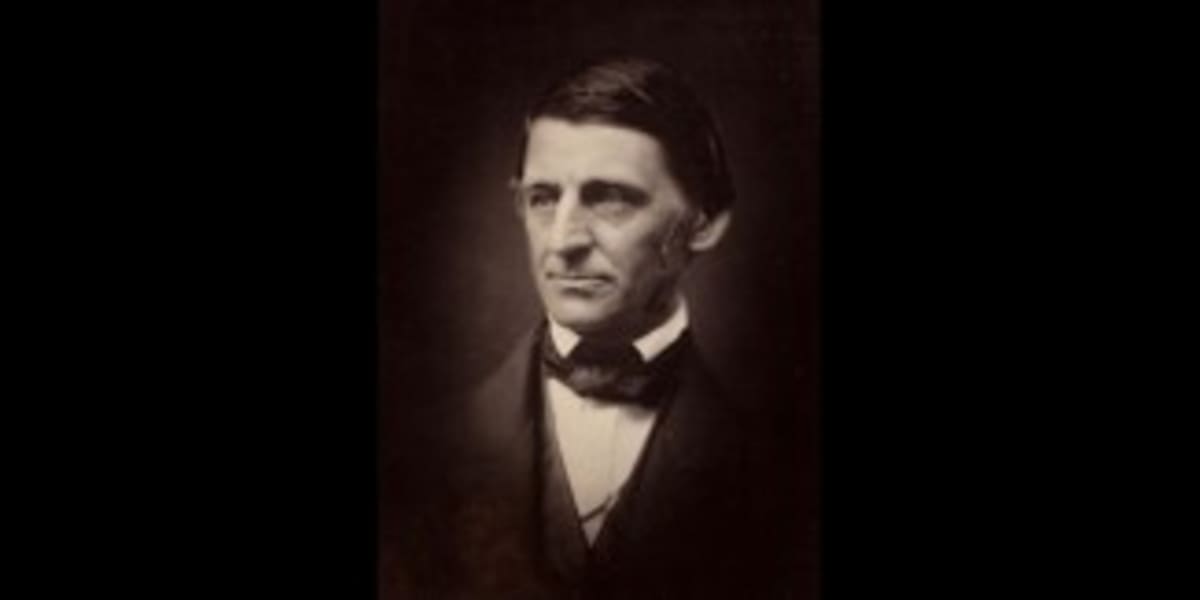
Emerson's "Nature" Essay Sparked a Movement 190 Years Ago
Ralph Waldo Emerson published his groundbreaking essay "Nature" 190 years ago today, arguing that true peace comes from connecting with the natural world. His words inspired generations of writers and thinkers to seek meaning beyond society's distractions.
📺 Watch the full story above
On September 9, 1836, Ralph Waldo Emerson published an essay that would change how Americans think about nature, spirituality, and finding peace in a chaotic world.
"Nature" laid out a simple but radical idea: God and spirituality exist all around us in the natural world, but our daily worries and social pressures blind us to it. Emerson believed that stepping away from society's noise and spending time alone in nature could restore our sense of wonder and wholeness.
"To go into solitude, a man needs to retire as much from his chamber as from society," Emerson wrote. "But if a man would be alone, let him look at the stars." He argued that true solitude in nature could transport us beyond our everyday concerns and reconnect us with something larger than ourselves.
Emerson described nature as a "Universal Being" where everything works together in perfect harmony. He marveled at how the wind sows seeds, the sun creates rain, and the rain feeds plants that nourish animals. This endless cycle, he believed, revealed a divine presence woven through the natural world.
The essay became the foundation of transcendentalism, a movement that reimagined spirituality as something visible and accessible in the world around us. One young Harvard senior named Henry David Thoreau read "Nature" and took its message to heart, eventually building his famous cabin on land Emerson owned and writing "Walden."
The Ripple Effect
Emerson's ideas sparked a literary and philosophical movement that continues today. His call to find meaning in nature influenced environmental conservation efforts, mindfulness practices, and our modern understanding of how time outdoors benefits mental health. What started as one essay became a cultural touchstone for anyone seeking peace away from society's pressures.
Nearly two centuries later, science confirms what Emerson intuited: spending time in nature reduces stress, improves mood, and helps us feel more connected to the world.
More Images


Based on reporting by Good News Network
This story was written by BrightWire based on verified news reports.
Spread the positivity!
Share this good news with someone who needs it