Firefighting Drones Could Stop Wildfires Before They Spread
New firefighting drones are being tested in California and Alaska to tackle wildfires early, potentially stopping small blazes before they become disasters. These automated systems can detect smoke, locate fires, and spray suppressants without putting human pilots at risk.
📺 Watch the full story above
Imagine stopping a wildfire before it becomes a headline. That future is getting closer as firefighting drones prove they can detect and douse flames faster than ever before.
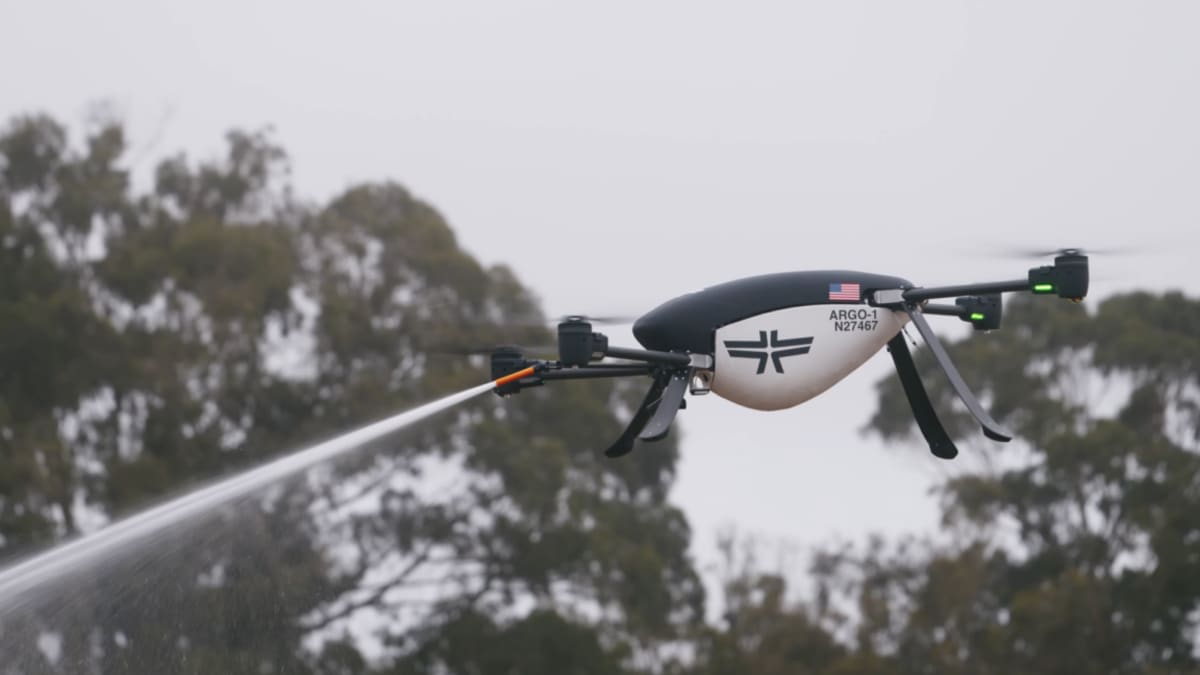
California's fire agency tested five autonomous drones working together this summer, spraying up to 1,000 gallons of foam to suppress fires. The demonstration showcased technology from Seneca, a California company making these drones available starting in 2026.
Each drone carries about 100 pounds of water or fire retardant and works in swarms of four to six. Once a human operator sets a GPS waypoint, the drones fly themselves to the target, spot the fire's heat signature with onboard sensors, and line up to spray it one by one.
The drones fit in a pickup truck bed and can be manually carried by two people. They're limited to 10-mile round trips at 30 miles per hour, so they need to be positioned near fire-prone areas. But that's exactly the point: quick response to small fires before they explode.
In Alaska, another system called Silvaguard took the concept even further. Solar-powered sensors attached to trees detect smoke from smoldering fires and trigger an observation drone to confirm the location. Then a suppression drone deploys up to 26 gallons of fire suppressant.
The German company Dryad Networks developed this system for the $11 million XPRIZE Wildfire competition, successfully detecting and suppressing a fire autonomously across 1,000 square kilometers of Alaskan wilderness. The drones launch from solar-powered spherical hangar pods positioned in remote areas.
These smaller drones can't replace massive airtankers that dump thousands of gallons on remote fires. But they offer something bigger aircraft can't: speed in the critical early minutes when a fire is still small enough to stop.
Colorado's Aspen Fire Protection District is betting on the technology with a $5 million contract to deploy five of Seneca's drones over five years. California's fire agency, which already operates the world's largest aerial firefighting fleet with over 70 aircraft, is watching closely.
The Ripple Effect
The timing couldn't be better. Climate change has transformed wildfire season from a few dangerous months into a nearly year-round threat across much of America. Traditional firefighting methods struggle to catch every ignition point fast enough.
These drones could change the equation by multiplying the eyes in the sky and response capacity without requiring more human pilots. Two people can refill a drone's payload and swap its battery in just two minutes, sending it back into action while crews coordinate the broader response.
The real test comes when fire agencies deploy these systems during actual wildfire seasons, but early adopters are already committing millions to find out.
Tomorrow's firefighters might win battles by stopping fires most of us never hear about.
More Images



Based on reporting by Ars Technica
This story was written by BrightWire based on verified news reports.
Spread the positivity!
Share this good news with someone who needs it