NYC's 40 Electric School Buses Cut Costs by 20%
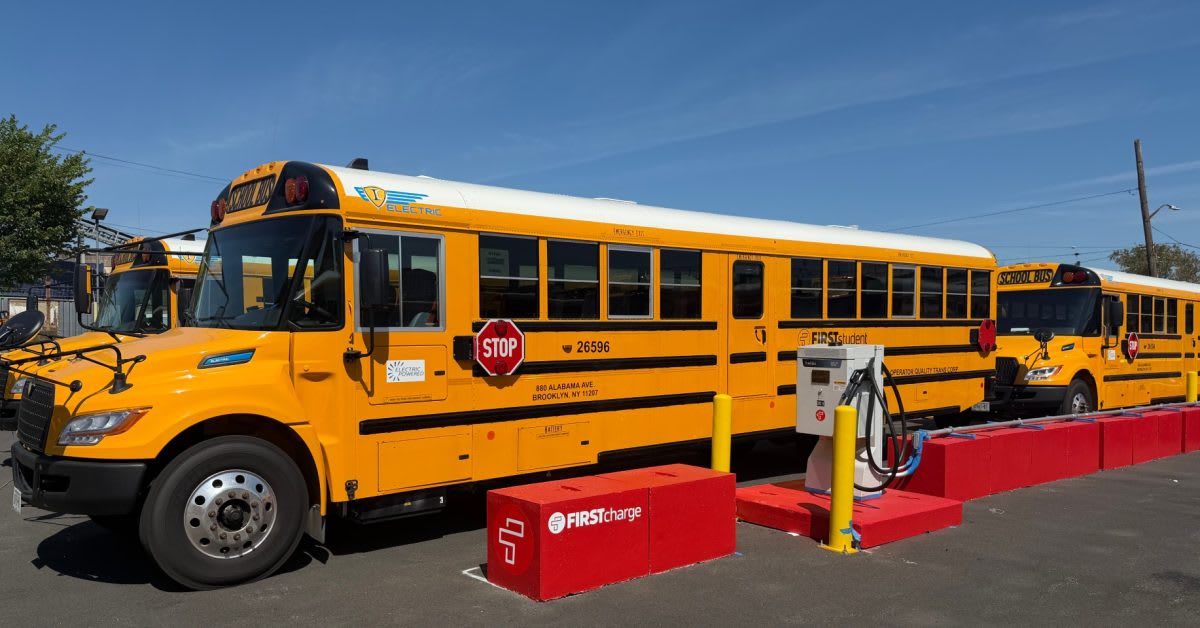
New York City is rolling out 40 electric school buses using overhead charging stations that slash installation costs by a fifth. The breakthrough design skips expensive underground cables, making it faster and cheaper for cities to go green.
📺 Watch the full story above
New York City just figured out how to make electric school buses 20% cheaper to charge, and it could change how cities everywhere go electric.
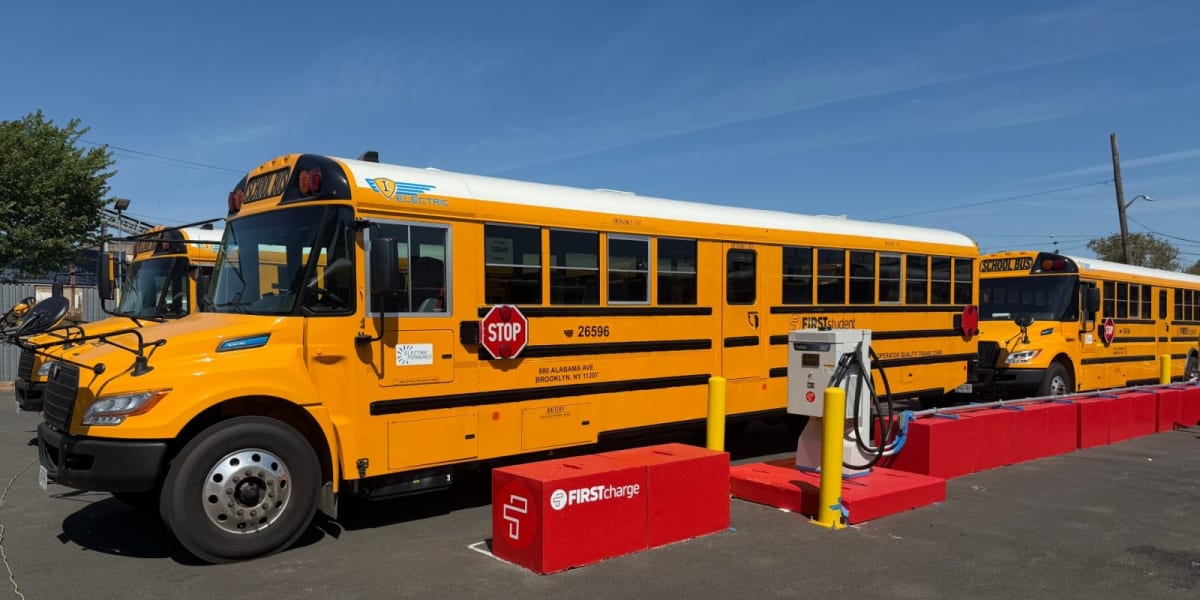
First Student is adding 40 electric school buses to serve Brooklyn and Queens public schools using a game-changing charging system called First Charge. Instead of tearing up pavement to bury electrical cables underground, the equipment carries power lines overhead, cutting both construction costs and installation time.
The innovation matters especially in dense cities like New York, where digging up paved bus yards costs a fortune and creates major headaches. The overhead system eliminates that problem entirely while saving money that school districts can spend on more buses or other student needs.
Con Edison and the New York State Energy Research and Development Authority funded the demonstration project, including six electric bus vouchers and support for converting four diesel buses to electric. The project also uses smart software to charge buses during off-peak hours when electricity costs less, helping control energy expenses for large fleets.
"Eliminating the need to bury the service line to these chargers lowers the upfront costs for First Student and is a strategy that other fleet owners can replicate," said Vicki Kuo, senior vice president at Con Edison. The company sees the overhead charging model as a blueprint other cities can copy.
Kevin Matthews, head of electrification at First Student, emphasized that scaling electric buses requires more than just vehicles. The right infrastructure, technology, and utility partnerships make the difference between a good idea and real progress.
The Ripple Effect
This breakthrough comes at a crucial time for New York State, which mandated that all new school buses purchased by 2027 must be zero-emission. By 2035, every school bus on state roads must produce zero emissions, meaning thousands of diesel buses need replacing soon.
The overhead charging system removes one of the biggest obstacles to meeting that goal. Cities across America have hesitated to electrify their bus fleets because of high infrastructure costs, but this simpler approach could accelerate the transition nationwide.
First Student is already planning more clean-energy upgrades at its Brooklyn facilities, including solar panels and a smart energy hub. The company sees this project as proof that urban fleet electrification can work at scale without breaking the bank.
Every electric school bus means cleaner air for the kids riding them and the neighborhoods they drive through, and now cities have a cheaper way to make it happen.
More Images



Based on reporting by Electrek
This story was written by BrightWire based on verified news reports.
Spread the positivity!
Share this good news with someone who needs it