Satellite Captures First Detailed View of Pacific Tsunami
A powerful earthquake near Russia unleashed a tsunami across the Pacific, and scientists captured it from space in unprecedented detail for the first time. The stunning new view is rewriting what we know about how these waves travel.
📺 Watch the full story above
Scientists just got their clearest view ever of a massive tsunami from space, and what they saw is changing how we understand these powerful waves.
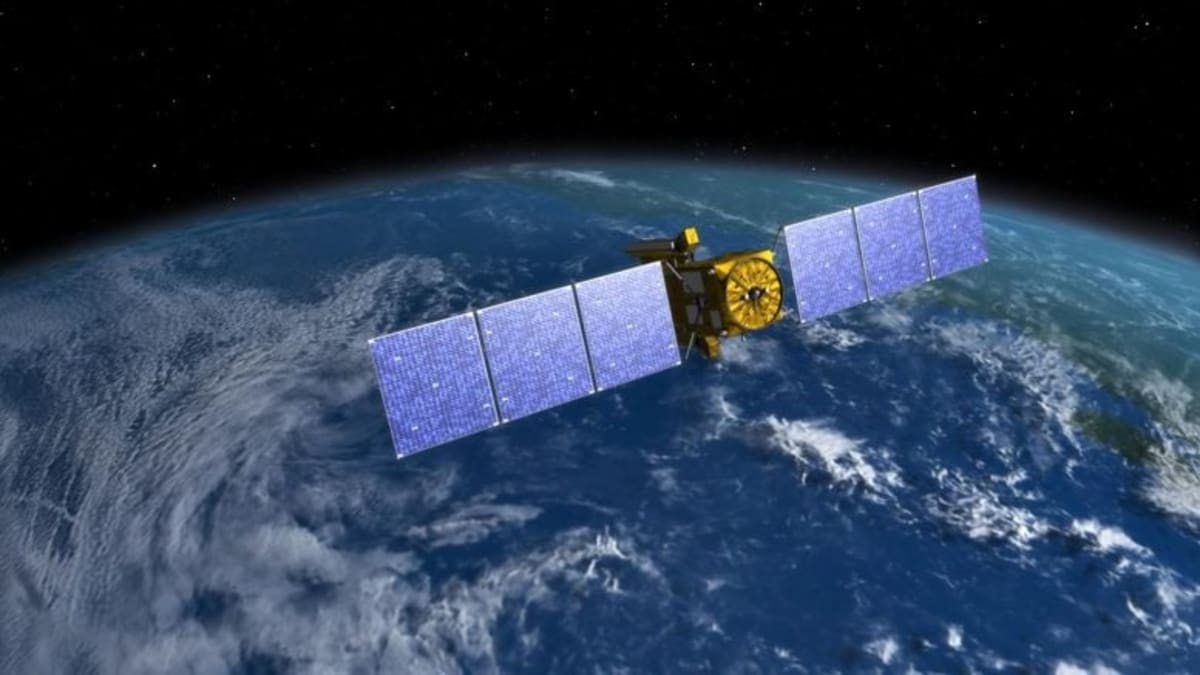
When a magnitude 8.8 earthquake struck near Russia's Kamchatka Peninsula in late July, the SWOT satellite happened to be in exactly the right place at the right time. This cutting-edge NASA spacecraft captured the first high-resolution track of a major tsunami from above, revealing secrets that ocean buoys alone could never show.
Angel Ruiz-Angulo from the University of Iceland couldn't believe his luck. He and his team had spent over two years studying SWOT data to analyze tiny ocean features, never imagining they'd witness something this dramatic. "I think of SWOT data as a new pair of glasses," he said.
Those new glasses revealed something surprising. Scientists have long believed that massive tsunamis travel as single, unified waves because their wavelengths are longer than the ocean is deep. But SWOT showed the wave breaking apart and scattering energy across the Pacific in multiple directions.
The satellite captured a 120-kilometer-wide swath of ocean, combining with readings from monitoring buoys to create an unprecedented picture. Previous satellites could only see thin lines across a tsunami at best. This was different.
The discovery has real implications for keeping people safe. The team's detailed observations helped them realize the earthquake's rupture extended about 400 kilometers, far longer than earlier estimates of 300 kilometers. Understanding exactly how these earthquakes behave helps forecasters issue better warnings.
Why This Inspires
The Kuril-Kamchatka region has produced some of history's largest tsunamis. A magnitude 9.0 earthquake there in 1952 triggered waves so destructive that it led to the creation of an international warning system still protecting millions today.
Now, scientists have a powerful new tool to make that system even better. SWOT launched in December 2022 to map Earth's surface water globally. Its ability to capture this tsunami was almost accidental, but the timing couldn't have been better.
Diego Melgar, a study co-author, emphasized how important it is to combine different types of data. Since the devastating 2011 Tohoku earthquake in Japan, researchers have worked to integrate tsunami wave data with traditional seismic measurements. Each piece of the puzzle helps create a clearer picture.
The breakthrough isn't just about understanding what happened. Computer simulations that included the wave-scattering behavior matched real-world observations far better than traditional models. That means forecasters can now account for complexity they didn't even know existed.
Ruiz-Angulo hopes these results will justify investing in real-time satellite monitoring for future events. The better we understand how tsunamis actually behave, the better we can protect coastal communities worldwide.
One satellite in the right place at the right time just gave us a whole new way to save lives.
More Images

Based on reporting by Google News - Science
This story was written by BrightWire based on verified news reports.
Spread the positivity!
Share this good news with someone who needs it