Space Footballs Found 10,000 Light-Years Away in Nebula
Scientists just spotted buckyballs—soccer ball-shaped carbon molecules—glowing in a distant nebula using the James Webb Space Telescope. These cosmic molecules could unlock secrets about how stars form and die.
📺 Watch the full story above
Imagine finding perfect soccer balls floating in space, glowing with infrared light 10,000 light-years from Earth.
That's essentially what astronomer Jan Cami and his team discovered in a dying star's remains. They spotted buckminsterfullerenes (nicknamed buckyballs) lighting up the planetary nebula Tc 1 in the constellation Ara. These molecules are made of exactly 60 carbon atoms arranged in the same pattern as a soccer ball.
The story starts in 1985 when scientists Harry Kroto, Bob Curl, and Rick Smalley first created these football-shaped molecules in a lab. They won the Nobel Prize in Chemistry for it. Kroto believed these strange structures must exist in space, but proving it took decades.
When Cami's team first spotted buckyballs in space using the Spitzer Space Telescope, even they were shocked. One researcher said: "This wasn't part of our original investigations, but when we saw certain spectral signatures, we instantly knew we were seeing one of the most sought-after molecules."
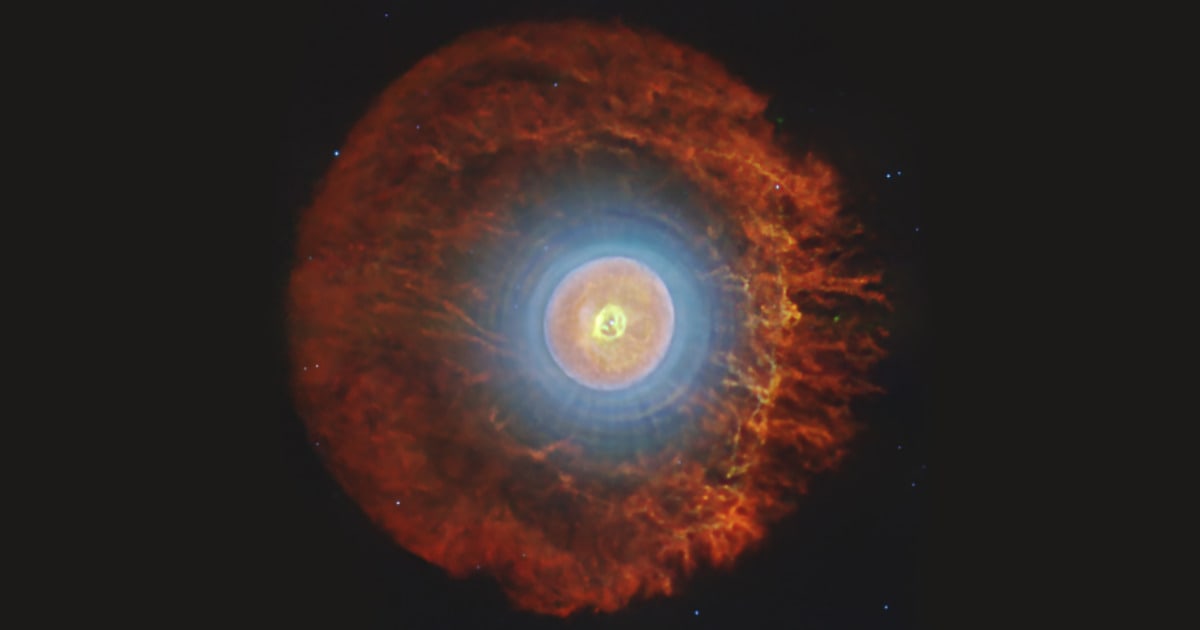
Now the James Webb Space Telescope has given scientists an even better look. The new images show wispy filaments and glittering shells of gas where these cosmic footballs float. The nebula formed when a star like our Sun ran out of fuel and blasted its outer layers into space.
Why This Inspires
These molecules aren't just space oddities. On Earth, scientists have found buckyballs in soot and rocks, and they're revolutionizing technology. Researchers are using them to store hydrogen fuel, deliver medicine directly into cells, create materials stronger than steel, and build superconductors.
The discovery proves that the building blocks of advanced technology exist naturally throughout the universe. What we create in labs has been floating in the cosmos since the dawn of time.
Sir Harry Kroto, after learning buckyballs existed in space, shared his excitement: "This particularly exciting breakthrough provides compelling evidence for what I have long suspected. Buckyballs have existed since time immemorial in the darkest corners of our Galaxy."
The universe has been making these perfect molecular structures for billions of years, just waiting for us to notice.
More Images



Based on reporting by Google: scientific discovery
This story was written by BrightWire based on verified news reports.
Spread the positivity!
Share this good news with someone who needs it