Tabla Legend's Family Keeps His Global Music Legacy Alive
A New Delhi museum honors Pandit Chatur Lal, who died at 39 after introducing the tabla to world stages in the 1950s. His family has spent decades preserving his groundbreaking legacy through festivals, awards, and a home museum filled with his treasured belongings.
📺 Watch the full story above
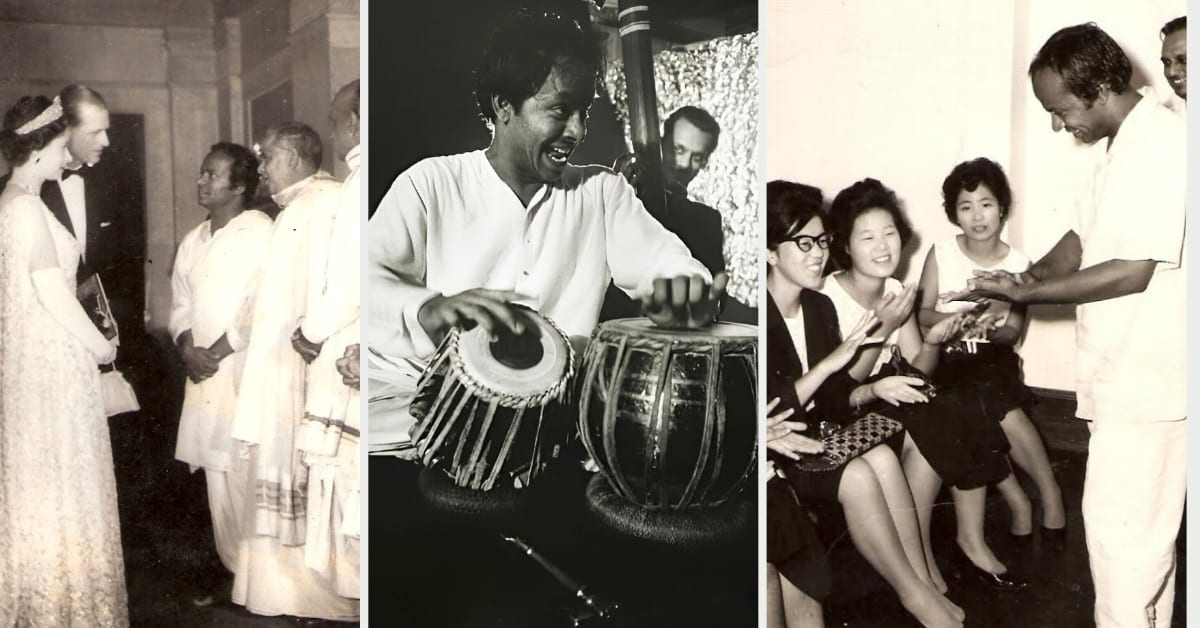
When Pandit Chatur Lal played tabla at a house concert in 1958, his knuckles bled from hours of relentless rhythm, but he refused to stop until sunrise so guests could find safe transport home. That devotion to music and people defined the "Tabla Wizard" whose 100th birth anniversary India celebrates this year.
Born in Udaipur in 1925, Chatur Lal stood at the frontier of Indian classical music's global journey. In the 1950s, he toured with legends like Pandit Ravi Shankar and Baba Allauddin Khan, performing at New York's Museum of Modern Art and Rockefeller Centre in 1955.
His 1957 solo album "The Drums of India" transformed the tabla from background accompaniment into a commanding solo instrument. That same year, he composed music for the Canadian short film "A Chairy Tale," which won a Special BAFTA Award.
He collaborated with Western jazz musicians when such partnerships were virtually unheard of, laying groundwork for what we now call fusion music. His work opened concert halls across continents to an instrument most Western audiences had never heard.
On October 14, 1965, he died from jaundice complications at just 39 years old. His eldest son Charanjit, then nine, remembers the road to their house carpeted entirely in flowers as crowds gathered to pay respects.
The Ripple Effect extends far beyond those grief-stricken streets. Charanjit became a percussionist himself and founded the Pandit Chatur Lal Memorial Society in 1990, hosting annual festivals and awards that keep his father's influence alive in India's classical music scene.
The most touching tribute stands in New Delhi: Taa Dhaa, likely India's first museum dedicated to a percussionist. The name combines "Taa," the family's nickname for him, with "Dhaa," the tabla's opening syllable.
The museum occupies the very home Chatur Lal built. Display cases hold his Parisian soap bar from his final days, gold kurta buttons, fountain pens, and concert memorabilia from around the world.
Carpets gifted by the Shah of Iran and King of Afghanistan hang on walls. A functioning refrigerator from German scholar Dr. Lothar Lutze preserves decades-old friendships.
A small closet holds photographs of deities and a rudraksha mala he used during prayer. "No matter how busy he was," Charanjit says, "every Tuesday he would stand on one foot for an hour to worship Lord Hanuman."
Among the treasures sits a 13 mm tape capturing a duet between Chatur Lal and American jazz legend Papa Jo Jones, a dialogue across drums that bridged continents and cultures.
His granddaughter Shruti and grandson Pranshu now carry forward what their grandfather started: proof that one artist's passion can echo across generations and around the world.
More Images
%2Fenglish-betterindia%2Fmedia%2Fmedia_files%2F2026%2F03%2F02%2Fpandit-chatur-lal-2026-03-02-17-33-06.png)
%2Ffilters%3Aformat(webp)%2Fenglish-betterindia%2Fmedia%2Fmedia_files%2F2026%2F03%2F02%2Fchatur-lal-with-ravi-shankar-2026-03-02-18-44-09.png)
%2Ffilters%3Aformat(webp)%2Fenglish-betterindia%2Fmedia%2Fmedia_files%2F2026%2F03%2F02%2Ftaa-dhaa-museum-2026-03-02-18-18-08.png)
Based on reporting by The Better India
This story was written by BrightWire based on verified news reports.
Spread the positivity!
Share this good news with someone who needs it