Waymo's 200M Autonomous Miles Make Roads Measurably Safer
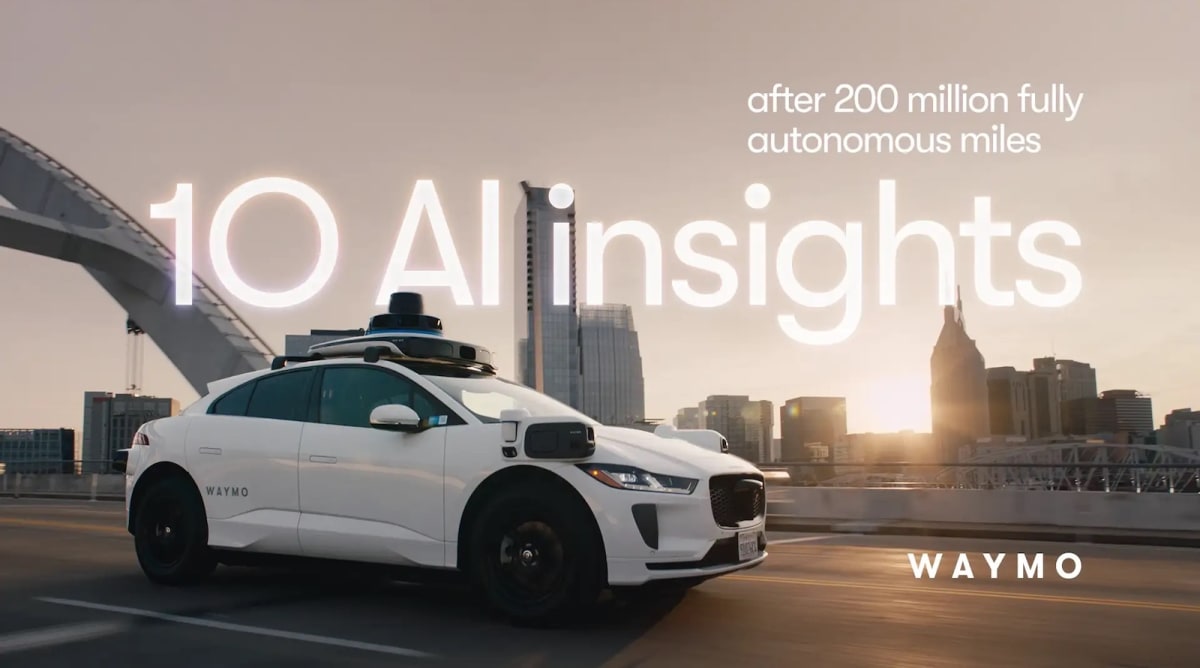
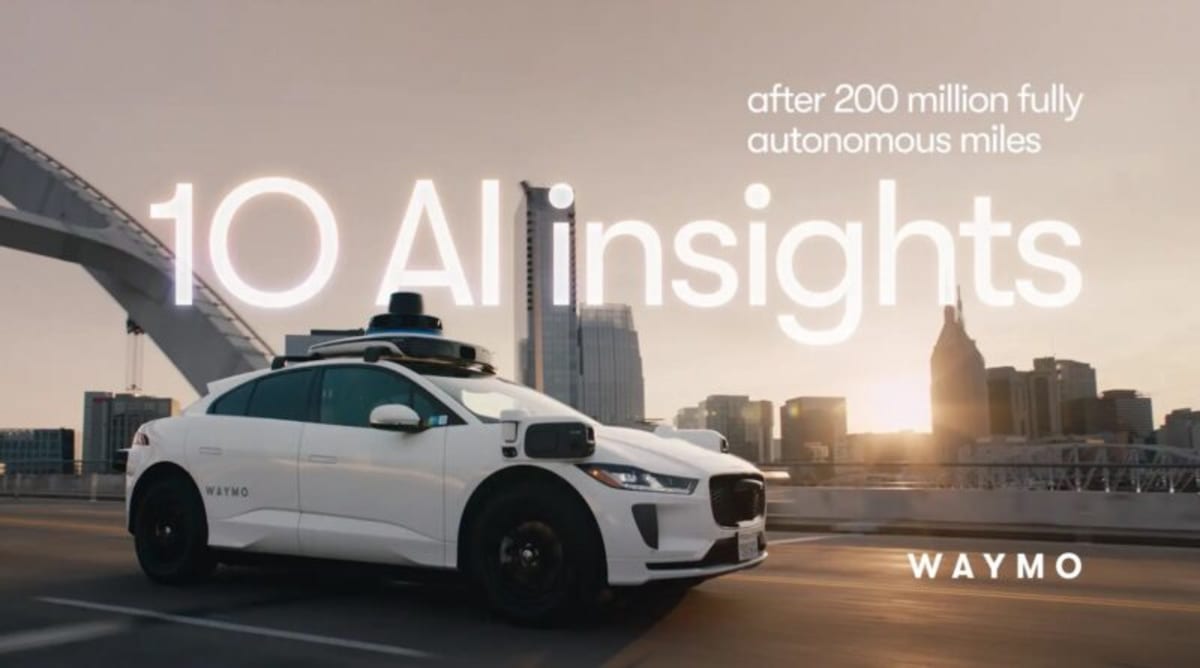
Self-driving cars just passed a massive milestone that proves they're not science fiction anymore. Waymo's autonomous vehicles have now driven over 200 million miles without a human behind the wheel, and the safety data shows they're already outperforming human drivers.
📺 Watch the full story above
The future of safer roads is already here, and it's learning fast.
Waymo, the self-driving car company, has quietly crossed 200 million fully autonomous miles on public roads. That's roughly equivalent to driving around Earth 8,000 times, except no human touched the steering wheel once. The real news isn't just the distance. It's what those miles taught the company about building artificial intelligence that genuinely saves lives.
The data reveals something remarkable. In cities where Waymo operates, their autonomous vehicles are already making roads measurably safer than human drivers. Every mile driven becomes a lesson that improves the entire fleet overnight.
Here's what makes it work. Waymo uses cameras, lidar, and radar together because no single sensor can do it all. Cameras read traffic signs and spot red lights. Lidar maps the world in 3D with millimeter precision. Radar tracks speed and sees through fog and rain when cameras can't. This triple-check system creates redundancy that catches what any single sensor might miss.
The company also relies on high-definition maps as a kind of memory system. Think of it like knowing your neighborhood so well that you can focus on the unexpected, like a sudden detour or construction zone. The onboard computer doesn't waste processing power relearning the landscape. It concentrates on what's changing right now.
Early autonomous vehicles used dozens of separate AI programs, one for each task. Waymo discovered that fewer, more powerful AI models work better. These foundation models can learn complex reasoning from massive datasets, similar to how chatbots like ChatGPT learned language patterns. The difference is these models are learning how to navigate safely through unpredictable real-world traffic.
Safety requires transparency. Waymo built an independent AI safety system that monitors every decision the vehicle makes. If the main system proposes a maneuver that violates physics or traffic laws, this backup layer stops it immediately. It's like having a co-pilot who never gets distracted or tired.
The company tests millions of scenarios in simulation that would be too dangerous or rare to practice on real roads. In closed-loop simulations, other virtual cars react realistically to the autonomous vehicle's choices, just like real traffic would. This reveals edge cases, those one-in-a-million moments that still happen regularly when you're driving millions of miles.
The Ripple Effect
This isn't just about one company's technology getting better. Every insight Waymo gains from 200 million autonomous miles advances the entire field of safe AI development. The approach of combining multiple sensors, using validation layers, and testing in realistic simulations creates a template for building trustworthy autonomous systems in other industries too.
When self-driving technology reaches more cities, the impact multiplies. Over 40,000 Americans die in car crashes annually, with human error causing 94% of serious accidents. Autonomous vehicles that demonstrably drive safer than humans represent one of the most concrete ways AI can save lives at scale.
The path from experimental technology to everyday safety net is being paved one autonomous mile at a time.
More Images
Based on reporting by CleanTechnica
This story was written by BrightWire based on verified news reports.
Spread the positivity!
Share this good news with someone who needs it