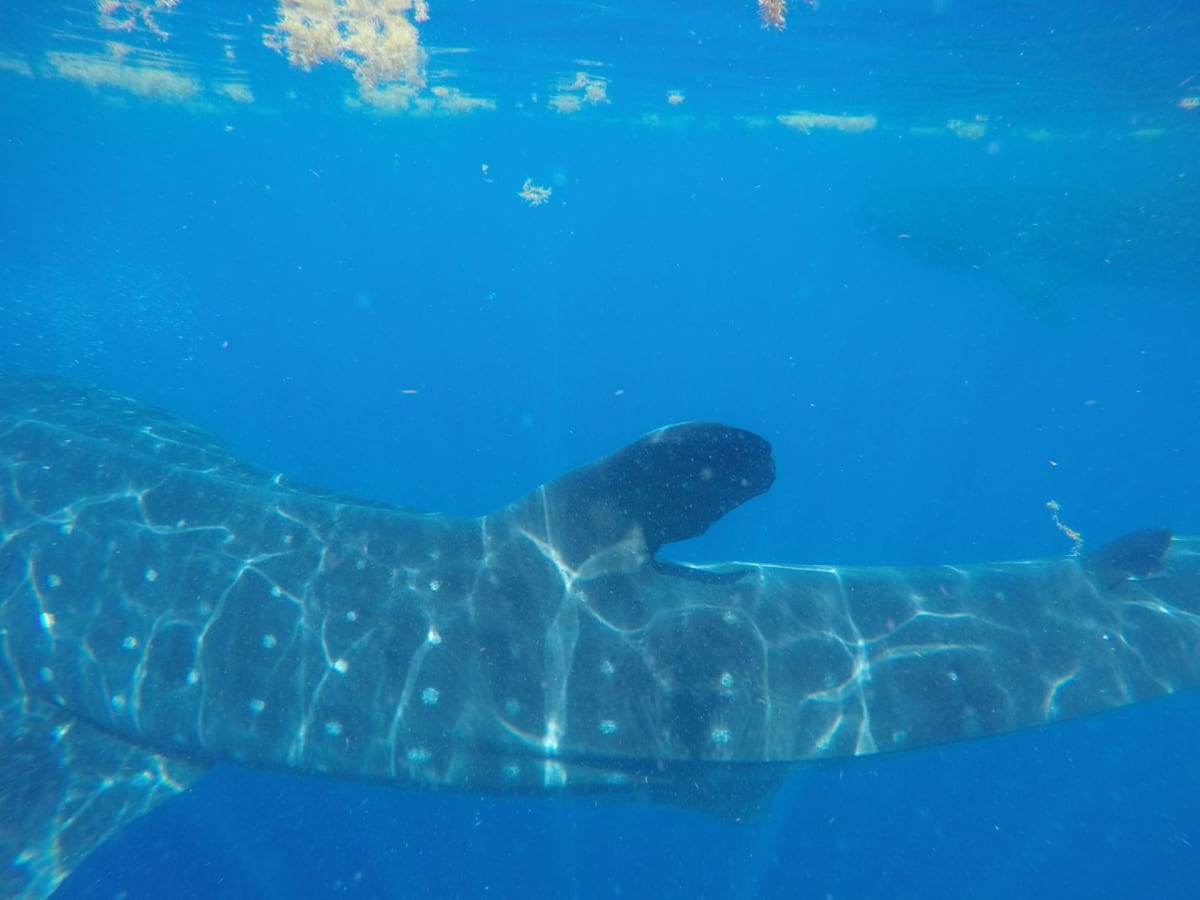
Whale Shark Milo Tracked 34,000 Miles Over 10 Years
A 26-foot whale shark nicknamed Milo has shattered the world record for longest shark tracking, traveling over 34,000 miles since researchers first tagged him in 2017. Scientists have now successfully tagged the same individual shark five times, revealing unprecedented insights into how these gentle giants navigate our oceans.
📺 Watch the full story above
Imagine running into the same friend at your favorite coffee shop every summer for ten years, and each time they tell you about an incredible journey across thousands of miles of ocean.
That's essentially what happened when marine researchers recently encountered Milo, a massive whale shark, at his regular hangout spot off Mexico's Yucatan Peninsula. The Guy Harvey Foundation and partner organizations just tagged him for the fifth time, creating the longest continuous tracking record of any shark in history.
Milo measures 26 feet long and weighs several tons, yet he returns like clockwork each summer to feast on fish eggs floating near the Yucatan coast. His predictable visits have given scientists an extraordinary window into whale shark behavior that would be impossible with just one tagging.
Since 2017, Milo's satellite tags have recorded over 34,000 miles of travel. He's cruised throughout the Gulf of Mexico, island-hopped around the Caribbean, ventured east of Bermuda, and swam as far north as Massachusetts. For perspective, that's more than circling the Earth at the equator.
Dr. Mahmood Shivji from Nova Southeastern University says Milo has revealed how adaptable these giants truly are. The shark spends months lounging in shallow coastal waters, then suddenly embarks on epic voyages into the deep Atlantic Ocean. He's equally comfortable in both drastically different environments.
The timing couldn't be better for this breakthrough. Whale sharks are classified as endangered due to overfishing and ship strikes, and they can live up to 125 years. Understanding where they travel helps scientists identify critical habitats that need protection.
This summer's whale shark gathering off the Yucatan has been particularly spectacular after several lean years. Hundreds of whale sharks and manta rays are showing up daily to feed, delighting both researchers and ecotourists who swim alongside the ocean's largest fish.
Why This Inspires
Milo's story reminds us that patience pays off in conservation. Nearly a decade of dedication by researchers, perfecting tagging techniques and returning year after year, has unlocked secrets about a species we're still learning to protect.
Rafael de la Parra from Mexican conservation group Ch'ooj Ajauil AC was there for all five taggings. His commitment to understanding one individual shark has generated data that will help protect the entire species for generations.
The research team has now tagged 48 whale sharks total in the region, building a comprehensive picture of migration patterns. Every data point from Milo and his companions informs smarter conservation strategies, shipping lane adjustments, and protected marine areas.
You can follow Milo's ongoing journey and see tracks from other tagged marine animals at GHRItracking.org, watching in real time as these ancient mariners navigate our shared oceans.
One shark, ten years, five tags, and 34,000 miles later, we're finally learning how to share the ocean with its most magnificent residents.
More Images
Based on reporting by Google News - World Record
This story was written by BrightWire based on verified news reports.
Spread the positivity!
Share this good news with someone who needs it