100-Year-Old Physicist Still Working on AI's Future
Jim Choyke fled Nazi Germany at age 9, and now at 100, he's still conducting research that powers today's artificial intelligence revolution. The University of Pittsburgh professor emeritus spent 50 years studying silicon carbide, a material now essential for AI and electric vehicles.
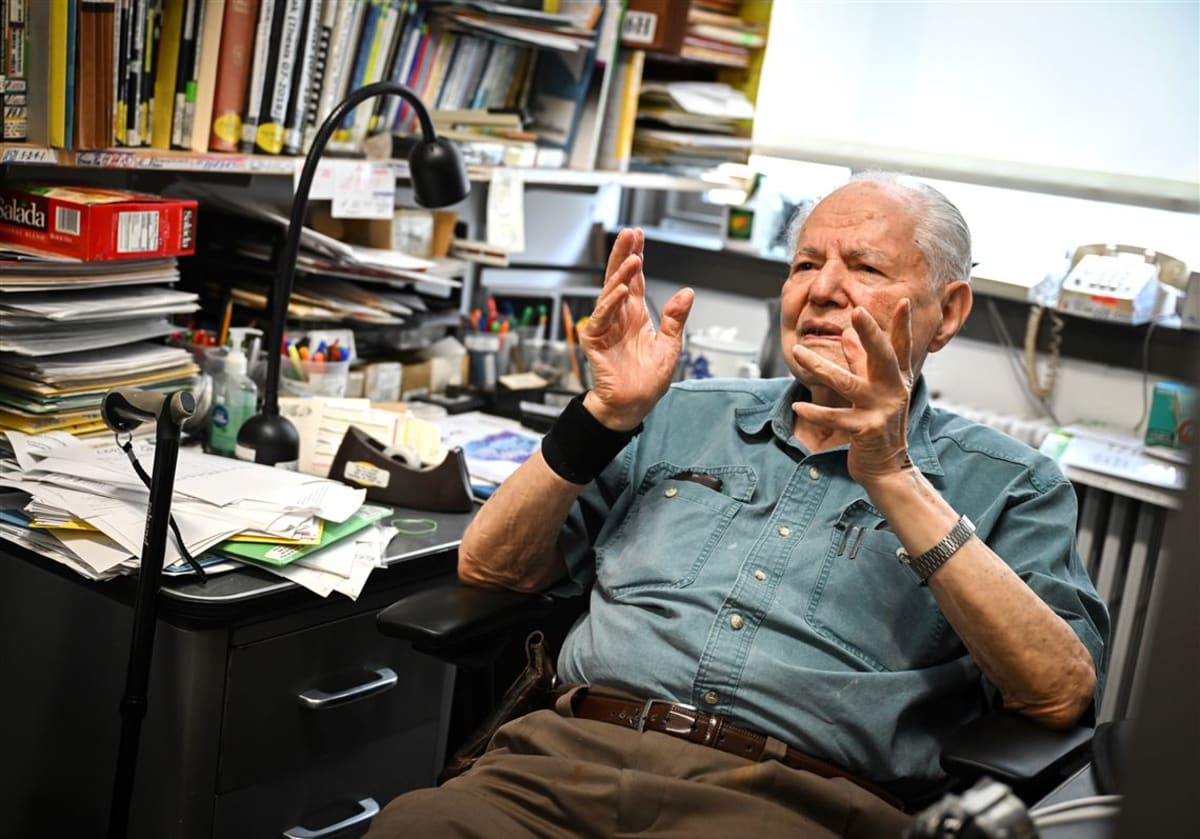
At 100 years old, Jim Choyke still climbs three flights of stairs to his University of Pittsburgh office each day, driven by a simple question: "I like doing physics. Why should I retire?"
Choyke's life story reads like a history book. Born in Berlin in 1926, he fled Nazi Germany with his family just before the Night of the Long Knives in 1934. They arrived in New York when he was 9, where young Choyke founded the Junior Astronomy Club and convinced famous scientists to speak at their meetings.
After earning his doctorate in nuclear physics at Ohio State, Westinghouse Research Laboratories offered him a job in Pittsburgh in 1952. There was just one catch: he'd be working in solid-state physics, a field he knew nothing about. "I said, 'Look, I don't have a clue what that is, I gotta be honest,'" Choyke recalls. "And they said, 'Well, why don't you come and learn it on the job?'"
That decision changed everything. Choyke spent the next five decades studying silicon carbide, a semiconductor compound most scientists ignored at the time. He was fascinated by its properties long before anyone saw its potential.
Today, that same material is crucial for the artificial intelligence boom. Silicon carbide helps scale up energy-intensive AI models, build quantum computers, and power batteries for electric cars. "All of AI is going to depend on this," Choyke said from his book-filled office.
His colleague Jeremy Levy credits him as being "as old as quantum mechanics itself" and a major reason the field has advanced so far. Choyke's early work laid groundwork that scientists are only now fully appreciating.
On July 24, Choyke celebrated his 100th birthday. He still drives, has no chronic illnesses, and only uses a cane for balance. His memory remains sharp, recalling exact dates from his childhood and the full names of friends from 80 years ago.
Why This Inspires
Choyke's story shows how curiosity and persistence create unexpected legacies. He studied silicon carbide not because it was popular or profitable, but because it fascinated him. Decades later, his work helps power the technologies transforming our world.
His dedication to learning never stopped. At 26, he moved to Pittsburgh to study a field he'd never heard of. At 100, he's watching his life's work become essential to humanity's technological future.
The boy who fled Nazi Germany became a father of quantum mechanics, proving that refuge can become renaissance. His refusal to retire isn't about stubbornness but passion for discovery that age cannot diminish.
Choyke's century of life bridges an extraordinary span: from a world without women's voting rights to one building quantum computers, and he helped build that bridge one discovery at a time.
More Images
Based on reporting by Google News - Science
This story was written by BrightWire based on verified news reports.
Spread the positivity!
Share this good news with someone who needs it