1,000 Rare Herons Find Safe Haven on Costa Rica Estate
A private property near Costa Rica's Caño Negro wetlands has become home to around 1,000 agami herons, one of the world's most elusive and colorful bird species. Scientists, locals, and the landowner are now working together to protect this extraordinary gathering.
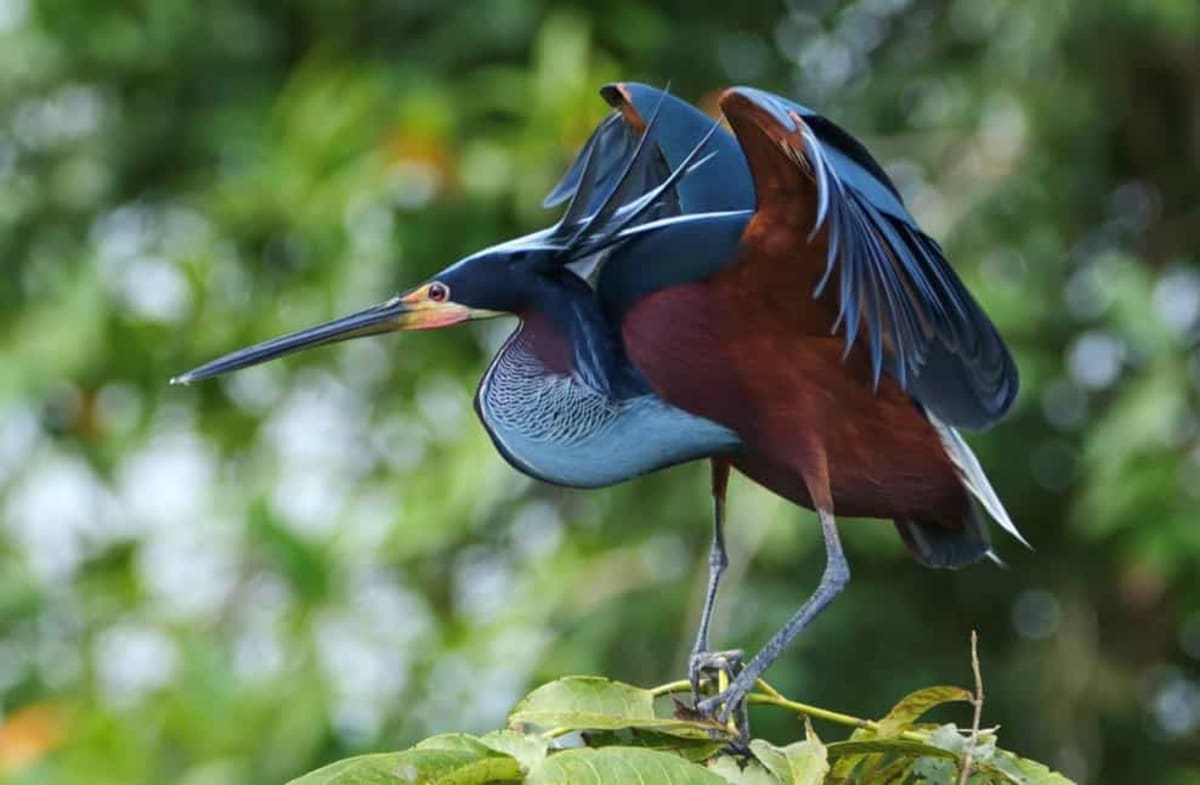
Around 1,000 agami herons have gathered on a private estate in Guatuso, Costa Rica, creating one of the largest known concentrations of this rare and secretive bird species.
The vibrant herons have turned the property near Caño Negro wetlands into an important breeding site. While these birds range from Mexico to South America, they're rarely spotted due to their preference for dense, hidden wetland habitats.
What makes this story special is the immediate collaboration it sparked. The property owner contacted researchers at the National Distance Education University (UNED) to help study and protect the colony, even offering to invest resources to maintain the environmental conditions the birds need.
Scientists are now conducting regular censuses to count nests, chicks, and adult birds. Their goal is to understand what makes this location so attractive and how to keep it that way for future generations.
Unlike typical herons dressed in white, gray, or brown, agami herons are among the most colorful in the Americas. Their distinctive plumage makes them a spectacular sight when groups gather like this.
The Ripple Effect
The initiative has grown beyond just science. Estate workers are receiving training to recognize threats and understand how their daily activities might affect the birds' feeding, resting, and nesting areas.
Local communities see potential for responsible nature tourism. Community leader Odir Rojas Gómez emphasizes that the colony brings both opportunity and duty: "We want the communities to be part of its protection and for people who come to learn about it to understand that they are facing a space we must care for future generations."
Researchers are taking a careful approach to any future tourism. They're planning observation protocols that include minimum viewing distances, binoculars and telescopes, and camouflaged viewing areas to prevent disturbing nesting birds.
The concern is real. Adult herons can abandon nests temporarily when stressed, leaving eggs and chicks vulnerable to predators or falls. Too many visitors or too much noise during breeding season could harm the very colony people want to celebrate.
"We don't want the interest sparked by this gathering to end up becoming a threat," said Ever Shion Salas, project designer and manager at UNED.
Ongoing monitoring will help determine what conservation measures work best as this unusual gathering continues to thrive in its protected corner of Costa Rica.
More Images




Based on reporting by Tico Times Costa Rica
This story was written by BrightWire based on verified news reports.
Spread the positivity!
Share this good news with someone who needs it