10,000-Year-Old Mastodon Tooth Found in Bay Area Creek
A scientist searching for frog habitats in a San Mateo County creek discovered the most complete Ice Age mastodon tooth ever found in the Bay Area. The ancient fossil is helping researchers understand California's vanished Ice Age giants and protect ecosystems today.
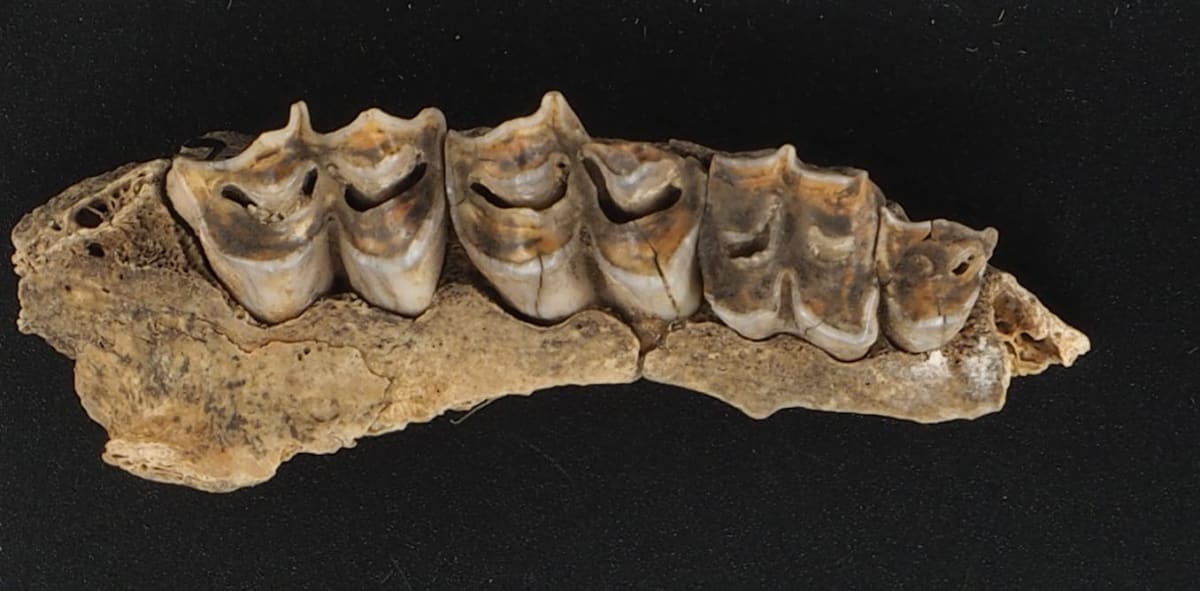
While surveying a redwood forest creek for threatened California red-legged frogs this summer, geomorphologist Brigid Lynch spotted what looked like an oddly shaped rock. It turned out to be something far more extraordinary: a 10,000-year-old Pacific mastodon molar in pristine condition.
Lynch, who works with Balance Hydrologics on habitat projects, made the discovery while doing fieldwork for the Midpeninsula Regional Open Space District. "As a geologist, I've gone out and seen stuff in the field, but definitely nothing as exciting as this," she said.
Paleontologists are calling it the most complete mastodon molar ever found in the Bay Area. Wayne Thompson, a paleontologist with Pacific Paleontology, said the discovery gave him "chills and shivers up and down my spine."
The fossil belonged to a Pacific mastodon, a huge, hairy relative of modern elephants that roamed California during the Ice Age. These giants walked alongside saber-toothed cats, dire wolves, and Columbian mammoths until their extinction about 11,700 years ago.
The Pacific mastodon was only officially recognized as a distinct species in 2019. Unlike their American mastodon cousins, they had narrower teeth and thicker leg bones, perfectly adapted for browsing leaves and soft shoots from woody plants in California's ancient forests.
The tooth has been donated to Stanford University's Doerr School of Sustainability, where researchers will carbon-date it to determine its exact age. Scientists will also create a 3-D scan and print a copy for public education.
Why This Inspires
This accidental discovery shows how everyday fieldwork can unlock secrets from our planet's past. Christine Garcia, curator at Stanford's Geoscience Specimen Collection, explains that fossils don't just tell us about ancient life. They help scientists make better predictions and decisions about protecting ecosystems and biodiversity today.
As California faces extreme heat and rapid environmental change, understanding how these Ice Age giants adapted and eventually vanished offers crucial lessons. The mastodon tooth is another puzzle piece in understanding how ecosystems respond to climate shifts.
The discovery also highlights how preserving open spaces creates opportunities for both wildlife conservation and scientific discovery. The same creek that supports threatened frogs today held evidence of megafauna from millennia ago.
Scientists continue finding Pacific mastodon fossils across California, with another tooth discovered at Rio Del Mar State Beach near Santa Cruz in 2023. Each find adds to our understanding of these magnificent creatures and the world they inhabited.
More Images


Based on reporting by Google: fossil discovery
This story was written by BrightWire based on verified news reports.
Spread the positivity!
Share this good news with someone who needs it