1,500-Year-Old Sculpture Hides 1,185 Figures in One Stone
Ancient Indian artisans carved 1,185 miniature figures into a single 11-foot sandstone block without any machines. The masterpiece has survived invasions, monsoons, and 1,500 years to still stand in Madhya Pradesh today.
Imagine carving 1,185 tiny figures by hand into a single block of stone, each one perfect enough to last 1,500 years.
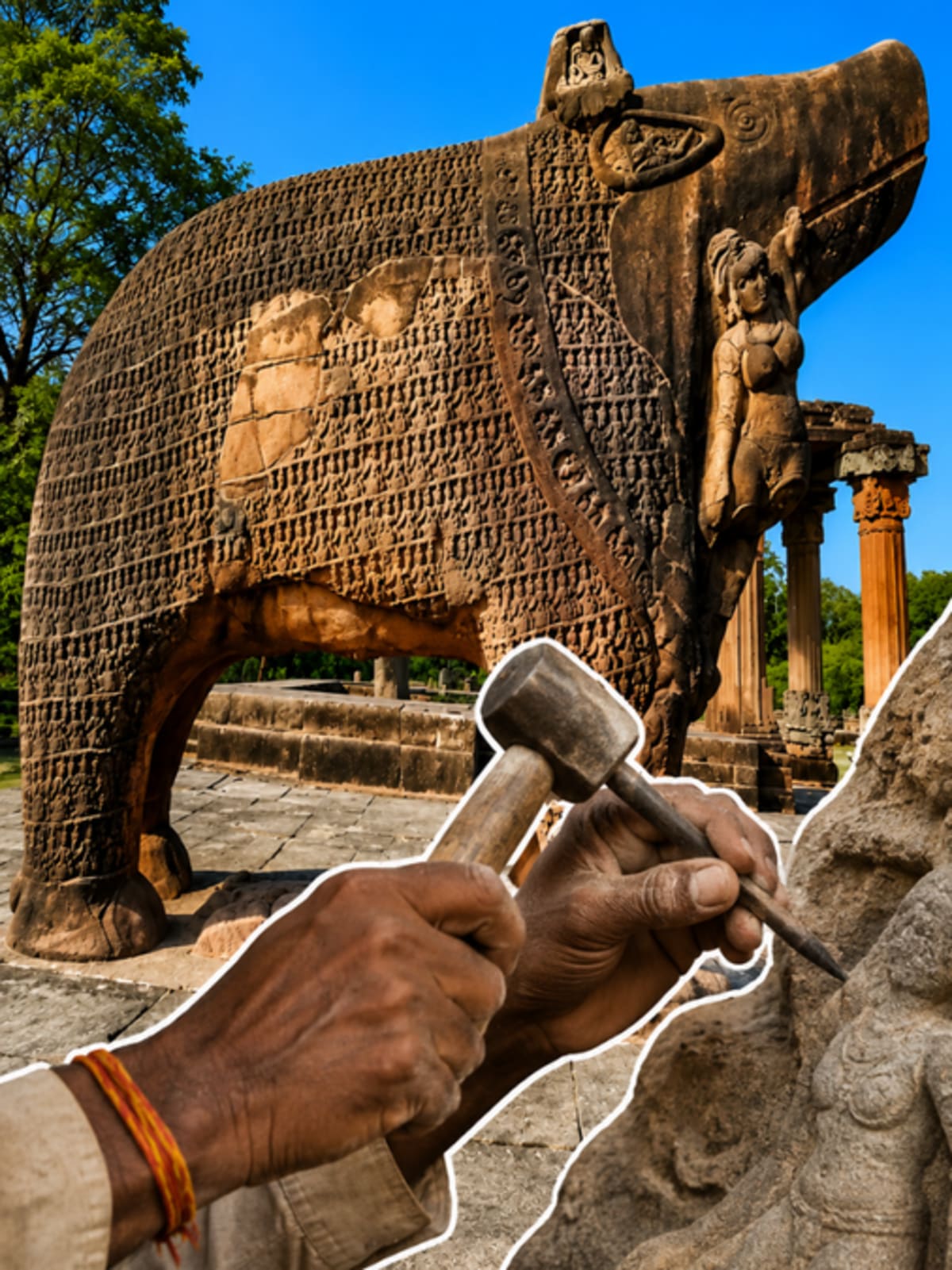
That's exactly what ancient Indian artisans achieved in Eran, Madhya Pradesh. The giant Varaha sculpture stands 11 feet tall, carved entirely from one sandstone block during the Gupta era. Every miniature sage and saint etched across its surface was created with hand tools alone, no machines.
The sculpture depicts Varaha, the boar incarnation of Vishnu, rescuing Goddess Bhudevi from the cosmic ocean. She hangs delicately from the boar's tusk, while 1,185 carved figures of sages and saints arrange themselves in careful rows across the body. Historians believe this is the earliest known fully animal-form Varaha sculpture ever found in India.
An eight-line Sanskrit inscription on the sculpture's neck tells its own remarkable story. When the Huna king Toramana conquered Malwa from the Guptas, a local noble named Dhyanvishnu carved his name into the neck. The inscription captures a moment of political turmoil frozen in stone.
The sculpture disappeared from historical memory for centuries until British archaeologist Alexander Cunningham documented Eran's ruins in the 1800s. His work brought the masterpiece back into modern awareness and sparked renewed interest in this engineering marvel.
For 1,500 years, the Varaha has weathered changing kingdoms, foreign invasions, and countless monsoons. Much of its intricate detailing remains visible today, a testament to the skill of its creators. Recent years have brought new challenges as algae and natural weathering threaten the surface. Conservationists have carefully cleaned and protected the sculpture while preserving its original character.
Why This Inspires
Few monuments combine artistry, engineering, storytelling, and historical documentation on this scale. The Varaha demonstrates what human hands could achieve with simple tools and extraordinary patience. It reminds us that the masterpieces we create today might inspire people 1,500 years into the future.
The sculpture continues to draw historians and visitors who marvel at its survival and craftsmanship.
Based on reporting by The Better India
This story was written by BrightWire based on verified news reports.
Spread the positivity!
Share this good news with someone who needs it