17,000-Year-Old Cave Art Found in Wales Is UK's Oldest
After a century of debate, scientists confirmed that mysterious red lines in a Welsh cave are the oldest known rock art in Britain, created by prehistoric people 17,000 years ago. The discovery reconnects us to our ancestors' creative spirit and shows that the human desire to make meaningful marks on the world is timeless.
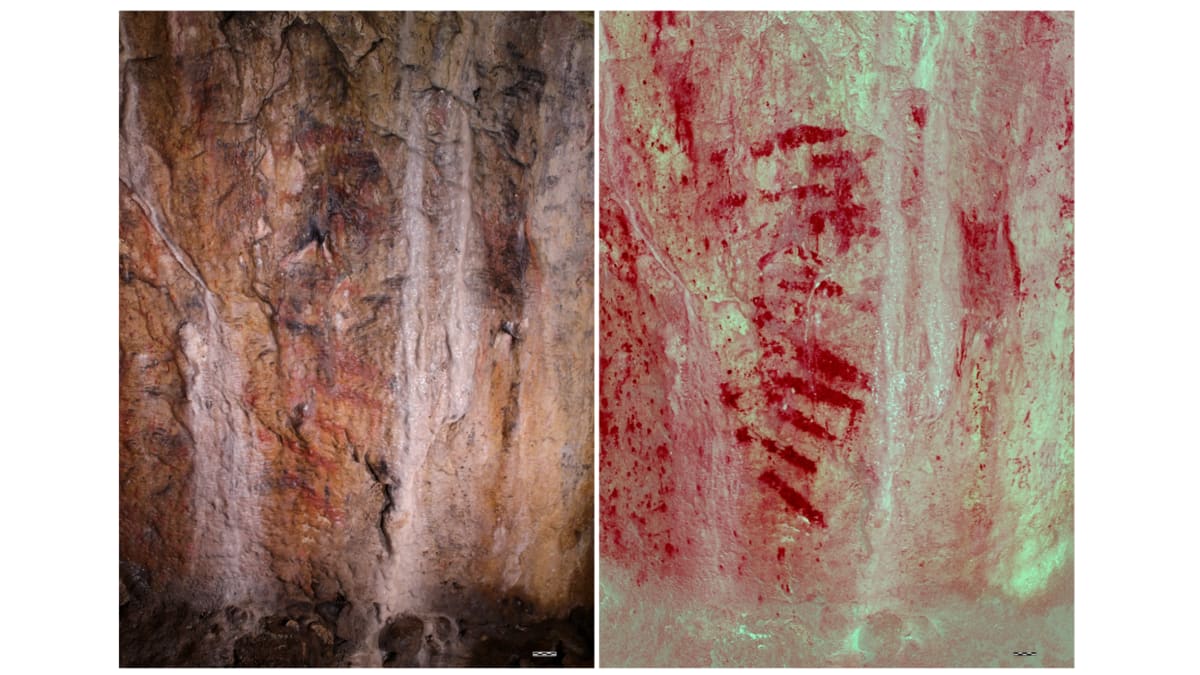
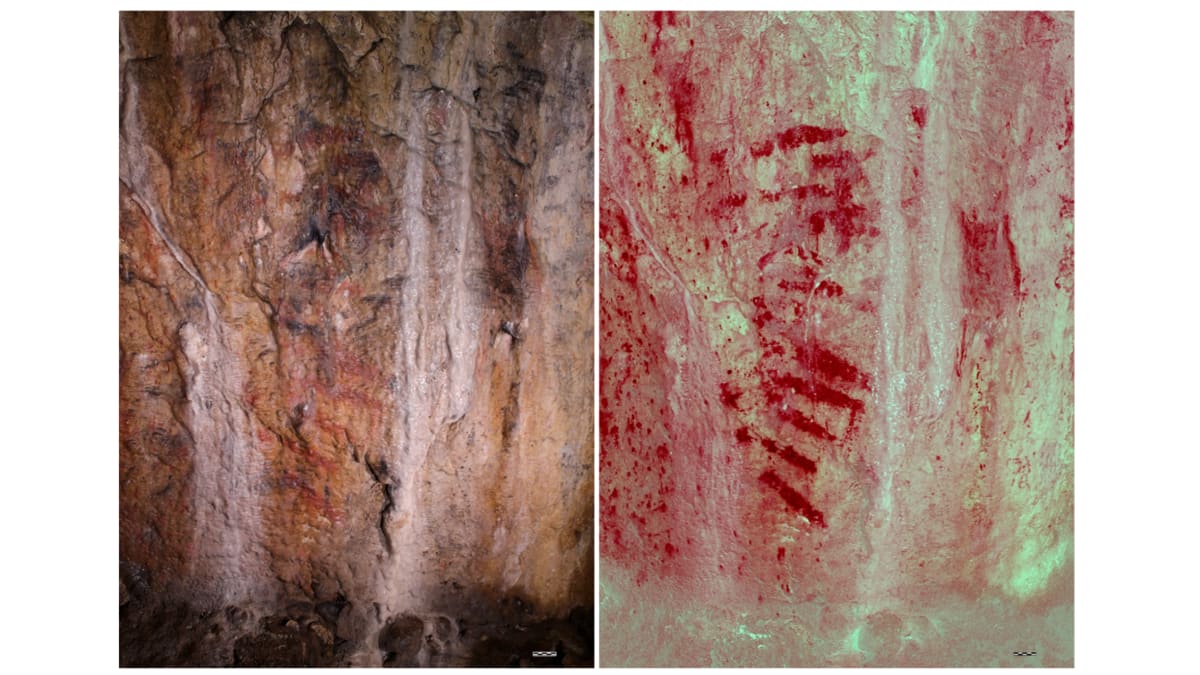
Deep inside a Welsh cave, eleven red lines painted 17,000 years ago have finally gotten the recognition they deserve as Britain's oldest known rock art.
The story begins in 1912, when explorers first discovered the horizontal red lines inside Bacon Hole, a cave carved into limestone cliffs on Wales' Gower Peninsula. Scientists initially celebrated the find as Britain's first example of Upper Paleolithic art, but skeptics soon dismissed the lines as nothing more than natural rock stains.
The debate faded away when everyone forgot exactly where in the cave the lines even were. For nearly a century, this ancient artwork remained lost to science.
Then in 2022, an international team of researchers rediscovered the panel hidden deep in the cave's darkness. Using uranium-thorium dating on the calcite crust covering the lines, they confirmed the art was created between 15,700 and 18,300 years ago.
The researchers also solved the mystery of what the ancient artists used for paint. The red hue comes from hematite, an iron-oxide compound that naturally seeps from rocks elsewhere in the cave, meaning prehistoric people collected the material and deliberately applied it to create their art.
What makes these lines clearly human-made is their precision. The eleven horizontal stripes are evenly spaced in a deliberate pattern, and researchers found matching finger dots and hematite splashes elsewhere in the cave.
Why This Inspires
George Nash, an archaeologist at the University of Liverpool who led the study, believes the cave held special meaning for ancient people. Located in the cave's deepest, darkest section, the red-lined panel would have required visitors to journey far from natural light into an acoustically unusual space separated from the everyday world.
"The darkness itself may have been an essential part of the ritual experience," Nash explained. The cave's isolated location may have made it feel like entering a different realm entirely.
What's remarkable is how many generations kept coming back. Archaeologists have found evidence of visitors from pre-Roman times, the Roman era, seventh-century Ireland, Saxon England, and medieval Wales all leaving their marks in Bacon Hole.
Even in 1894, a local fisherman added his own graffiti to the walls, continuing a tradition of human expression that started thousands of years before.
"Once a place becomes embedded in cultural memory, it can acquire meanings that endure long after its original purpose has been forgotten," Nash said. The cave's prominent coastal location and enduring presence in the landscape made it a place where successive generations felt drawn to return.
These ancient red lines remind us that creativity, ritual, and the need to leave our mark are deeply human traits that connect us across millennia.
More Images

Based on reporting by Live Science
This story was written by BrightWire based on verified news reports.
Spread the positivity!
Share this good news with someone who needs it
%2Ffile%2Fattachments%2F2997%2F36Thulamela_Archaeological_Research_Field_Trip_Sept_2025_035_372816.jpg)