20 Minutes of Exercise Protects Brain's Learning Ability
A quick cycling session shields your brain from losing its automatic learning power. Scientists found that just 20 minutes of moderate exercise prevents the natural fade in motor skills that happens after rest.
Your brain is constantly making tiny adjustments to keep your movements accurate, and scientists just discovered that a short bike ride keeps that system running strong.
Researchers at the Université de Sherbrooke found that 20 minutes of moderate cycling protects the brain's unconscious ability to learn physical movements. The study, published in Physiology & Behavior, shows this brief workout prevents a natural decline in motor learning that typically happens after rest.
The research team studied 26 healthy young adults who performed reaching tasks on two different days. Participants sat at a robotic apparatus that tracked their arm movements while a screen showed their hand position as a cursor, similar to using a computer mouse.
The scientists measured something called "post-rotation bias," which reveals how automatically your brain adjusts to errors. When the screen showed movements rotated 30 degrees from where hands actually moved, participants' brains involuntarily corrected on the next try, even when told not to think about it.
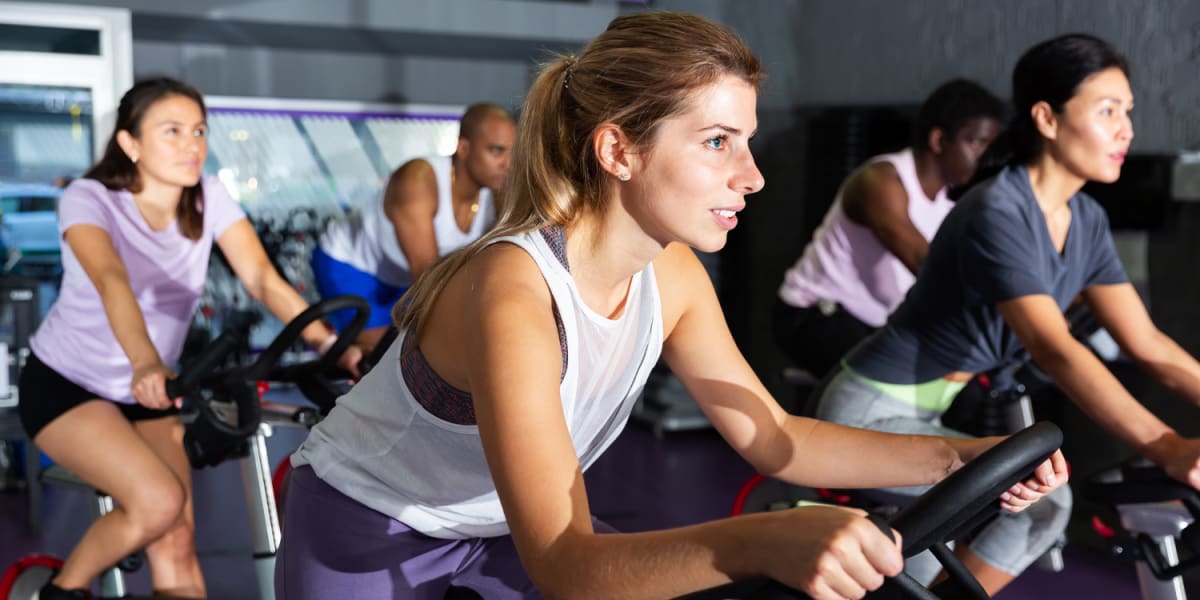
Here's where exercise made the difference. After participants rested and watched a documentary, their automatic learning ability dropped from 2.93 degrees to 2.20 degrees. But after 20 minutes of stationary cycling at 65 to 75 percent of their maximum heart rate, that learning ability stayed steady at around 2.40 degrees.
The exercise also made movements faster overall. Response times dropped from 555 milliseconds to 532 milliseconds after cycling, a 4 percent improvement in speed and vigor.
This unconscious learning system works differently from conscious strategies. When you first use a super-sensitive computer mouse, you might consciously aim differently to hit your target. But underneath that, your brain is automatically recalibrating its internal movement map without you realizing it.
The Bright Side goes beyond just preventing decline. These findings suggest that a quick workout before physical therapy or practicing a new skill could prime your nervous system to learn more effectively. Whether you're recovering from an injury or mastering a musical instrument, that pre-session sweat might give your brain's automatic learning systems the boost they need.
The protective effect happened at a very achievable exercise level. Participants weren't running marathons or doing high-intensity intervals. Moderate cycling for just 20 minutes was enough to shield their brains from the natural learning fade.
Physical activity appears to maintain the brain's existing adaptation capacity rather than supercharging it beyond baseline. The exact mechanism remains unclear, but researchers suggest the rest-related decline might involve neural fatigue or saturation of learning circuits from repetition.
Getting your heart rate up for less than half an hour keeps your brain's automatic learning system fresh and ready.
More Images

Based on reporting by Google News - Scientists Discover
This story was written by BrightWire based on verified news reports.
Spread the positivity!
Share this good news with someone who needs it