2,000 Volunteers Help Uncover 20-Foot Ancient Predator
Over 2,000 everyday people in Poland are carefully chiseling away rock to reveal one of the best-preserved ancient skeletons ever found. The massive amphibian predator fossil is turning paleontology into a public celebration of science.
Imagine getting off work and spending your evening delicately chipping away at a 20-foot prehistoric skeleton with a fine-tipped chisel. That's exactly what thousands of volunteers in Warsaw are doing, and the results are rewriting paleontology history.
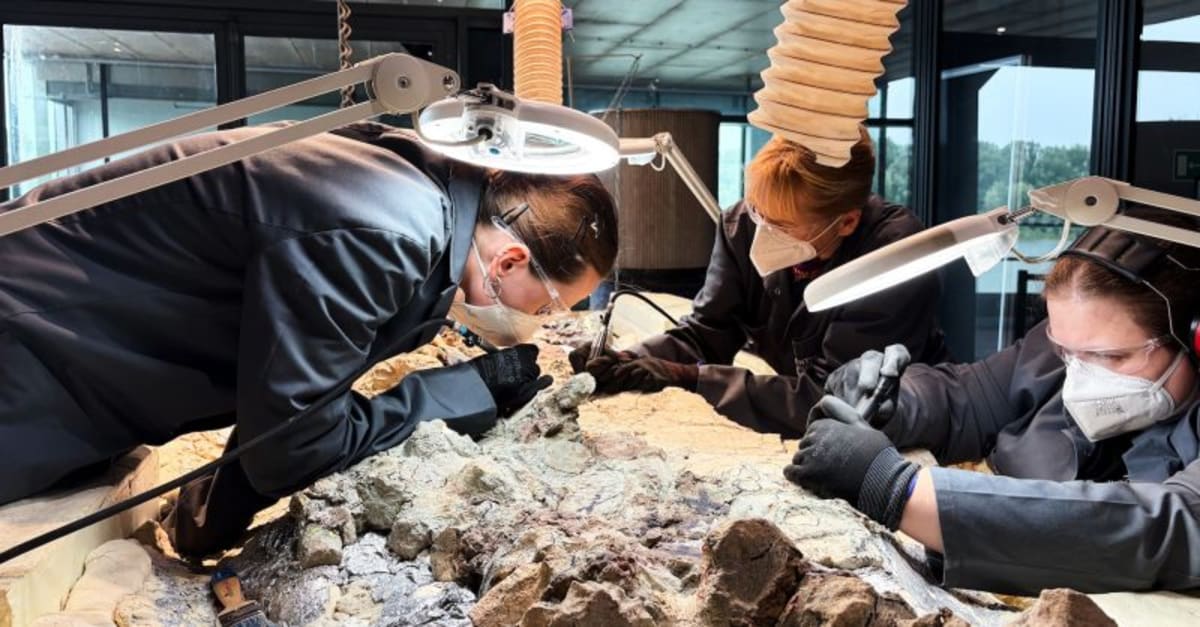
More than 2,000 people from all walks of life have signed up to help uncover a nearly complete Mastodonsaurus skeleton at Warsaw's Copernicus Science Center. The volunteers include managers, cleaners, tattoo artists, and construction workers, each receiving special training before taking their two-hour shifts at the fossil.
The skeleton itself is remarkable. At nearly 20 feet long and weighing over 2,800 pounds, it's the largest known Mastodonsaurus skeleton ever discovered. Scientists consider it one of the best-preserved specimens in the history of global paleobiology.
Paleontologist Tomasz Sulej's team first discovered the fossil in southern Poland in 2023. Local construction workers and residents helped dig it out before the skeleton made its way to the Science Center for restoration.
Now comes the painstaking work. Each volunteer removes the surrounding rock millimeter by millimeter under professional supervision. One wrong move could damage a piece of history that's been preserved for millions of years.
The Mastodonsaurus was an aquatic ambush predator that lurked in Europe's freshwater lakes and rivers. Scientists believe it had a broad, flat head with long jaws and sharp conical teeth, resembling a crocodile despite being an amphibian, not a reptile.
The Ripple Effect
What makes this project truly special is its accessibility. Visitors to the Copernicus Science Center can watch the volunteers work through a glass wall, witnessing both the careful restoration process and the sheer size of this ancient creature. Science isn't locked away in a lab; it's happening in real time with real people.
The project transforms what's typically lonely, specialized work into a community celebration. Thousands of ordinary citizens are literally touching history, learning paleontology hands-on, and contributing to global scientific knowledge.
This massive predator from millions of years ago is bringing people together today, proving that curiosity about our world's past is alive and well.
More Images
Based on reporting by Google: volunteers help
This story was written by BrightWire based on verified news reports.
Spread the positivity!
Share this good news with someone who needs it