%2Fhttps%3A%2F%2Ftf-cmsv2-smithsonianmag-media.s3.amazonaws.com%2Ffiler_public%2Faa%2F5c%2Faa5cdffc-5bdb-4949-bd7c-03e89903fd60%2Flife_reconstruction_hd.jpg)
236M-Year-Old Fossil Hints Mammals Gave Birth Much Earlier
Scientists found a growth mark in an ancient fossil suggesting mammals may have started giving birth to live young 95 million years earlier than previously thought. The discovery could rewrite our understanding of how mammals evolved.
A tiny line in a 236-million-year-old bone might just rewrite the story of how mammals came to be.
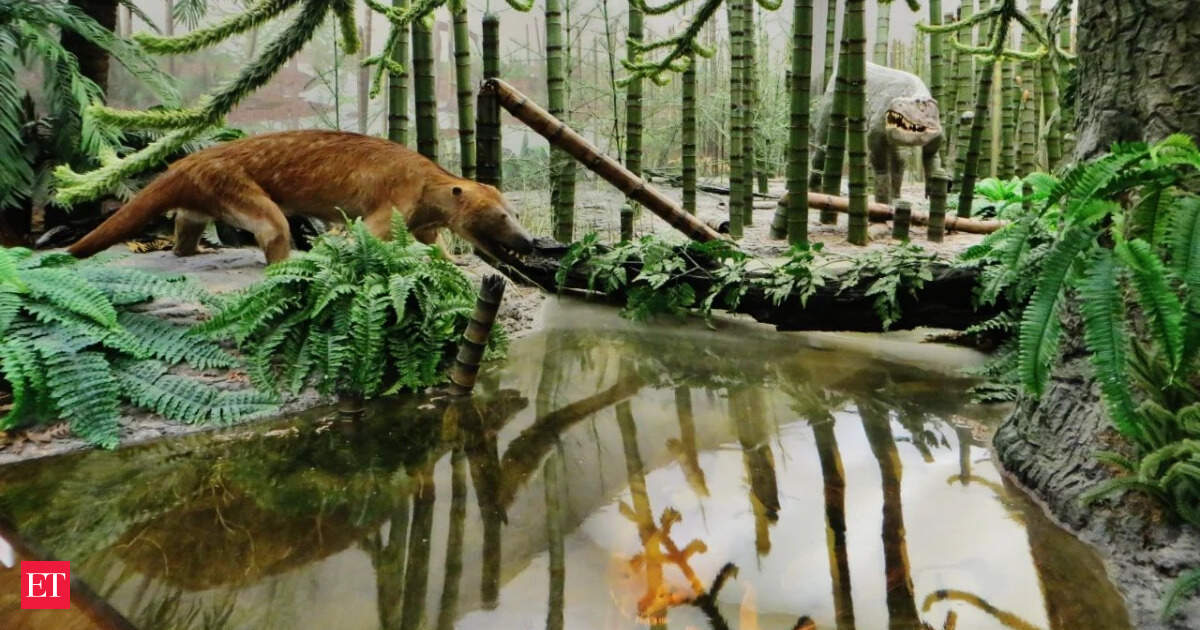
Scientists examining a fossil of Chiniquodon theotonicus, a dog-sized mammal ancestor from Argentina, discovered something remarkable. A strange line in one of its bones turned out to be a neonatal growth mark, the kind that forms when newborns experience a growth spurt right after birth.
This little line tells a big story. It suggests this ancient creature gave birth to live young rather than laying eggs, pushing back the timeline for live birth by about 95 million years.
The research team used the growth mark to calculate that baby Chiniquodon weighed about 3.7 pounds at birth and the adult weighed 26.4 pounds at death. That's a 14 percent newborn-to-adult body mass ratio.
When they compared this ratio to nearly 5,000 living animals, the numbers lined up perfectly with mammals, not egg-laying creatures. Today's reptiles and birds have tiny babies relative to adult size, usually less than 5 percent. Mammals of similar size? Up to 19 percent, matching the ancient fossil almost exactly.
"When you are in an egg or in your mom's belly, you have a small space and you grow very slowly," explains study co-author Leandro Gaetano. "When you hatch or are born, you have a lot of space and you start growing very, very quickly."
The timing makes evolutionary sense too. Chiniquodon lived during the Triassic period, when fierce predators roamed and temperatures swung wildly between seasons. Embryos developing safely inside their mothers would have had better survival odds than vulnerable eggs exposed to the elements.
Why This Inspires
This discovery shows how scientists can unlock ancient mysteries using creative approaches when direct evidence doesn't exist. We may never find a fossilized mammalian egg or pregnant mother from this era, making indirect detective work like this crucial for understanding our own origins.
The finding also raises fascinating new questions about whether live birth evolved once in the mammalian family tree or multiple times independently. More fossils will help answer that puzzle, opening new chapters in the story of life on Earth.
From a tiny growth ring to a massive shift in understanding, this fossil reminds us that breakthrough discoveries often hide in the smallest details.
More Images
%2Fhttps%3A%2F%2Ftf-cmsv2-smithsonianmag-media.s3.amazonaws.com%2Ffiler_public%2Faa%2F5c%2Faa5cdffc-5bdb-4949-bd7c-03e89903fd60%2Flife_reconstruction_hd.jpg)
%2Fhttps%3A%2F%2Ftf-cmsv2-smithsonianmag-media.s3.amazonaws.com%2Ffiler_public%2Faa%2F5c%2Faa5cdffc-5bdb-4949-bd7c-03e89903fd60%2Flife_reconstruction_hd.jpg)
%2Fhttps%3A%2F%2Ftf-cmsv2-smithsonianmag-media.s3.amazonaws.com%2Ffiler_public%2F1f%2F66%2F1f662989-4b4b-4012-a302-15f7b826f9d5%2Ffig_1g.jpg)
%2Fhttps%3A%2F%2Ftf-cmsv2-smithsonianmag-media.s3.amazonaws.com%2Ffiler_public%2F8b%2Fd8%2F8bd87a73-e36f-4ed8-b718-ddbc1665fa97%2Fimg_2959.jpg)
Based on reporting by Smithsonian
This story was written by BrightWire based on verified news reports.
Spread the positivity!
Share this good news with someone who needs it