270-Year-Old Physics Trick Powers Next-Gen Batteries
Scientists in India used a centuries-old observation about dancing water droplets to create affordable batteries that could last 10,000 charges. The breakthrough could make renewable energy storage cheaper and more reliable for millions.
Imagine a battery that powers your devices through 10,000 charges instead of dying after a few hundred cycles.
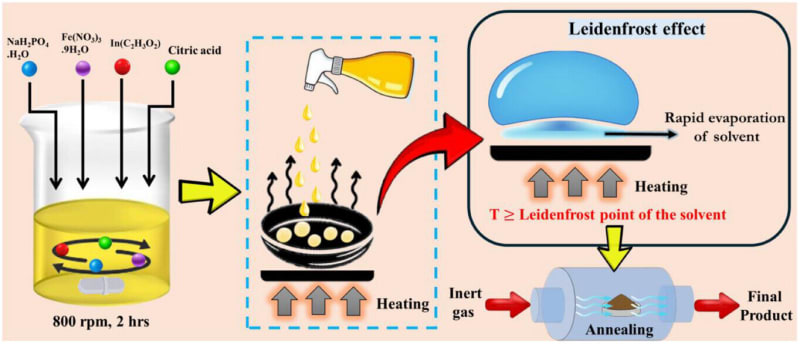
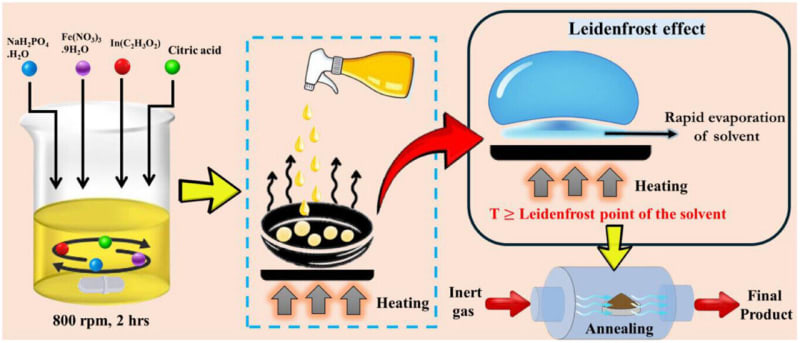
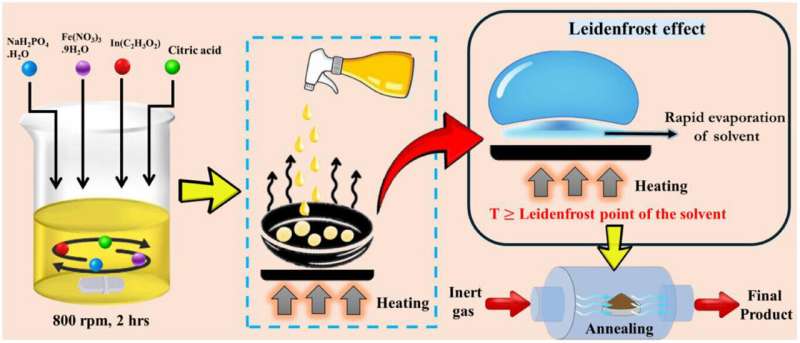
Researchers in India just made that dream a reality by borrowing a trick from 1756. Back then, German scientist Johann Gottlob Leidenfrost noticed something strange: water droplets seemed to float and dance on extremely hot metal surfaces. The secret was a thin cushion of vapor that let the water glide without friction.
Now scientists at the Indian Institute of Science Education and Research Bhopal have used this same effect to manufacture better batteries. They spray chemical mixtures onto blazing hot metal plates, triggering instant evaporation that creates perfectly porous particles. No energy-hungry furnaces required.
But the real magic happens inside the battery itself. The team focused on sodium-ion batteries, which use one of Earth's most abundant elements instead of rare, expensive lithium. Sodium sits in seawater, salt shakers, and even our blood, making it incredibly cheap to source.
The challenge? Sodium ions are bulky troublemakers that wear out battery components quickly. Think of them as oversized trucks trying to navigate narrow city streets.
So the researchers built an atomic highway. They created a cathode material with tunnel-like structures and added just 1% indium to widen the pathways. Sodium ions now zip through effortlessly, like upgrading from dirt roads to interstate highways.
Dr. Rohit Ranganathan Gaddam, who led the study published in Small, calls it building the right infrastructure. His team's cathode material demonstrated exceptional energy density and that remarkable 10,000-cycle lifespan. Most laptop and phone batteries quit after just a few hundred charges.
The Ripple Effect
This breakthrough arrives exactly when the world needs it most. As solar panels and wind turbines multiply across landscapes, we desperately need affordable ways to store that clean energy for cloudy, windless days.
India plans to generate 500 gigawatts of renewable energy by 2030. Scaled-up versions of these sodium-ion batteries could store that power without breaking the bank, preventing blackouts while keeping costs low.
The manufacturing process itself is a win for sustainability. Flash evaporation skips the enormous energy consumption of traditional furnace-based production. The sponge-like particles it creates soak up electrolyte fluid beautifully, smoothing the path for sodium travel even further.
For developing nations eyeing renewable transitions, this technology offers hope. Cheap sodium from seawater beats mining rare lithium deposits every time. Grid-scale storage suddenly becomes affordable for communities that need it most.
From water dancing on hot pans to batteries that refuse to quit, sometimes the oldest observations spark the newest revolutions.
More Images

Based on reporting by Phys.org - Technology
This story was written by BrightWire based on verified news reports.
Spread the positivity!
Share this good news with someone who needs it